
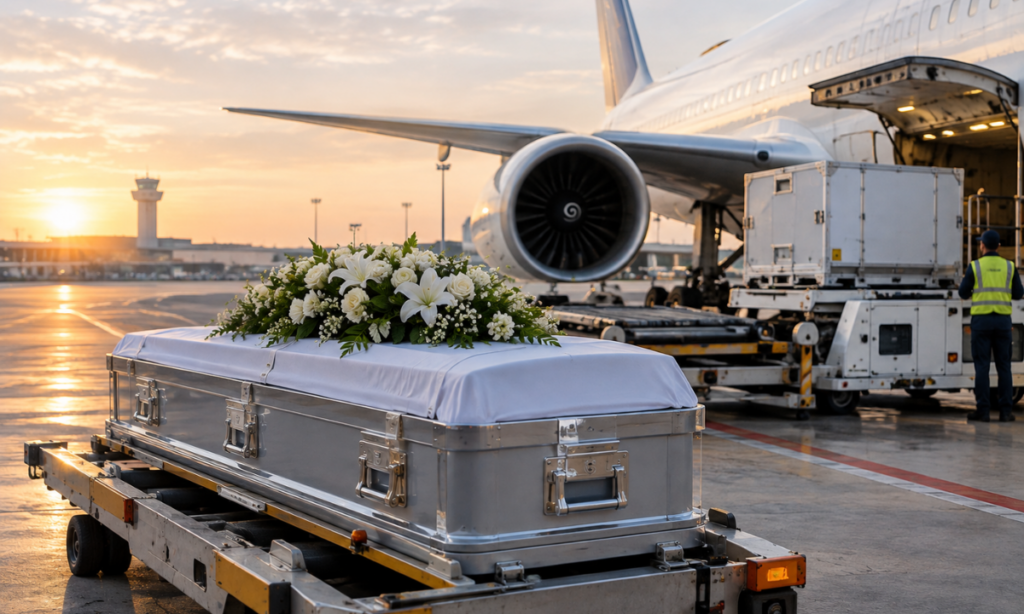
Accident Death Repatriation From USA to India
When an Indian citizen dies in an accident in the United States, the family has to manage several procedures before the deceased can be brought back to India. Unlike a routine natural death, an accidental death may involve police investigation, a medical examiner or coroner, autopsy procedures, documentation and formal release of the body.
After the local authorities complete their required procedures, the family or an authorised representative can begin the repatriation process. This normally involves funeral-home arrangements, embalming, preparation of the coffin or casket, Indian Consulate formalities, required clearances, airline cargo booking and transportation after arrival in India.
For families dealing with an unexpected loss, having one team coordinate the process can make the situation easier to manage. Beleiv provides Repatriation Services From USA to India for families who need assistance bringing a loved one home.
Why Accident Death Repatriation Is Different
An accident death may require additional procedures before the body can be released.
Depending on the circumstances, the case may involve:
- Police investigation
- Medical examiner or coroner
- Autopsy or forensic examination
- Hospital documentation
- Death certificate
- Accident-related reports
- Release authorization
- Funeral-home preparation
The body may remain under the control of the relevant authority until these procedures are completed.
For this reason, families should not assume that an international flight can be arranged immediately after the death.
The first priority is to understand when the body will be released and what documents will be required for international transportation.
What Should the Family Do After an Accident Death in the USA?
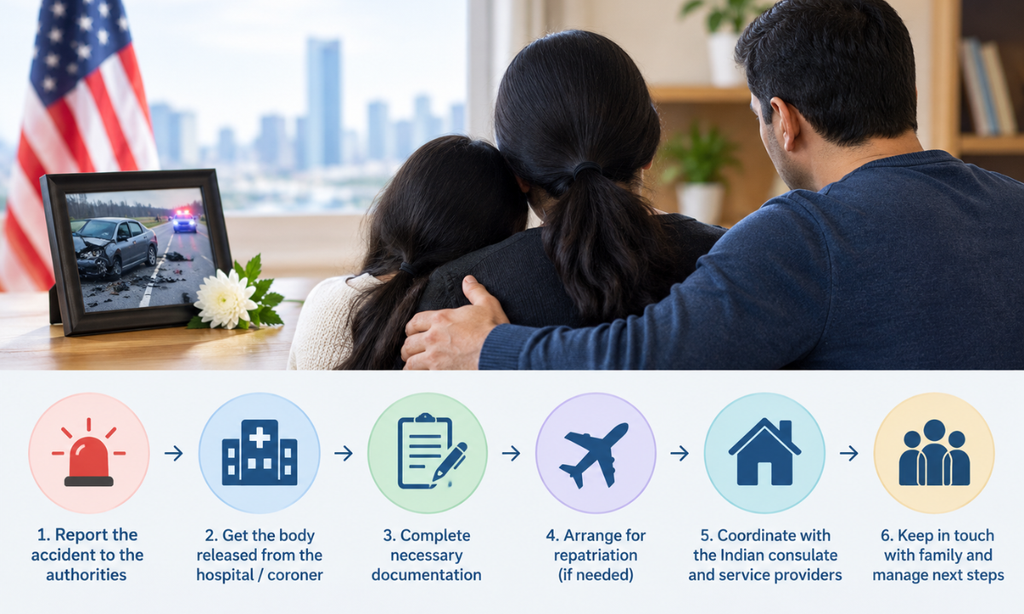
The family should start by identifying the authorities handling the case and contacting a funeral home or repatriation provider experienced in international transportation.
A practical sequence is:
- Confirm the death with the appropriate authorities.
- Determine whether police, a medical examiner or coroner is handling the case.
- Identify the funeral home that will receive the body after release.
- Contact the appropriate Indian Consulate.
- Collect the required documents.
- Complete the applicable Indian consular formalities.
- Arrange embalming and international preparation.
- Complete the required clearance process for India.
- Book airline cargo.
- Arrange transportation after arrival in India.
Police and Medical Examiner Procedures
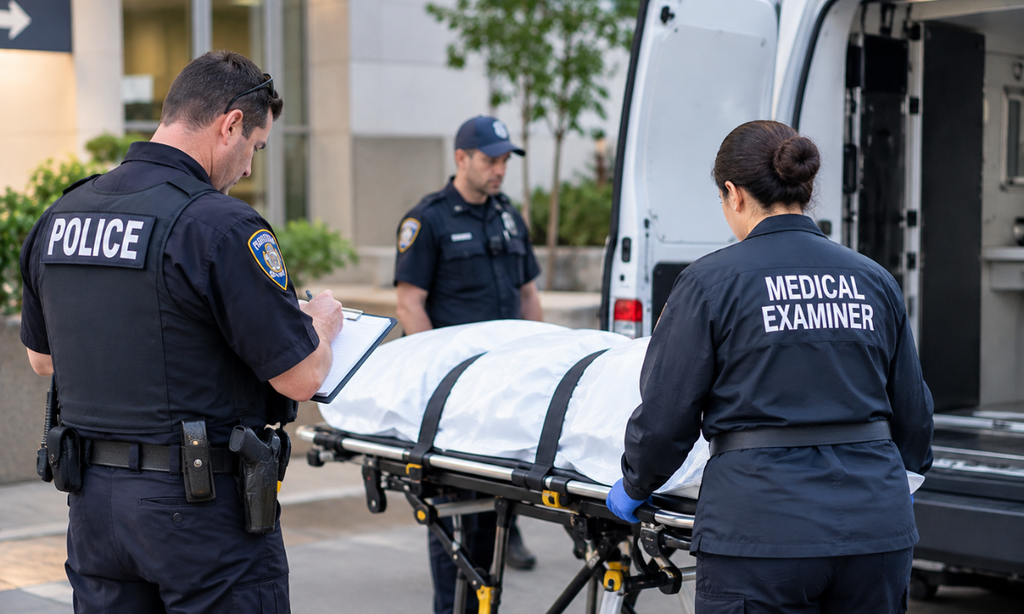
In an accidental death, the local authorities may need to establish the circumstances and cause of death before releasing the body.
This can involve:
Police investigation
For road accidents, workplace accidents, falls and other incidents, police may investigate the circumstances surrounding the death.
Medical examiner or coroner
The medical examiner or coroner may be responsible for determining or certifying the cause of death.
Autopsy
An autopsy may be required depending on the nature of the accident and the rules applicable in the state where the death occurred.
Release of the body
The funeral home normally cannot proceed with international preparation until the body has been formally released.
This is why families should first ask:
“Has the body been released for repatriation?”
That answer will determine how quickly the next stage can begin.
Who Can Arrange the Repatriation?
The process may be coordinated by:
- Immediate family members
- A relative in the USA
- An authorised representative
- Employer or organisation
- Funeral home
- Professional repatriation service provider
When the family is in India, an authorised person in the USA can help manage local formalities.
A professional repatriation provider can coordinate the funeral home, documents, airline and India-side transportation so the family does not have to manage every stage separately.
Documents Required for Accident Death Repatriation
The exact document requirements depend on the U.S. state, the Indian Consulate involved and the circumstances of the accident.
The documentation may include:
- Original death certificate
- Deceased person’s Indian passport
- Police documentation, where applicable
- Medical examiner or coroner documents
- Autopsy or post-mortem documentation, where applicable
- Release documentation
- Embalming certificate
- Coffin or casket preparation certificate
- Applicable health certificate
- Consular application forms
- Authorisation letter from the next of kin
- Identification documents of the applicant or representative
- Airline transportation details
- Other documents requested by the relevant authorities
The family should obtain the final checklist before submitting the application because accident cases can require additional documentation.
Indian Consulate Formalities
The Indian Consulate plays an important role in the documentation process for the repatriation of an Indian citizen who has died abroad.
The family or authorised representative may need to submit documents relating to:
- The deceased
- Cause of death
- Passport
- Death certificate
- Funeral-home preparation
- Transportation
- Family authorisation
The relevant Consulate depends on the location where the death occurred.
Because U.S. consular jurisdiction differs by location, families should contact the Indian Mission responsible for the state in which the accident occurred.
Indian Consulate NOC for Repatriation
The family may need a No Objection Certificate (NOC) or applicable consular documentation before the remains can be transported to India.
The NOC process typically involves verification of the supporting documents and completion of the required consular formalities.
The family should not rely on an old checklist because documentation requirements and submission procedures can change.
It is best to confirm the exact requirements with the Indian Consulate handling the case.
Arranging Embalming
Once the body has been released, the funeral home can arrange embalming and preparation for international transportation.
The funeral home may coordinate:
- Embalming
- Coffin or casket
- Sealing
- Preservation
- Required certificates
- Transportation to the airport
International airline transportation has specific handling requirements, so preparation should be completed through a funeral provider familiar with international repatriation.
Preparing the Coffin or Casket
The body needs to be prepared for international air transportation according to the applicable requirements.
The funeral home may arrange:
- Appropriate coffin or casket
- Internal sealing
- External preparation
- Documentation
- Certification
- Airline cargo preparation
The airline’s cargo department should be consulted before the shipment is booked.
eCARe Clearance for Bringing Mortal Remains to India
Once the consular and funeral-home documentation is ready, the family or service provider must also address India’s applicable clearance requirements for human remains arriving from abroad.
The eCARe process is an important part of the overall journey.
The information submitted may relate to:
- Deceased person’s details
- Death certificate
- Consular documentation
- Embalming
- Passport
- Packaging
- Airline
- Airport of arrival
- Consignee or receiving party in India
Families should make sure the information across all documents is consistent.
Even a small difference in the deceased person’s name, passport information or travel details can result in additional clarification.
Booking the Flight From USA to India
Once the required documents and clearances are ready, the funeral home or repatriation provider can arrange airline cargo transportation.
The process may include:
- Selecting an airline
- Confirming cargo acceptance
- Booking the shipment
- Preparing the Air Waybill
- Airport delivery
- Cargo-terminal handling
- Flight confirmation
- Receiving arrangements in India
The availability of suitable cargo flights can affect the final timeline.
A family should therefore avoid assuming that a body can travel on the next passenger flight simply because seats are available.
How Long Does Accident Death Repatriation Take?
There is no fixed timeline for every accident death case.
The process can take longer because of:
- Police investigation
- Medical examiner or coroner procedures
- Autopsy
- Delay in release of the body
- Death certificate processing
- Consular documentation
- Missing documents
- Embalming arrangements
- Airline cargo availability
- Clearance requirements
A straightforward case can move faster once the body is released and the documentation is complete.
An accident involving an investigation may take considerably longer.
The most important factor is usually the release of the body by the responsible authority.
How Much Does Accident Death Repatriation Cost?
The final cost depends on where the death occurred, how far the body has to be transported to the airport, funeral-home charges, airline cargo and the destination in India.
Costs may include:
| Cost Area | Possible Expenses |
| Local transportation | Hospital, medical examiner or funeral-home transfer |
| Funeral preparation | Embalming and preservation |
| Coffin or casket | International transportation preparation |
| Documentation | Certificates and administrative charges |
| Consular services | Applicable consular fees |
| Airline cargo | International transportation |
| Airport charges | Cargo handling and related charges |
| Repatriation service | Professional coordination |
| India transportation | Airport to final destination |
Insurance, employer benefits or other eligible assistance may cover some of the expenses depending on the deceased person’s circumstances.
Can the Family Handle Everything Without a Repatriation Agency?
A family can coordinate many steps independently, but accident death cases can become difficult because several organisations may be involved at the same time.
The family may need to communicate with:
- Police
- Medical examiner
- Coroner
- Funeral home
- Indian Consulate
- Airline
- Cargo terminal
- Clearance authorities
- Receiving relatives in India
A professional repatriation provider can coordinate these steps and reduce communication gaps between the different parties.
Beleiv provides Repatriation Services From USA to India for families requiring coordinated assistance.
What Happens When the Body Arrives in India?
After the body reaches India, the receiving representative or transportation provider completes the applicable airport and cargo formalities.
The remains can then be transported to the final destination for the family’s funeral arrangements.
Beleiv also provides Dead Body Transportation Services for transportation after arrival in India.
For specific destinations, families can also explore:
Dead Body Transportation in Bangalore
Dead Body Transportation in Mumbai
Dead Body Transportation in Chennai
Dead Body Transportation in Hyderabad
Dead Body Transportation in Kolkata
These destination pages are useful for families who need India-side transportation after the international shipment arrives.
What If the Family Chooses Cremation in the USA?
Not every family chooses to transport the body back to India.
In some circumstances, the family may decide to complete cremation in the USA and then transport the ashes to India.
This is a different process from transporting a complete body because the documentation, packaging and airline requirements can differ.
For families choosing this option, Beleiv provides Asthi Repatriation support.
Important Mistakes to Avoid
Do not book the flight before the body is released
If the investigation is still active, the release date may change.
Do not use an old document checklist
Consular requirements can change, and different U.S. jurisdictions may have different procedures.
Do not ignore the Indian Consulate
Consular formalities should be started as early as practical.
Do not leave airline arrangements until the last moment
Cargo acceptance and flight availability need to be confirmed in advance.
Check every document carefully
The deceased person’s name and identification details should be consistent across the passport, death certificate, funeral documents and transportation paperwork.
Keep copies of everything
Maintain scanned and physical copies of all important documents and receipts.
Accident Death Repatriation Checklist
Before the body leaves the United States, confirm that:
- Police or medical examiner procedures are complete.
- The body has been released.
- The death certificate has been obtained.
- Required accident-related documents are available.
- The appropriate Indian Consulate has been contacted.
- Required consular forms have been submitted.
- The deceased person’s passport has been submitted where required.
- The NOC or applicable consular documentation has been obtained.
- Embalming has been completed.
- The coffin or casket has been prepared.
- Required clearance has been completed.
- Airline cargo has been booked.
- Air Waybill and cargo documents are ready.
- A receiving person is arranged in India.
- Transportation from the Indian airport has been organised.
Frequently Asked Questions
Is accident death repatriation more complicated than natural death repatriation?
It can be. Accident cases may involve police investigations, a medical examiner or coroner and additional documentation before the body is released.
Can the body be transported before the investigation is completed?
Normally, the family needs to wait until the responsible authority has completed the procedures required for release.
Is an Indian Consulate NOC required?
The applicable Indian consular documentation and clearance requirements must be completed before international transportation. The exact requirements should be confirmed with the relevant Indian Mission.
Is embalming required?
International transportation generally requires appropriate preparation, and the funeral provider should confirm the documentation and preparation requirements applicable to the shipment.
Can a relative in India coordinate the process?
Yes. A relative in India can coordinate with the funeral home, authorised representative and repatriation provider while the local procedures are completed in the USA.
How long does it take to bring a body from the USA to India after an accident?
There is no fixed timeline. The investigation, release of the body, documentation, consular process, clearance and airline availability all affect the total duration.
Can ashes be brought to India instead?
Yes. Families that choose cremation in the USA can arrange transportation of ashes separately. Beleiv provides Asthi Repatriation support.
How Beleiv Helps With Accident Death Repatriation From USA to India
When a family loses someone unexpectedly in an accident abroad, managing international repatriation can be overwhelming.
Beleiv can help coordinate the practical aspects of the process, including:
- Funeral-home coordination
- Local transportation
- Embalming arrangements
- Coffin or casket preparation
- Documentation coordination
- Consular coordination
- Airline cargo arrangements
- Airport handling
- India-side transportation
The main service page is Repatriation Services From USA to India.
For India-side transportation, see Dead Body Transportation Services.
For cremated remains, see Asthi Repatriation.
Final Thoughts
Accident death repatriation from USA to India involves several stages, and the process can be more complex when police, medical examiner or coroner procedures are involved.
The family should first ensure that the body is officially released, then coordinate the death documentation, Indian Consulate formalities, required preparation, clearance and airline transportation.
Starting the process early and coordinating the different stages through an experienced repatriation provider can help minimise avoidable delays.
For assistance with a case, visit Beleiv Contact Us.