

Losing a loved one abroad is one of the most painful experiences a family can face, and body repatriation adds another layer of stress during an already emotional time. From paperwork to airline coordination, the process requires careful planning and strict compliance with international laws.
When families try to manage everything alone without understanding how repatriation services in India work, small errors can quickly turn into major delays and financial burdens.
If you are currently facing the repatriation of a deceased to India, understanding these common mistakes can help you avoid unnecessary complications and make this difficult journey smoother for your family.
Key Points at a Glance
- Documentation errors are the most common cause of delays
- Incorrect documents can lead to airport or embassy rejection
- Not hiring a specialist early creates confusion
- Dead body transport by air requires strict packaging rules
- Last-minute decisions often increase costs significantly
- Cultural and religious requirements must be respected
- Emotional burnout can make families rush critical steps
- Professional Repatriation services in India simplify the process
1. Documentation and Administrative Errors
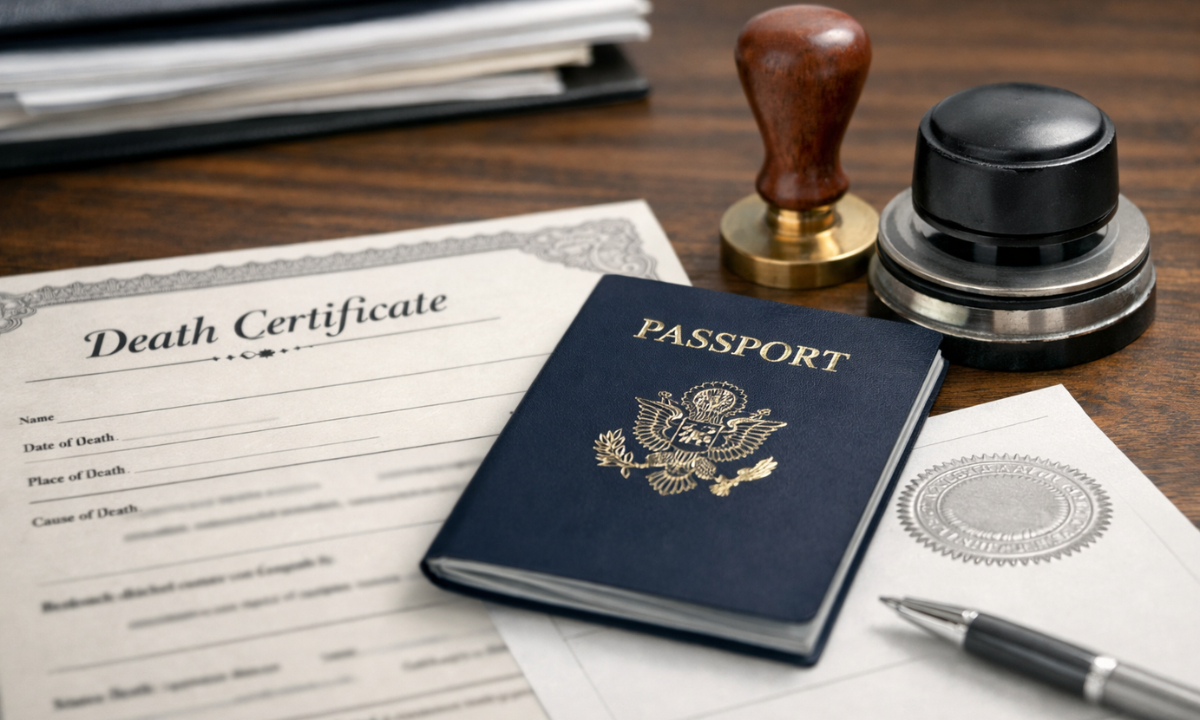
In our experience, paperwork mistakes are the biggest reason for delays in international repatriation. Many families are unaware of the number of documents required to transport a deceased person across borders.
Here are the essential documents usually required:
| Required Document | Purpose | Common Mistake |
|---|---|---|
| Death Certificate | Official proof of death | Not obtaining multiple certified copies |
| Embalming Certificate | Confirms preservation | Missing official seal |
| No Objection Certificate (NOC) | Clearance from authorities | Applying too late |
| Passport of Deceased | Identity verification | Forgetting to cancel or stamp |
| Consular Clearance | Embassy approval | Not checking country-specific rules |
One small error in these documents can stop the transport of a dead body by air at the airport itself.
Incorrect Documents and Translation Issues
Another common issue is submitting incorrect documents or incomplete translations. Many countries require certified translations in English or the destination country’s language.
If documents are not properly notarized or authenticated, airlines and embassies may refuse clearance.
2. Neglecting Embassy and Consulate Requirements
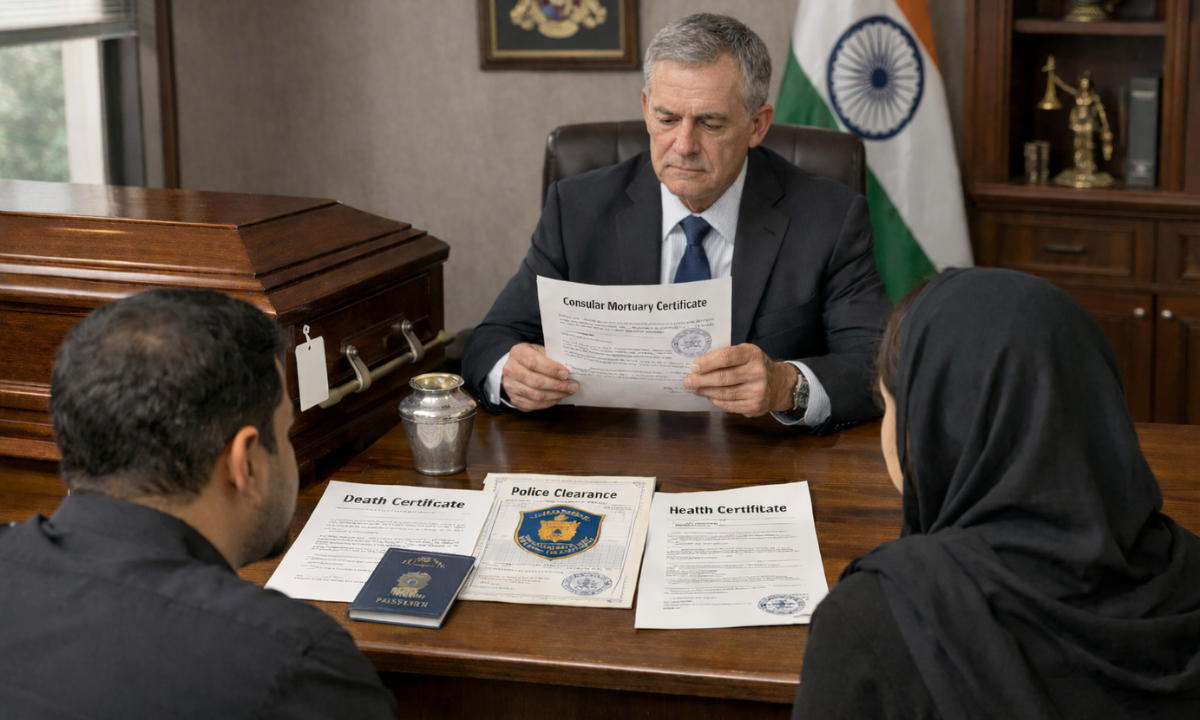
Each country has different legal procedures for international repatriation. Families often assume the process is the same everywhere.
What many people do not realize is that embassies act as the final authority for approving the transfer of human remains across borders. Without their formal clearance, airlines will not allow transportation. Even a small oversight in embassy communication can pause the entire process for days.
Embassy officials also verify documentation, confirm identity details, and ensure all local laws in the country of death are properly followed before granting permission. Delays usually happen when families contact the embassy too late or submit incomplete paperwork.
In reality:
- Some countries require additional health certificates
- Some require police clearance
- Some require consular mortuary certificates
Failure to coordinate immediately with the embassy handling repatriation of the deceased to India can result in serious delays.
3. Not Engaging Professionals Early

We often see families trying to handle dead body transportation in international repatriation on their own to save costs. Unfortunately, this usually leads to more stress and higher expenses later.
Body repatriation involves multiple authorities, including hospitals, local police, embassies, airlines, and cargo handlers. Coordinating between all these departments requires experience and clarity about international protocols.
When families attempt to manage everything themselves, they may miss critical steps such as cargo booking timelines, documentation sequencing, or packaging standards required by airlines. Even one missed requirement can result in shipment rejection or extended storage charges at the airport.
A specialized funeral service provider in India understands:
- Airline cargo regulations
- Documentation compliance
- Embassy coordination
- Sealing and packaging standards
Without professional guidance, mistakes multiply quickly.
4. Underestimating the Cost of Repatriation
International transportation is expensive. Families sometimes make last-minute decisions without understanding the full cost involved.
Many people assume that the primary expense is only the flight ticket or cargo charge. However, body repatriation includes several mandatory services that must meet international health and aviation standards.
There are also country-specific compliance charges, airport handling fees, and documentation expenses that are not always discussed upfront. When these costs are not clearly explained in advance, families may feel overwhelmed at the final stage of payment.
Here is a basic cost overview:
| Cost Component | What It Includes |
|---|---|
| Embalming | Preservation as per international norms |
| Coffin & Sealing | Zinc-lined or hermetically sealed coffin |
| Air Cargo Charges | Weight-based airline freight |
| Documentation Fees | Certificates, NOC, and consular approvals |
| Local Transport | Hospital-to-airport transfer |
Without clear cost estimates, families may face unexpected financial strain during an already difficult time.
5. Improper Packaging and Airline Non-Compliance
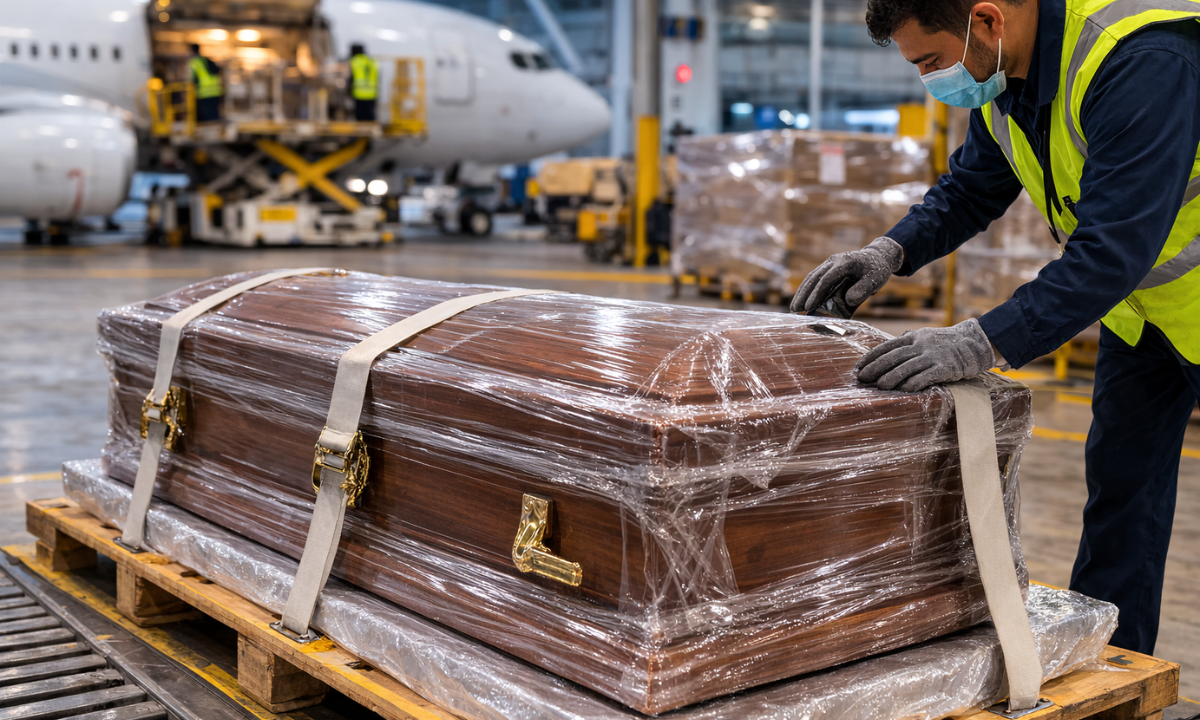
Dead body transport by air requires strict packaging standards. Airlines mandate hermetically sealed coffins and leak-proof arrangements.
Many families are unaware that international aviation authorities follow very specific safety and hygiene protocols for transporting human remains. These rules are non-negotiable and are checked carefully before cargo acceptance.
Even if all documents are correct, failure to meet packaging standards can result in immediate rejection at the airport cargo terminal. This not only delays departure but can also lead to additional storage and re-sealing charges.
Common mistakes include:
- Using non-compliant caskets
- Improper sealing
- Incorrect labeling
- Weak or non-waterproof identification tags
If packaging standards are not met, airlines can refuse cargo at the last minute.
6. Rushing the Process
In grief, families want to bring their loved one home as quickly as possible. While urgency is understandable, rushing can cause serious errors.
Body repatriation is a structured legal process that must follow a specific sequence of approvals and certifications. When steps are completed out of order or without proper verification, authorities may halt the process immediately.
Taking a little extra time to double-check documents, confirm airline bookings, and secure embassy clearance can actually prevent avoidable setbacks. Acting in haste often creates complications that require even more time to fix.
Skipping verification steps or ignoring safety regulations may lead to:
- Embassy rejection
- Airport cargo refusal
- Legal complications
Sometimes, moving too quickly results in longer delays.
7. Ignoring Cultural and Religious Sensitivities
Different religions have different requirements regarding burial, embalming, and timing.
During international repatriation, families are often focused on paperwork and logistics, and cultural practices may unintentionally be overlooked. However, respecting religious traditions is deeply important for emotional closure and family harmony.
Some countries also have legal rules that may conflict with certain religious customs, especially regarding embalming or immediate burial. In such cases, proper coordination with authorities and experienced professionals becomes essential.
For example:
| Religious Requirement | What Families Must Consider |
|---|---|
| Burial within 24 hours | Fast documentation process |
| No embalming preference | Legal exceptions may be required |
| Specific rituals before sealing the coffin | Coordination with local authorities |
Ignoring such requirements can create emotional conflict within families and community pressure.
8. Ignoring the Deceased’s Wishes
Sometimes families disagree about burial versus cremation. If the deceased had expressed specific wishes, ignoring them can create tension and regret.
In many cases, the deceased may have verbally shared their preference or even documented it in a will or personal note. During the emotional stress of body repatriation, these wishes can unintentionally be overlooked or questioned.
Disagreements among family members can delay decision-making, especially when legal paperwork must clearly state whether burial or cremation will take place upon arrival. Such conflicts not only slow down the process but also add emotional strain at an already painful time.
Clear communication and respect are essential during body repatriation.
9. Attempting to Travel Immediately
Families often feel they must fly to the country of death immediately. However, in many cases, this does not speed up the process.
We completely understand the emotional urge to be physically present, but international procedures are largely handled through official channels and documentation rather than family presence. Most hospitals, embassies, and cargo authorities communicate only with authorized representatives.
Travelling urgently without confirmed appointments or clarity on legal steps can result in unnecessary hotel expenses, extended stays, and added stress. In many situations, professional coordination from India is more efficient than personal travel.
Professional repatriation services can manage:
- Hospital coordination
- Documentation
- Embassy visits
- Airline cargo booking
Travelling without a clear plan only increases cost and emotional exhaustion.
10. Emotional Burnout and Poor Decision-Making
Grief clouds judgment. When families handle everything alone, stress levels rise quickly.
Body repatriation requires constant coordination, paperwork verification, and financial decisions, all of which demand mental clarity. Trying to manage these responsibilities while processing shock and loss can become overwhelming very quickly.
Emotional exhaustion often leads to rushed approvals, overlooked details, or disagreements within the family. Taking a step back and sharing responsibilities can prevent avoidable mistakes.
We recommend:
- Delegating responsibilities
- Asking for professional help
- Taking emotional support from relatives
Clear thinking is critical during such sensitive procedures.
Tips to Avoid These Mistakes
Here are simple steps to prevent complications:
- Appoint a specialist in international repatriation immediately
- Order multiple certified copies of the death certificate
- Verify if travel insurance covers repatriation
- Confirm airline packaging requirements in writing
- Avoid making last-minute decisions under emotional pressure
- Double-check all documentation before submission
Final Thoughts
Body repatriation is not just a logistical task; it is an emotional responsibility that deserves accuracy, respect, and professional care. Mistakes in documentation, packaging, embassy coordination, or last-minute decisions can lead to painful delays and financial strain during an already difficult time.
This is why choosing reliable repatriation services in India makes a significant difference. At such moments, working with experienced professionals like Beleiv Repatriation Services ensures that every detail of dead body transportation in international repatriation is handled with dignity, compliance, and compassion.
When we are grieving, we should focus on honoring our loved one, not worrying about paperwork and airline regulations. The right support can make all the difference.
Frequently Asked Questions
1. How long does body repatriation take?
Body repatriation usually takes between 3 and 7 days, but the timeline can vary depending on the country where the death occurred. The process depends heavily on documentation, embassy approvals, police clearances, and airline cargo availability.
If there are public holidays or missing paperwork, delays can extend the timeline further. Proper coordination from the beginning helps avoid unnecessary waiting periods.
2. Is embalming mandatory for dead body transport by air?
In most international cases, embalming is mandatory for the transport of a dead body by air. Airlines and health authorities require proper preservation to meet hygiene and safety regulations during transit.
The embalming certificate must also be officially issued and attached to the documentation file. In rare cases, exceptions may apply based on religious considerations, but these require special approvals from local authorities and the embassy.
3. What is the biggest reason for delays in body repatriation?
The most common reason for delays in international repatriation is incorrect documents or incomplete paperwork. Missing certificates, improper translations, or a lack of consular clearance can immediately halt the process. Airlines and embassies strictly verify every detail before approving.
Even small spelling errors in names or passport numbers can cause complications. Careful documentation review is essential to ensure smooth transportation without avoidable setbacks.
4. Can families handle international repatriation alone?
Technically, families can manage international repatriation on their own, but it is highly complex and emotionally demanding. The process involves coordination with hospitals, police departments, embassies, airlines, and cargo authorities. Without professional knowledge of regulations and documentation standards, mistakes are common.
Handling everything alone can increase stress, costs, and delays, which is why professional guidance from repatriation service providers is strongly recommended.
Reference
1. From Google
2. https://globalrepatriations.com.au/the-dos-and-donts-of-the-funeral-repatriation-process/