
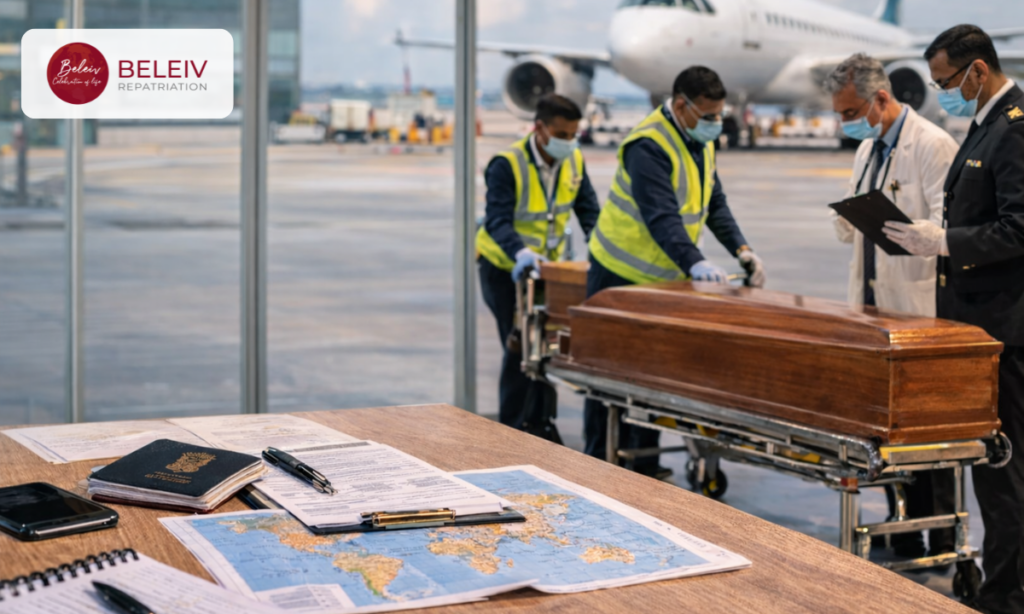
Losing a loved one in another country is an emotionally overwhelming experience. During such a difficult time, families must also manage legal procedures and documentation required for the repatriation of human remains, which can often feel confusing and stressful. This process involves coordination with hospitals, local authorities, embassies, and airlines, and many families rely on professional dead body repatriation services in India to handle these formalities with care and accuracy.
Government approvals play a crucial role in ensuring that transportation is done legally, safely, and respectfully according to international health regulations. Understanding these approvals in advance can help families avoid delays and ensure a smooth international repatriation process.
In this guide, we will walk through every important approval, document, and step involved so you know exactly what to expect during the process.
Key Points at a Glance
- Repatriation requires approvals from local authorities, health departments, and embassies.
- A death certificate, embalming certificate, and police clearance are essential documents.
- The No Objection Certificate (NOC) from the Indian Embassy or Consulate is mandatory.
- The eCARe portal helps speed up approvals for bringing remains into India.
- The process usually takes 3–14 days in cases of natural death.
- Special procedures may apply if the death involves infectious diseases.
- Professional repatriation service provider teams help coordinate documentation and logistics.
Why Government Approvals Are Necessary
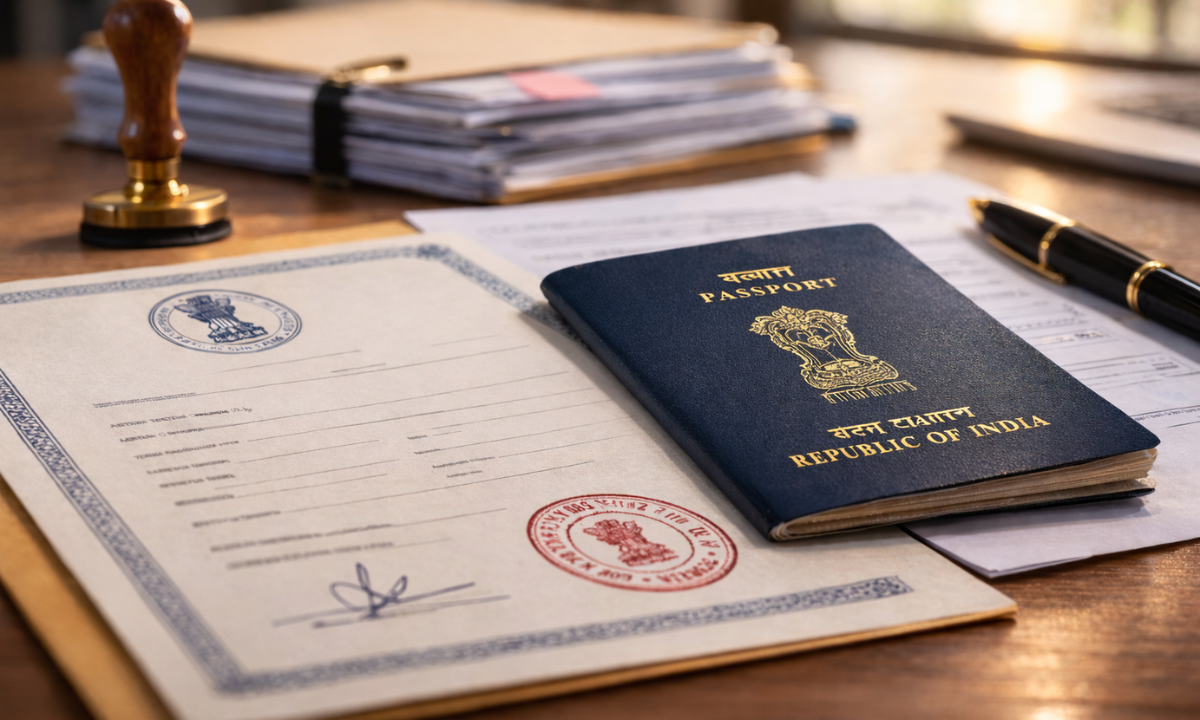
When someone passes away abroad, their remains cannot simply be transported on a flight without official permission. Governments have strict rules to ensure public health safety, proper identification, and legal compliance.
These approvals are also important because the process involves multiple authorities, such as hospitals, police departments, embassies, and airport health officials. Each authority verifies specific details to make sure the transfer of the remains follows international regulations and aviation safety standards. This coordinated verification helps prevent legal complications and ensures the dead body repatriation process is carried out with dignity and respect.
These approvals confirm several important things:
- The cause of death is verified.
- The body is safely prepared for travel.
- International health regulations are followed.
- The transportation of the remains is legally authorised.
Without these approvals, airlines and airports will not allow the transportation of mortal remains.
Important Government Documents Required
The process of international repatriation requires several official documents. Each document verifies a different aspect of the case.
In most situations, these documents are collected from different authorities such as hospitals, police departments, embalmers, and embassy officials. Every document serves a specific legal or health purpose, ensuring that the transportation process follows international aviation and public health regulations. Having all documents prepared correctly can help prevent delays during airport clearance and embassy approvals.
Below is a simple overview.
| Document | Issued By | Purpose |
|---|---|---|
| Death Certificate | Hospital or Local municipal authorities | Confirms the cause and date of death |
| Embalming Certificate | Licensed Embalming Facility | Confirms the body is preserved for travel |
| Police Clearance | Local Police Authority | Required in cases of unnatural death |
| No Objection Certificate (NOC) | Indian Embassy/Consulate | Authorises transport to India |
| Consular Mortuary Certificate | Consulate Official | Verifies documentation |
| Cancelled Passport | Passport Authority | Confirms the identity of the deceased |
These documents together form the legal foundation required for the repatriation of human remains.
1. Death Certificate
The death certificate is the most important document in the entire process. It is issued by the hospital or local municipal authorities and later registered by the Indian Embassy or consulate in the country where the death occurred.
This document acts as the official legal confirmation of the death and is required for almost every step that follows in the repatriation process. Authorities, airlines, and embassy officials rely on this certificate to verify the identity of the deceased and confirm that the death has been legally recorded. Without this document, other approvals and clearances cannot move forward.
This document includes:
- Name of the deceased
- Date and location of death
- Cause of death
In many countries, the certificate must be translated into English before it can be submitted to the Indian Embassy.
2. Embalming Certificate
Before international transportation, the body must be preserved to prevent decomposition during travel.
Embalming is a preservation process carried out by trained professionals to ensure the body remains stable during long-distance transport. This step is especially important when the journey involves international flights and extended transit times. Authorities and airlines require proof that the body has been properly prepared according to international health and safety guidelines.
An embalming certificate confirms that:
- The body has been embalmed by an authorised facility
- It has been placed in a sealed coffin or casket
- The preparation follows international safety standards
Most airlines require this certificate before approving the transportation of mortal remains.
3. Police Clearance (For Unnatural Deaths)
If the death is caused by an accident, suicide, or unknown reasons, the local police must conduct an investigation.
This step is necessary to confirm the exact cause of death and ensure that there are no legal or criminal concerns involved. Authorities must document the incident properly before allowing the body to be transported to another country. Because of these investigations, the process may take additional time compared to cases of natural death.
This process may involve:
- Post-mortem examination
- Police report
- Clearance after investigation
In such cases, the repatriation of human remains may take longer because authorities must complete legal procedures before granting permission.
4. No Objection Certificate (NOC) from the Indian Embassy
The No Objection Certificate (NOC) issued by the Indian Embassy or Consulate is one of the most critical approvals.
This certificate is issued only after embassy officials carefully review all the submitted documents related to the death and transportation process. It confirms that the repatriation request meets legal requirements and that there are no objections from the Indian authorities to bringing the remains back to India. The NOC also ensures that the identity of the deceased and the documentation provided are accurate and complete.
The embassy verifies:
- Identity of the deceased
- Authenticity of documents
- Legal clearance for transportation to India
Without this certificate, airlines cannot proceed with international repatriation.
5. Consular Mortuary Certificate
After verifying all documents, the consular officer may issue a consular mortuary certificate.
This certificate is an official confirmation from the embassy or consulate that all required legal and medical documents have been reviewed and approved. It ensures that the repatriation process complies with international transportation and health regulations. Airlines and airport authorities often rely on this document before allowing the remains to be transported.
This document confirms that:
- All paperwork is complete
- The coffin meets international transport standards
- The remains are cleared for transport
It acts as the final approval for international air transport.
6. Airport Health Officer (APHO) Clearance in India
Once the remains arrive in India, they must be inspected by the airport health officer (APHO).
This inspection is conducted at the arrival airport to ensure that the remains have been transported according to international public health guidelines. The APHO verifies all medical and transport documents before allowing the coffin to leave the airport. This step is important to ensure there are no health or safety risks during the entry of the remains into the country.
The officer checks:
- Condition of the coffin
- Embalming documentation
- Health compliance rules
Only after this clearance can the remains be released to the family.
Role of the eCARe Portal in India
The Government of India introduced the eCARe (e-Clearance for After Life Remains) portal to simplify approvals.
Earlier, families and service providers had to coordinate with multiple departments and submit physical documents to different offices, which often caused delays. The eCARe system was created to make the process faster and more transparent by allowing authorities to review documents online. It helps streamline approvals from health officials and airport authorities before the remains arrive in India.
This online system allows authorities to:
- Upload required documents
- Track approvals digitally
- Reduce paperwork delays
| Benefit | Explanation |
|---|---|
| Faster approvals | Documents reviewed online |
| Transparent tracking | Families can monitor progress |
| Reduced paperwork | Digital submission simplifies the process |
This portal has significantly improved the speed of international repatriation procedures.
Time Required for Repatriation
The timeframe for the international repatriation process can vary depending on the circumstances.
Several factors influence how long the process will take, including the cause of death, the country where the death occurred, and how quickly the required documents are issued by authorities. Coordination between hospitals, police departments, embassies, and airlines also plays a major role in determining the timeline. When documentation is prepared correctly and approvals are obtained quickly, the process can move forward smoothly.
| Situation | Estimated Time |
|---|---|
| Natural death | 3–7 days |
| Death requiring investigation | 7–14 days |
| Complex legal cases | Up to several weeks |
Delays may occur if documents are incomplete or investigations are pending.
Special Health Regulations
International transportation must follow global public health guidelines.
These rules are designed to prevent the spread of infectious diseases and ensure that the transportation process is safe for airline staff, airport authorities, and the public. Health regulations are usually based on international standards set by organisations such as the World Health Organisation (WHO) and aviation health authorities. In certain situations, additional precautions or approvals may be required before the remains can be transported across international borders.
Certain infectious diseases may require special handling or restrictions, including:
- Yellow fever
- Anthrax
- Plague
In such situations, additional health clearance may be required before the repatriation of human remains can proceed.
Example: Repatriation of Human Remains Australia
When handling the repatriation of human remains to Australia, the process typically involves coordination between several authorities and service providers. Each organisation plays an important role in ensuring that all legal, medical, and transportation requirements are properly completed. Families often work with funeral homes or repatriation professionals who help manage documentation, embalming arrangements, and communication with the Indian High Commission.
The process may also involve local government departments that verify the death certificate and issue necessary permits for international transport. Careful coordination between these agencies helps ensure the remains can be transported safely and respectfully back to India.
The process typically involves coordination between:
- Australian health authorities
- Funeral homes
- The Indian High Commission
- Airlines transporting the remains
While the documents are similar, some procedural steps may vary depending on local regulations.
Helpful Tips for Families
Handling repatriation while grieving can be extremely difficult. Here are some practical tips.
- Always keep multiple copies of all documents.
- Contact the Indian Embassy early in the process.
- Work with an experienced repatriation service provider.
- Confirm airline requirements before booking cargo space.
- Check documentation requirements for the destination airport in India.
Professional support can significantly reduce stress during this challenging time.
Final Thoughts
Managing the legal and administrative steps involved in the repatriation of human remains can be emotionally and logistically challenging. From embassy approvals and health clearances to airline documentation, every step must be carefully coordinated to ensure safe and lawful transportation.
Working with experienced dead body repatriation services in India can make this process much smoother, as professionals understand embassy regulations, documentation requirements, and international transportation procedures.
At Beleiv Repatriation, we support families with compassionate guidance and reliable coordination so that their loved ones can return home with dignity and respect.
Frequently Asked Questions
1. Who issues the No Objection Certificate for repatriation?
The No Objection Certificate (NOC) is issued by the Indian Embassy or Consulate in the country where the death occurred. Before granting the NOC, embassy officials carefully review all required documents, including the death certificate, embalming certificate, and identification details of the deceased.
This certificate confirms that the Indian authorities have no objection to transporting the remains to India and allows airlines to proceed with the repatriation process.
2. Is embalming mandatory for international transportation?
Yes, embalming is generally mandatory for international transportation of human remains. The embalming process preserves the body and prevents decomposition during long-distance travel.
After the procedure is completed, an authorised facility issues an embalming certificate confirming that the body has been properly prepared and placed in a sealed coffin. Most airlines and international health authorities require this certificate before approving transportation.
3. How long does the repatriation process usually take?
The repatriation process usually takes between 3 and 14 days, depending on several factors. The timeline may vary based on the cause of death, the speed of document approvals, and the coordination between hospitals, police authorities, embassies, and airlines.
In cases of natural death, the process may be quicker, while deaths requiring investigations or legal procedures may take longer.
4. Can families handle the process themselves?
Yes, families can handle the repatriation process themselves, but it can be complicated and emotionally challenging. The procedure involves multiple documents, embassy approvals, airline coordination, and health clearances. Because of these complexities, many families prefer to work with professional dead body repatriation services in India, which manage the paperwork, transportation arrangements, and legal requirements during such a difficult time.
Reference
1. From Google