
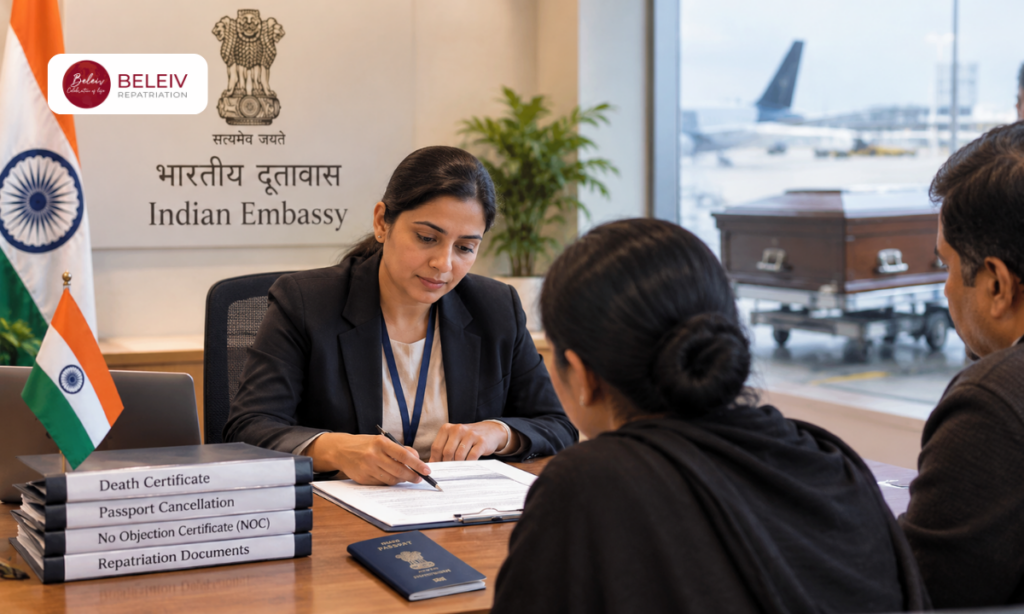
When an Indian citizen dies abroad, bringing the mortal remains back to India involves several authorities, documents and transport arrangements. The Indian Embassy or Consulate can play an important role by facilitating documentation, verifying required papers, issuing the necessary No Objection Certificate (NOC), cancelling the deceased person’s passport and coordinating with relevant authorities.
However, the Embassy is generally a facilitator rather than the party that physically arranges every part of the repatriation. The family, employer, insurer, authorised representative or a professional repatriation service provider may need to arrange the funeral home, embalming, coffin or casket, airline cargo booking, local transportation and arrival arrangements in India.
Important: Repatriation requirements can vary by country, cause of death, airline, local authorities and the Indian Mission involved. Families should confirm the current document and clearance requirements with the relevant Embassy or Consulate before transport is booked.
What Is Repatriation of Mortal Remains?
Repatriation of mortal remains means transporting the body of a deceased person from the country where the death occurred to another country, such as India, so that the family can conduct the funeral, cremation or burial according to their wishes.
For an Indian citizen who dies abroad, the family may choose to bring the mortal remains to India. In some cases, the family may instead choose local cremation or burial, subject to the applicable local requirements and the consent and documentation expected by the Indian Mission.
Families may also need a different process when transporting cremated remains or ashes instead of a body. Beleiv’s Asthi Repatriation service covers this separate type of arrangement.
When Should You Contact the Indian Embassy?
Contact the nearest Indian Embassy or Consulate as early as possible after the death is confirmed. Early communication helps the family understand which documents and clearances are needed before the remains can leave the country.
This is especially important in cases involving a hospital death, accidental death, unnatural or unexplained death, police investigation, post-mortem examination, or situations where the family is not present in the country of death.
If family members cannot travel, an authorised person or professional service provider may assist with local formalities, depending on the country’s rules and the instructions of the Indian Mission.
How Does the Indian Embassy Help?
1. Death Registration and Verification
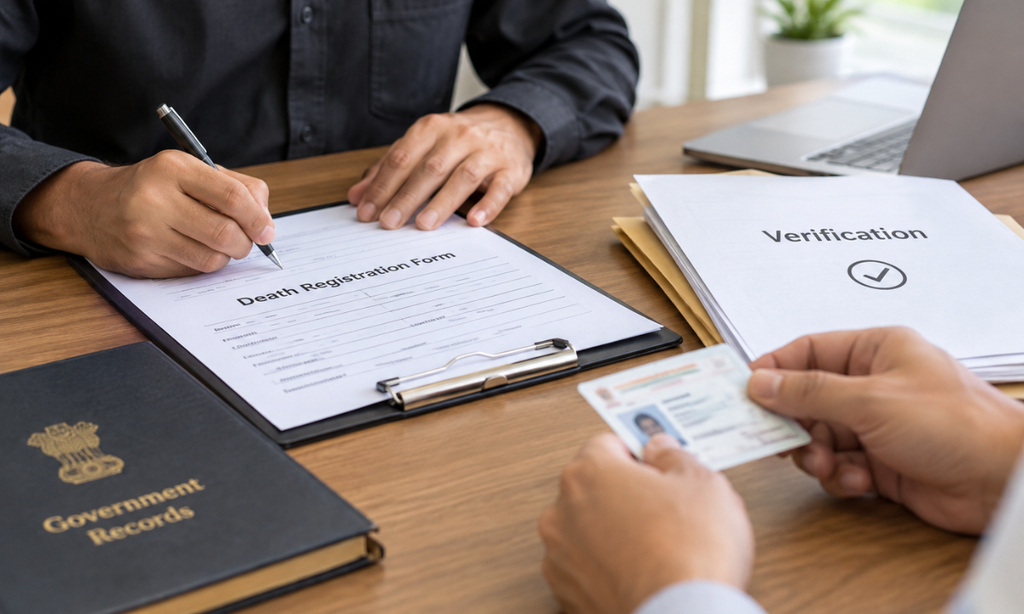
The Embassy or Consulate can assist with the formal documentation relating to the death of an Indian national abroad. The exact procedure depends on the country and circumstances of the death.
2. Document Verification
The Indian Mission may review or request important documents such as the local death certificate, medical documents, police or post-mortem records where applicable, the deceased person’s passport and other papers required for transportation.
3. Issuing the No Objection Certificate
One of the most important documents in the repatriation process is the Embassy or Consulate’s No Objection Certificate (NOC), where required. The NOC supports the transportation of the mortal remains to India after the required documentation and formalities have been completed.
4. Passport Cancellation
The deceased person’s Indian passport may need to be submitted to the Embassy or Consulate for cancellation as part of the documentation process.
5. Coordination With Local Authorities
Depending on the case, the Indian Mission may coordinate or communicate with local authorities, hospitals, police authorities, mortuaries and other agencies involved in releasing the remains.
6. Guidance on Repatriation Requirements
The Embassy can guide the family or authorised representative on the documents and procedures that apply in that country. This is particularly useful because requirements may differ between jurisdictions.
What Documents Are Usually Required?
The exact checklist varies by country and circumstances. Common documents may include:
- Local death certificate
- Medical report or medical certificate, where applicable
- Police report in accidental, unnatural or investigated deaths
- Post-mortem report, when required
- Original passport of the deceased
- Next-of-kin consent or declaration
- Authority letter for a representative, where required
- Embassy or Consulate NOC
- Embalming certificate
- Coffin or casket sealing and packaging documentation
- Airline cargo and Air Waybill documentation
- Any additional local health, customs, airport or public-health clearance required for transport
Do not rely on a generic checklist alone. The final document list should be confirmed with the relevant Indian Embassy or Consulate, local authorities, funeral home and airline handling the shipment.
What Is an Embassy NOC for Mortal Remains?
NOC stands for No Objection Certificate. In repatriation cases, it is a formal document from the Indian Mission indicating that there is no objection to transporting the mortal remains to India, subject to the applicable requirements.
The NOC is important because airlines, cargo handlers, airports and authorities may require supporting documentation before the remains can be accepted for transportation.
What Is eCARe and Why Is It Important?
For transportation of a dead body or human remains to India by air, families and service providers may also need to complete the applicable health-clearance process through India’s eCARe system.
Depending on the case, documents may include the death certificate, embalming certificate, Embassy NOC, cancelled passport and packaging-related certification. Transport and airline details may also be required.
The exact process can change according to the circumstances and current government requirements, so the family or authorised service provider should verify the latest requirements before submitting the clearance request.
Step-by-Step Repatriation Process
- Confirm the death and notify the relevant authorities. The hospital, police, employer, university, insurer or family representative may begin the required notifications.
- Contact the Indian Embassy or Consulate. Inform the Mission about the death and ask for the current repatriation checklist.
- Appoint an authorised representative. When the family cannot travel, an authorised local representative may handle permitted formalities.
- Collect the local death documents. Obtain the death certificate and any medical, police or post-mortem records required for the case.
- Complete local release formalities. The mortuary, hospital, police or other authority must release the remains before transport can proceed.
- Arrange embalming and approved packaging. The funeral home or repatriation provider handles the preparation required for international transportation.
- Submit documents to the Indian Mission. Provide the passport and other documents needed for verification and the NOC process.
- Complete the air-transport clearance process. Where applicable, submit the required information and documents for the eCARe/public-health clearance process.
- Book airline cargo transportation. The remains are booked according to airline and airport procedures, with the required cargo documentation.
- Arrange arrival in India. The family or service provider coordinates collection from the Indian airport and transportation to the final destination.
- Complete the funeral arrangements. Once the remains reach the family, the cremation or burial can proceed according to the family’s plans.
What Does the Embassy Do and What Does the Repatriation Provider Do?
| Activity | Indian Embassy / Consulate | Family / Authorised Representative / Service Provider |
| Death-related diplomatic documentation | Provides or facilitates applicable consular processes | Supplies the required supporting documents |
| NOC | Issues the NOC where applicable after required formalities | Submits the documents and follows the Mission’s instructions |
| Passport cancellation | Processes cancellation as applicable | Submits the original passport |
| Embalming | Generally does not perform it | Funeral home / repatriation provider arranges it |
| Coffin or casket preparation | Generally does not arrange the physical transport packaging | Funeral home / repatriation provider arranges compliant preparation |
| Airline booking | May provide guidance or coordination where necessary | Family / provider arranges cargo booking |
| Airport collection in India | Not normally the family’s transport provider | Family / provider arranges final transportation |
Who Pays for Repatriation?
The Embassy does not automatically pay all repatriation expenses. Depending on the case, costs may be paid by the family, employer, insurer or another assistance arrangement that the deceased person was eligible for.
Typical expenses can include local funeral-home charges, embalming, coffin or casket, documentation, transportation to the airport, airline cargo charges, health clearance, customs-related services and transportation from the destination airport in India.
For a full-service option, families can review Beleiv’s Repatriation Services.
How Long Does Repatriation Take?
There is no single fixed timeline. The overall duration depends on how quickly the death documents are issued, whether a police investigation or post-mortem is required, when the remains are released, how quickly the Embassy formalities are completed, availability of the necessary clearances and the airline cargo schedule.
Simple cases can move faster when all documents are available. Investigated deaths, documentation problems, holidays, airline limitations and delays in local approvals can extend the process.
What Happens in Accidental or Unnatural Deaths?
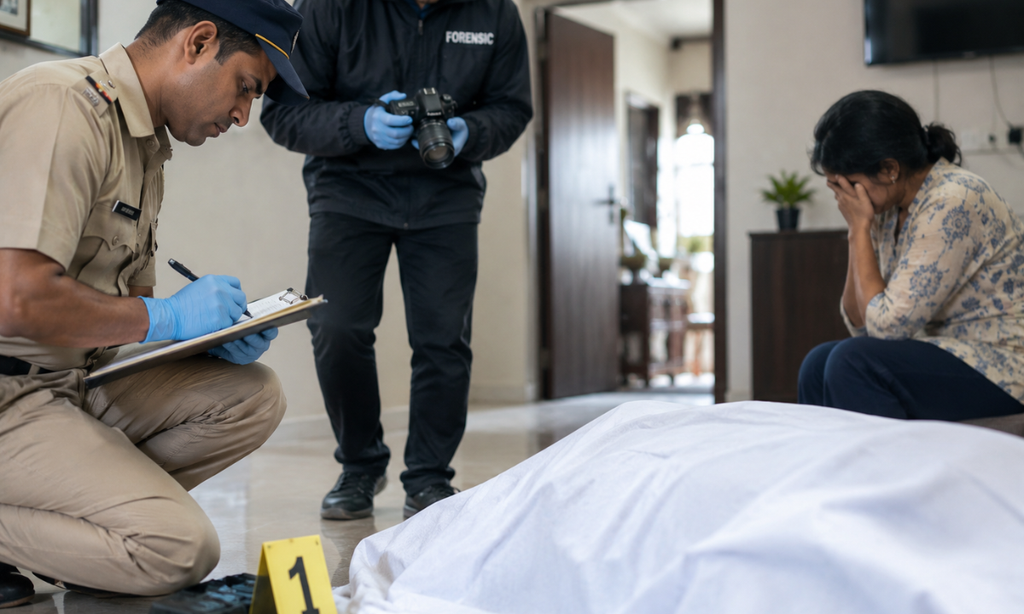
When the death involves an accident, police investigation, suspicious circumstances or another unnatural cause, the repatriation process may take longer because the local authorities may need to complete an investigation or post-mortem before the remains are released.
The family should avoid making assumptions about the timeline and should obtain the release requirements directly from the relevant local authorities and the Indian Mission.
Transporting Mortal Remains by Air
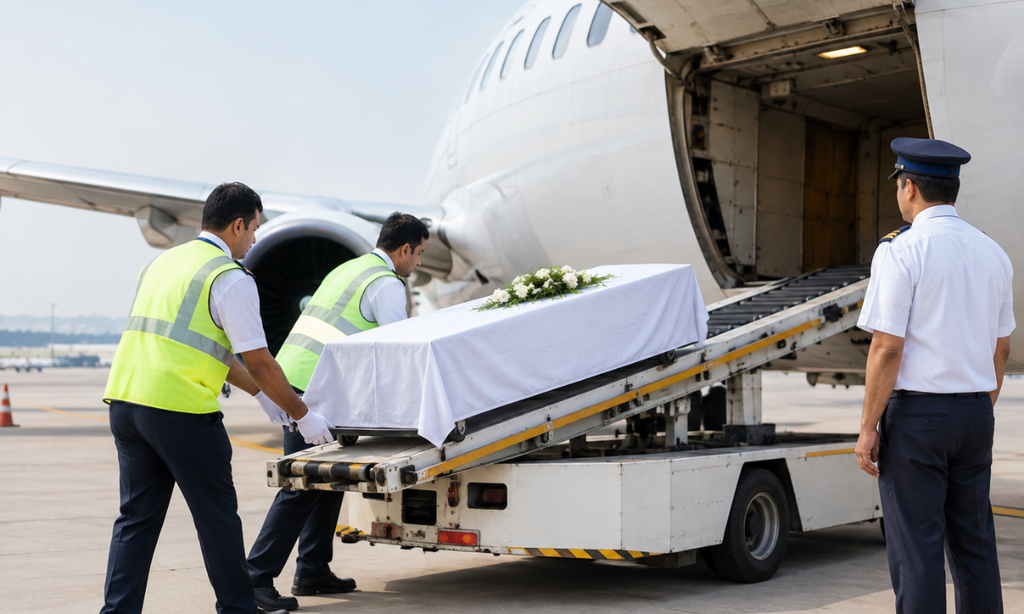
International repatriation to India commonly involves air cargo because of the distance and the need to move the remains efficiently between countries.
The funeral home or repatriation provider generally coordinates the preparation, compliant packaging, airport transfer, airline booking and cargo paperwork. The flight schedule and airline rules must be confirmed before final arrangements are made.
Beleiv also provides Dead Body Transportation Services for families requiring coordinated transportation support.
What Happens When the Body Arrives in India?
After arrival at the Indian airport, the authorised family member or service provider completes the applicable airport and cargo formalities and collects the remains.
The remains are then transported to the family residence, mortuary, hospital, funeral facility or other approved destination depending on the family’s arrangements and the local requirements.
Beleiv provides city-based transportation support, including:
- Dead Body Transportation in Bangalore
- Dead Body Transportation in Mumbai
- Dead Body Transportation in Chennai
- Dead Body Transportation in Hyderabad
- Dead Body Transportation in Kolkata
What About Repatriating Ashes Instead of a Body?
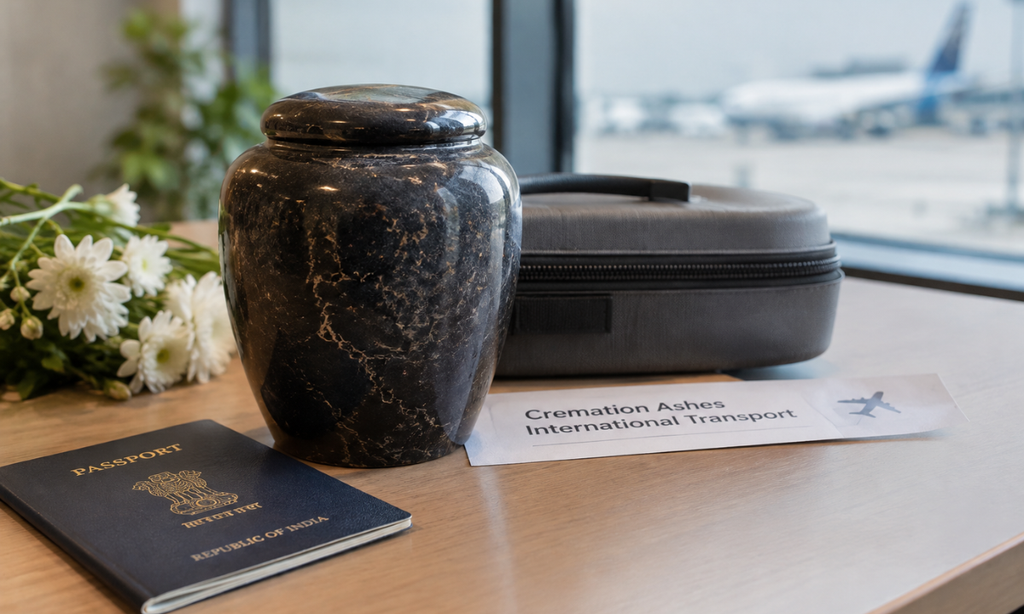
The documentation and transport process for cremated remains can be different from the process for transporting a body. Families should confirm airline and destination requirements before travelling with ashes.
For assistance focused on cremated remains, visit Asthi Repatriation.
Country-Specific Repatriation Requirements
The overall process is similar, but local documentation and authority requirements can vary from one country to another. Beleiv supports repatriation arrangements from multiple countries, including:
- Repatriation from UAE to India
- Repatriation from Saudi Arabia to India
- Repatriation from Qatar to India
- Repatriation from Kuwait to India
- Repatriation from Oman to India
- Repatriation from USA to India
- Repatriation from UK to India
- Repatriation from Canada to India
- Repatriation from Australia to India
- Repatriation from Singapore to India
Family Checklist for Repatriation to India
- Contact the nearest Indian Embassy or Consulate as soon as possible.
- Confirm the current document checklist for the country of death.
- Arrange an authorised representative if the family cannot travel.
- Collect the death certificate and relevant medical or police records.
- Complete the release formalities with the local authorities.
- Arrange embalming and compliant coffin or casket preparation.
- Submit the deceased person’s passport and required documents to the Indian Mission.
- Obtain the applicable Embassy NOC.
- Complete the required air-transport or health-clearance process.
- Confirm the airline cargo booking and Air Waybill details.
- Arrange airport collection and final transportation in India.
- Keep copies of all documents, receipts and approvals.
Frequently Asked Questions
Does the Indian Embassy pay for repatriation?
Not automatically. Repatriation expenses are usually handled by the family, employer, insurer or another applicable assistance arrangement. The Embassy’s role is primarily consular facilitation, documentation and coordination.
What is the Embassy NOC?
The NOC is a No Objection Certificate issued by the Indian Mission when the required formalities have been completed. It may be needed for transporting mortal remains to India.
Can a body be cremated abroad instead of being brought to India?
In some circumstances, families may choose local cremation or burial, subject to the applicable local procedures, consent and documentation.
What happens to the deceased person’s passport?
The original passport may need to be submitted to the Indian Embassy or Consulate for cancellation as part of the required formalities.
Who should families contact first?
Contact the nearest Indian Embassy or Consulate, the hospital or local authorities as applicable, and a qualified funeral home or repatriation service provider so the documentation and transport arrangements can be coordinated without unnecessary delay.
Can a family member arrange the repatriation without a service provider?
Yes, families may coordinate the process themselves, but international repatriation can involve multiple authorities, documents, funeral-home formalities and airline procedures. A specialist provider can help coordinate these steps.
How Beleiv Can Help
Beleiv can support families with the practical coordination required to bring mortal remains to India, including documentation assistance, funeral-home coordination, embalming arrangements, compliant preparation, airport transfer, airline cargo coordination and arrival transportation.
Learn more about Beleiv Repatriation Services, Dead Body Transportation Services or Asthi Repatriation.
Need Help With Repatriation to India?
When a family is dealing with the loss of a loved one abroad, managing documentation and transport can be overwhelming. Beleiv can help coordinate the practical steps involved in repatriation.
Contact Beleiv to discuss the case and the next steps.
Need Help With Repatriation to India?
When a family is dealing with the loss of a loved one abroad, managing documentation and transport can be overwhelming. Beleiv can help coordinate the practical steps involved in repatriation.
Contact Beleiv to discuss the case and the next steps.