

Have you ever imagined receiving the heartbreaking news that a loved one has passed away in a foreign country and you do not know what to do next? In such painful moments, dead body repatriation becomes more than a legal process; it becomes a final act of love and responsibility.
When families feel lost and overwhelmed, Indian Embassies step in to guide, support, and coordinate every official step required for the safe return of mortal remains. Along with trusted repatriation services in India, embassies ensure that the journey home is handled with dignity, legality, and compassion.
But what exactly does an Indian Embassy do during this difficult process, and how do they help families bring their loved ones back home? Let us understand this step by step.
Key Points at a Glance
- Indian Embassies register the death of Indian nationals abroad.
- They issue a mandatory No Objection Certificate (NOC).
- They coordinate with hospitals, police, and local authorities.
- They assist with documentation and attestation.
- They help arrange dead body air transport in India.
- Financial help may be provided through the Indian Community Welfare Fund (ICWF).
- Emergency certificates are issued if the passport is missing.
- 24/7 helplines are available for distressed families.
- The government’s e-CARe portal helps speed up clearance.
What is the Work of the Indian Embassy in Such Cases?
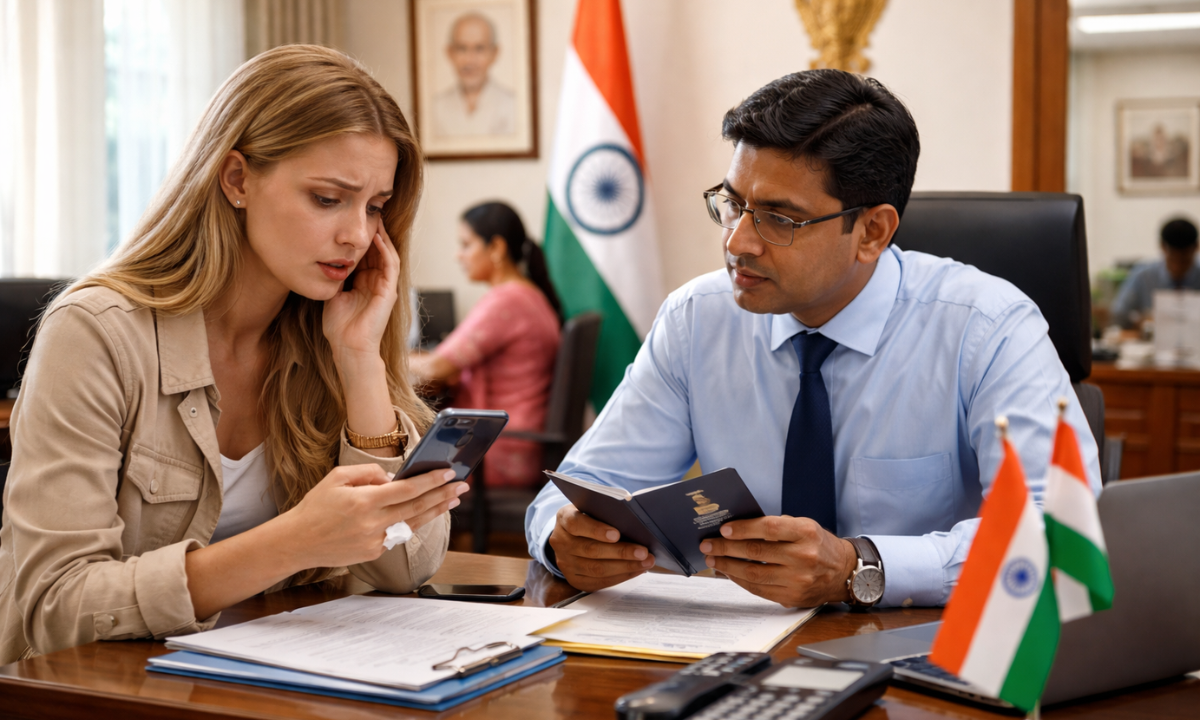
Many families ask us, What is the work of the Indian embassy when someone passes away abroad?
Indian Embassies and Consulates act as the central authority that manages all official formalities required for the repatriation of a deceased to India. They ensure the process follows both local country laws and Indian regulations.
Their role is not just administrative; it is supportive and coordinating in nature. They communicate with families, employers, local authorities, and service providers to make sure everything moves smoothly.
Registration of Death – The First Official Step
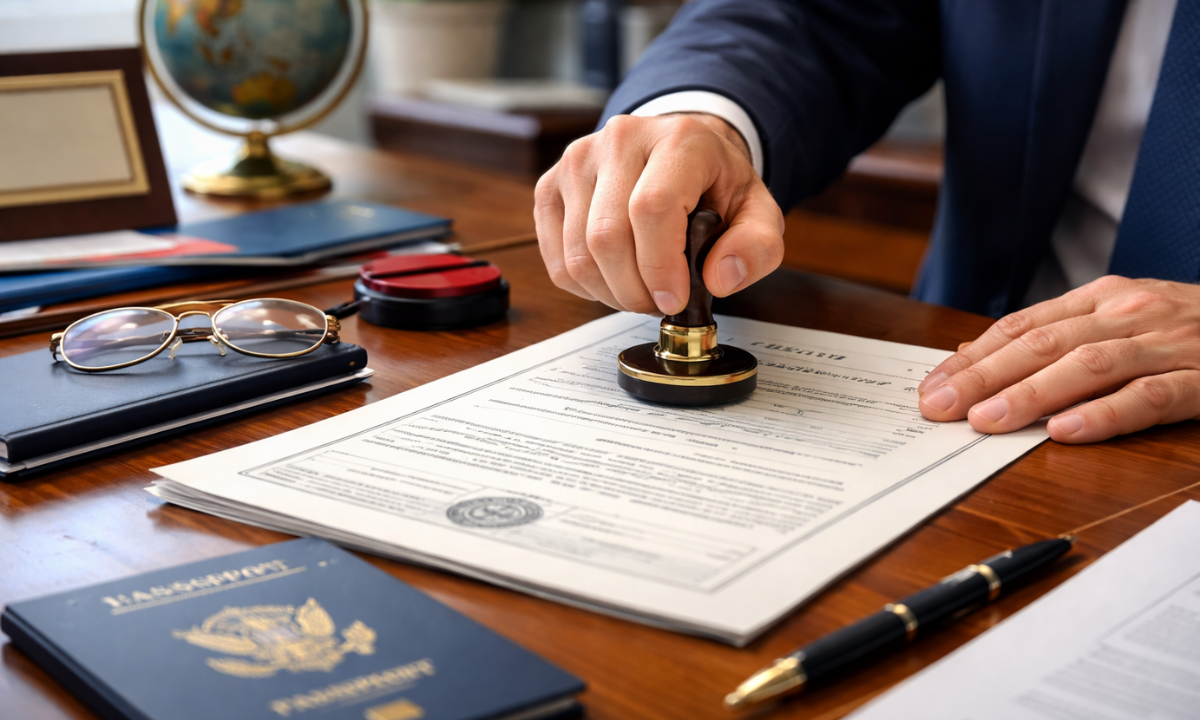
Once the Embassy is informed about the death, the first step is registration. This is an official entry made by the Indian Mission to formally record that an Indian national has passed away in that country.
The Embassy verifies the identity of the deceased using passport details, visa information, and confirmation from local authorities such as the hospital or police department. This ensures that all records are accurate and legally valid.
This registration is necessary to initiate any dead body transfer process. Without this official acknowledgement, further documentation, including the issuance of the No Objection Certificate (NOC) and attestation of papers, cannot proceed.
Issuance of No Objection Certificate (NOC)
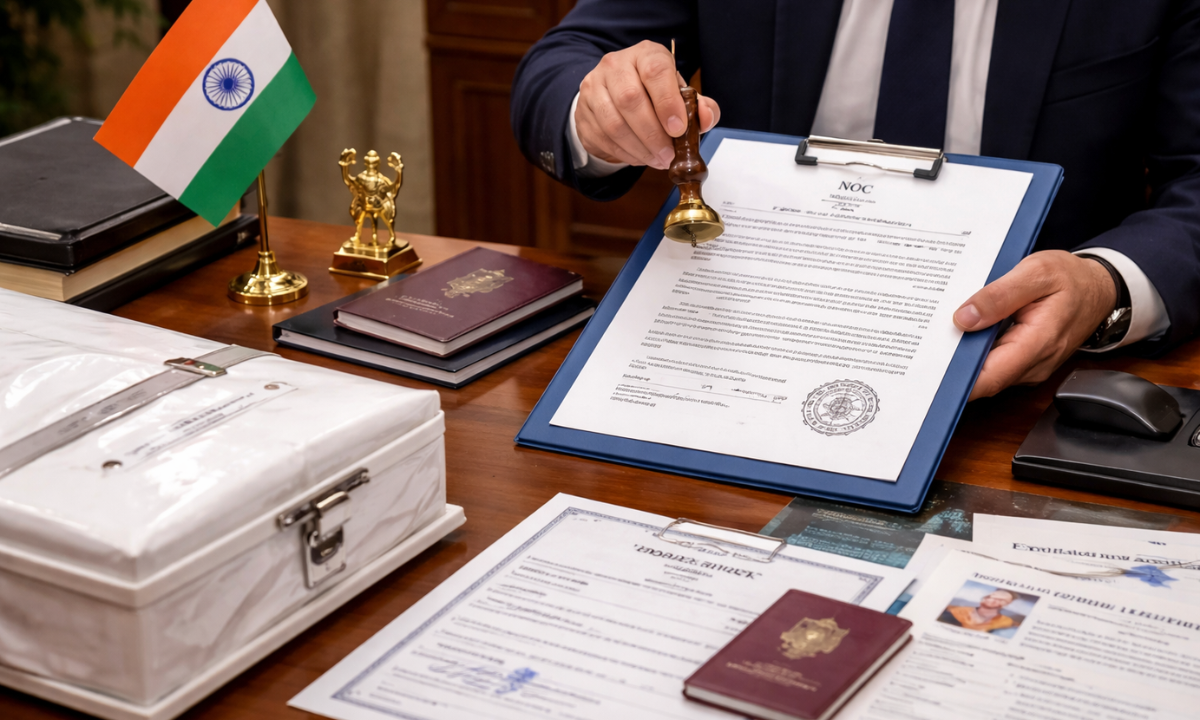
One of the most important documents in dead body transportation in international repatriation is the No Objection Certificate (NOC). This certificate acts as official approval from the Indian Embassy, allowing the mortal remains to be transported to India.
Before issuing the NOC, the Embassy carefully verifies all required documents, including the death certificate, embalming certificate, coffin sealing certificate, passport copy, and police clearance (if applicable). This verification ensures that the transportation complies with both local country laws and Indian regulations.
The NOC legally permits the transportation of mortal remains from a foreign country to India and confirms that there are no legal objections or pending investigations preventing the transfer. Without this document, airlines will not accept the cargo booking, and the repatriation process cannot move forward.
Liaising with Local Authorities

During such sensitive situations, coordination with local authorities is extremely important to avoid delays and legal complications. The Embassy acts as a bridge between the family and foreign officials to ensure all formalities are completed correctly and respectfully.
The Embassy works closely with:
- Hospitals – To obtain medical reports, confirm the cause of death, and secure the official death certificate.
- Police departments – To collect investigation reports or clearance documents, especially in cases of accidental or unnatural death.
- Mortuaries – To coordinate preservation procedures like embalming and ensure proper coffin sealing as per international standards.
- Local government offices – To complete legal paperwork, attest documents, and obtain necessary municipal clearances for transportation.
They help obtain essential documents such as:
| Required Document | Purpose |
|---|---|
| Death Certificate | Confirms cause and date of death |
| Police Report (if applicable) | Required in accidental or unnatural deaths |
| Embalming Certificate | Confirms body preservation |
| Coffin Sealing Certificate | Confirms coffin is sealed as per regulations |
This coordination ensures that paperwork is accurate and completed without unnecessary delay.
Coordination with Employers
In countries like Saudi Arabia or the UAE, many Indian nationals work under employer sponsorship. Under local labor laws in these countries, employers are often responsible for expenses related to repatriation in the unfortunate event of an employee’s death.
In such cases, the Embassy communicates directly with the sponsor or company to ensure they fulfil their legal responsibility of bearing the repatriation costs, including documentation, embalming, and air cargo charges. This significantly reduces the financial burden on the grieving family in India.
If the employer refuses, delays, or avoids responsibility, the Embassy formally intervenes and follows up with the concerned authorities to ensure compliance with applicable labor regulations.
Financial Assistance Through ICWF
Sometimes, families cannot afford the cost of dead body air transport in India, especially when the death is sudden and unexpected. International repatriation involves multiple expenses such as embalming, documentation, coffin sealing, and air cargo charges, which can be financially overwhelming.
If the deceased had no insurance or employer coverage, financial assistance may be provided through the Indian Community Welfare Fund (ICWF). The Embassy reviews the financial condition of the family before approving support under this scheme.
This support is given on a means-tested basis and is intended for genuinely distressed cases. It ensures that no Indian citizen is denied a dignified return due to financial constraints.
Issuing Emergency Certificates
If the passport of the deceased is missing, damaged, or unavailable, the Embassy issues an Emergency Certificate. This situation may arise in cases of theft, loss of documents, or accidental damage.
Before issuing the certificate, the Embassy verifies the identity and nationality of the deceased through available records, copies of documents, or confirmation from family members and local authorities.
This certificate acts as a temporary travel document that allows the body to be transported legally and completes the required consular formalities. Without it, the dead body transfer cannot proceed, as airlines and authorities require valid identification clearance.
24×7 Consular Assistance
Indian Missions operate emergency helplines for families in distress. These helplines are designed to provide immediate guidance during one of the most emotionally overwhelming moments in a family’s life.
When a death occurs abroad, confusion about legal procedures, documentation, and local rules can add to the stress. The consular team offers clear instructions, reassurance, and step-by-step support to help families understand what needs to be done next.
These dedicated consular wings provide:
- Immediate guidance on the repatriation procedure
- A checklist of required documents
- Coordination support with local authorities
- Updates on case progress
- Contact details of authorized funeral coordinators or service providers
This round-the-clock support offers emotional reassurance during an extremely stressful time.
Step-by-Step Repatriation Process Managed by the Embassy
When a loved one passes away abroad, families often feel overwhelmed because they are unsure about the legal and procedural steps involved. The Embassy follows a structured and systematic approach to ensure that every requirement is completed in the correct order.
This organized process reduces confusion, avoids unnecessary delays, and ensures that all international and Indian regulations are properly followed. From documentation to final dispatch, each stage is carefully monitored.
Here is how the entire process usually works:
| Step | Action |
|---|---|
| 1 | Family informs the Indian Embassy or Consulate |
| 2 | The embassy registers the death |
| 3 | Required documents are collected |
| 4 | The embassy verifies and attests documents |
| 5 | NOC is issued |
| 6 | Air cargo booking is arranged |
| 7 | Mortal remains are dispatched to India |
This structured process ensures transparency and compliance at every stage.
Timeline for Repatriation
The time required for repatriation depends largely on the circumstances surrounding the death and the legal procedures involved in the foreign country. While some cases move quickly with minimal formalities, others may require extended investigations and clearances.
Embassies work to complete the process as efficiently as possible, but certain legal requirements cannot be bypassed. Understanding the estimated timelines helps families prepare emotionally and practically.
| Type of Case | Estimated Time |
|---|---|
| Natural death | 3–14 days |
| Unnatural or accidental death | Longer (due to investigation) |
Police investigations and post-mortem procedures can delay the process in certain cases.
The Role of the e-CARe Portal
The Government of India has introduced the e-CARe portal to speed up document clearance and simplify the approval process for transporting mortal remains. This online system was created to reduce manual paperwork and minimise delays caused by physical file movement between departments.
Through the portal, authorised officials can digitally upload, verify, and approve required documents such as the death certificate, embalming certificate, and No Objection Certificate (NOC). This ensures faster coordination between Indian Embassies, airport authorities, and other government departments involved in the process.
The digital tracking system also improves transparency, as applications can be monitored in real time. By reducing processing time and human error, the e-CARe portal helps make the repatriation of deceased to India faster, more organized, and more efficient for grieving families.
How Dead Body Air Transport in India is Arranged
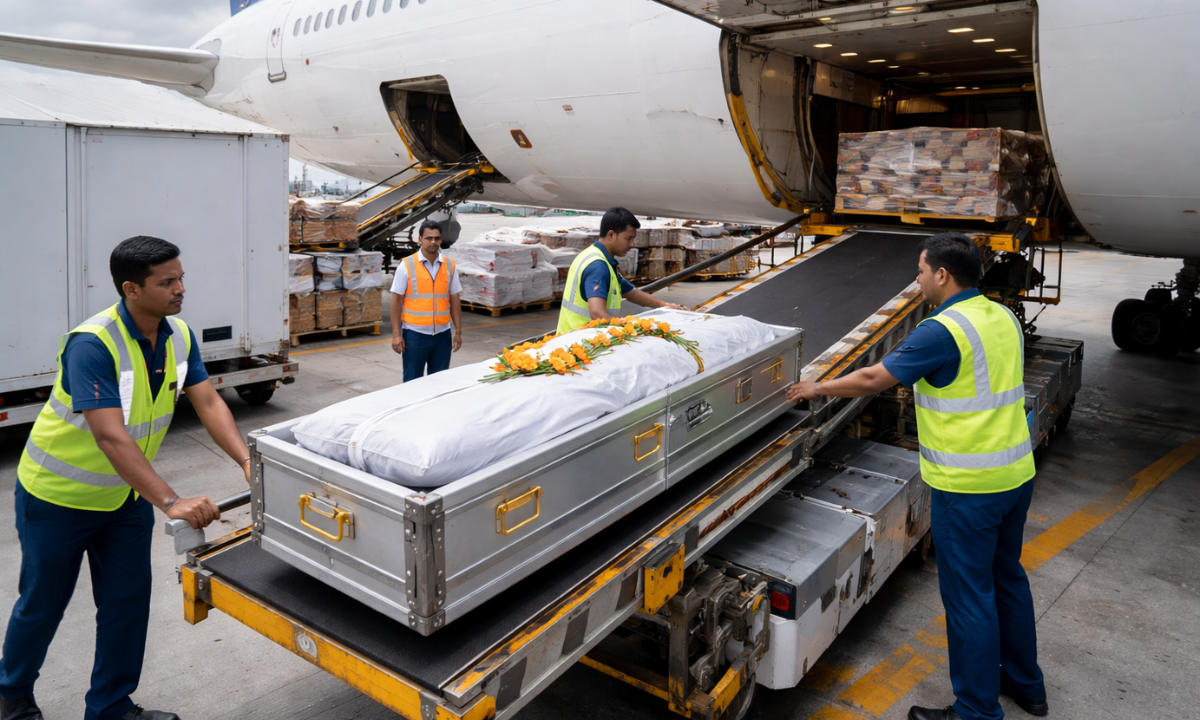
Once all documents are ready, the body is prepared for air cargo transport. This stage requires strict compliance with international aviation rules and health regulations to ensure safe and dignified transportation.
Professional coordination is essential at this point, as airlines, cargo departments, and airport authorities must all approve the shipment before departure. Proper packaging and documentation prevent last-minute delays.
The process includes:
- Professional embalming as per international standards
- Placement in a zinc-lined, hermetically sealed coffin
- Coffin sealing and certification by authorised officials
- Air cargo booking with an approved airline
- Customs clearance at the departure airport
- Coordination with the receiving authorities in India
This ensures safe and dignified dead body transportation in international repatriation.
Role of a Funeral Service Provider in India
While the Embassy handles formalities abroad, the responsibility shifts to local professionals once the mortal remains arrive in India. At this stage, timely coordination is crucial to ensure smooth airport clearance and respectful final rites.
A reliable Funeral Service Provider in India works closely with airport authorities, customs officials, and the grieving family to complete the final steps without added stress. Their role ensures that the transition from international repatriation to local arrangements is seamless.
They assist with:
- Airport cargo clearance and documentation verification
- Hearse services for safe local dead body transfer
- Assistance with home delivery or mortuary arrangements
- Coordination of religious or cultural funeral rites
- Support with cremation or burial formalities
This coordination ensures a smooth handover from international to domestic services.
Important Tips for Families
Here are some practical tips we always suggest:
- Inform the Indian Embassy immediately.
- Keep scanned copies of the passport and visa.
- Check insurance coverage details.
- Stay in constant touch with consular officers.
- Choose experienced repatriation services in India for seamless coordination.
Being informed reduces delays and stress.
Final Thoughts
Losing someone far away from home is one of the most painful experiences any family can go through. During such times, Indian Embassies become a pillar of support by handling documentation, issuing clearances, coordinating with authorities, and ensuring respectful repatriation of the deceased to India.
However, the process also requires seamless coordination with professional repatriation services in India to manage airport clearance, domestic transfer, and funeral arrangements. At Beleiv Repatriation Services, we understand this emotional journey and work closely with families to ensure that every step of dead body repatriation is handled with dignity, care, and complete transparency.
Because in the end, bringing a loved one home is not just a procedure; it is a final promise we keep with love and respect.
Frequently Asked Questions (FAQs)
1. Who should inform the Embassy about the death?
Family members are usually the first to inform the Indian Embassy, but close friends, employers, sponsors, or community representatives can also notify the Mission.
The important thing is to inform the Embassy as soon as possible. Early intimation helps officials begin documentation, coordinate with local authorities, and guide the family through the repatriation process without unnecessary delay.
2. Is NOC mandatory?
Yes, a No Objection Certificate (NOC) is absolutely mandatory for international transportation of mortal remains.
The NOC is issued by the Indian Embassy after verifying all required documents. It serves as official approval that there are no legal objections to the transfer. Without this certificate, airlines and cargo authorities will not accept the body for transportation to India.
3. Who pays for the transportation?
The cost of transportation may be covered by the employer if local labour laws require it, especially in Gulf countries. In other cases, insurance providers may bear the expenses if the deceased had valid coverage.
If neither option applies, the family may pay. In financially distressed cases, assistance may be provided through the Indian Community Welfare Fund (ICWF).
4. Can the Embassy handle unclaimed bodies?
Yes, if no family member or representative is available, the Indian Embassy can step in to manage necessary arrangements.
After proper verification and authorization, the Mission coordinates with local authorities to complete documentation and transportation formalities.
This ensures that even unclaimed cases are handled with dignity and in accordance with legal procedures and humanitarian considerations.
5. How long does the process take?
The timeline usually ranges between 3 and 14 days in cases of natural death, depending on documentation and administrative procedures.
However, if the death is accidental, suspicious, or under investigation, the process may take longer due to police enquiries, post-mortem reports, or court clearances. The Embassy works to complete formalities as quickly as regulations permit.
Reference:
1. From Google
2. https://www.eoiriyadh.gov.in/page/disposal-transportation-of-mortal-remains/