
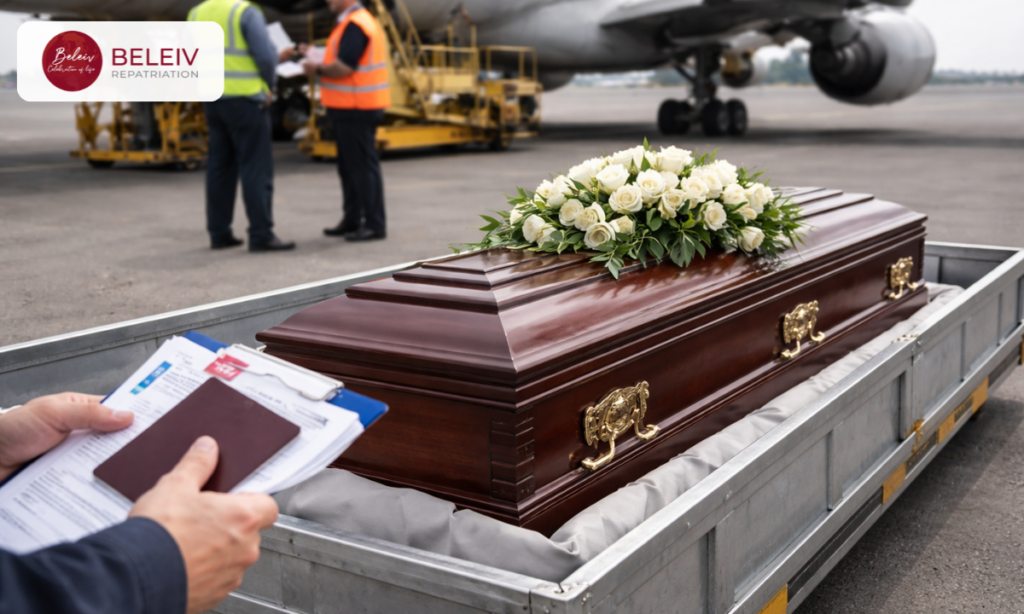
When families need to transport human remains across countries, understanding IATA regulations becomes essential to ensure a smooth and respectful journey. In such sensitive moments, following the correct procedures and relying on professional support like repatriation services in India can reduce stress and confusion.
We know how overwhelming this process can feel, especially when you are dealing with grief and urgent arrangements at the same time. That’s why having a clear, simple guide can make all the difference, and by the end of this blog, you will feel more confident navigating every step.
Key Points at a Glance
- IATA rules and regulations ensure safe and dignified international transport
- Human remains are usually transported via air cargo with strict documentation
- Proper embalming and sealed coffin packaging are mandatory
- Cremated remains have simpler transport requirements
- A permit to transport human remains is required in most countries
- Human remains transportation costs vary based on distance, airline, and services
- Professional repatriation services simplify complex legal and logistical steps
What Are The IATA Regulations For Human Remains?

The International Air Transport Association (IATA) sets global standards for transporting human remains by air. These guidelines are detailed in the Compassionate Transportation Manual (CTM), which ensures dignity, safety, and compliance.
These IATA rules and regulations are followed by airlines worldwide to maintain uniformity. They cover everything from documentation and packaging to handling and airline coordination.
In addition, these regulations clearly define responsibilities for airlines, funeral directors, and cargo handlers to avoid any confusion during transit. They also ensure that international health and safety standards are strictly followed to prevent risks during transportation. Most importantly, IATA guidelines help streamline approvals across countries, making the repatriation process faster and more organised for families.
Why Are IATA Rules Important?
We often see families unsure about where to begin when arranging international repatriation. During such emotional times, having a clear set of globally accepted guidelines brings much-needed clarity and direction.
These regulations act as a standard framework that helps avoid confusion between different countries, airlines, and authorities.
IATA regulations help create a structured process that ensures:
- Respectful handling of the deceased
- Safety for airline staff and passengers
- Compliance with international health laws
- Smooth customs clearance at both origin and destination
Without following these rules, delays, rejections, or legal complications can occur.
Required Documents to Transport Human Remains

Documentation is one of the most critical steps when planning to transport human remains by air cargo. Missing even a single document can delay the entire process.
Essential Documents Checklist
| Document | Purpose |
|---|---|
| Death Certificate | Confirms the cause and details of death |
| Embalming Certificate | Confirms body preservation |
| Passport Cancellation | Prevents identity misuse |
| Certificate of Packaging | Confirms coffin meets IATA standards |
| No Objection Certificate (NOC) | Required from the embassy/consulate |
| Permit to Transport Human Remains | Legal approval for international transfer |
We always recommend double-checking with authorities or professionals to avoid last-minute issues.
Packaging Requirements Under IATA Guidelines

Proper packaging is not just a requirement; it’s a mark of dignity and respect. It also plays a crucial role in ensuring safety during transit, especially when remains are transported across long international distances.
IATA guidelines are very specific about packaging to prevent any leakage, contamination, or damage during handling and air transport.
For Human Remains (Coffin)
- The body must be embalmed
- Placed in a zinc- or lead-lined coffin
- Coffin must be hermetically sealed
- The outer wooden crate must be used for added protection
- Packaging must prevent leakage and odour
For Cremated Remains (Ashes)
- Stored in a sift-proof container
- Placed inside a sturdy urn or outer box
- Non-metallic urns are recommended for X-ray clearance
- Can often be carried as hand baggage
Special Handling Guidelines
When transporting human remains internationally, airlines follow strict handling protocols. These procedures are designed to maintain dignity while also ensuring safety throughout the journey.
Every step, from loading to unloading, is carried out with care and sensitivity by trained personnel. Clear communication between airlines, cargo handlers, and authorities also helps prevent delays or mishandling.
Important Handling Rules
- Coffins are sanitised before transport
- Covered with a tarpaulin for discretion
- Clearly labelled as per airline guidelines
- No personal items, flowers, or wreaths allowed inside
In Case of Infectious Diseases
Extra precautions are required:
- Body wrapped in disinfected linens
- Double-sealed packaging
- Additional health clearances
These steps ensure safety for everyone involved.
How Are Human Remains Transported by Air Cargo?
Most international transfers involve shipping the deceased as cargo rather than passenger baggage.
Process Overview
| Step | Description |
|---|---|
| Booking | Coordinated with airline cargo services |
| Documentation | Verified before acceptance |
| Packaging | Inspected for compliance |
| Customs Clearance | Required at both ends |
| Delivery | Received by the funeral director at the destination |
We usually advise working with professionals who are familiar with airline procedures to avoid delays.
Human Remains Transportation Costs
One of the most common concerns families have is cost. The overall expense can vary depending on several factors, especially when transporting across international borders.
We often notice that unexpected charges arise due to documentation, airline policies, or last-minute arrangements. Understanding the cost structure in advance can help families plan better and avoid unnecessary stress during an already difficult time.
Factors Affecting Cost
- Distance between countries
- Airline cargo charges
- Type of coffin or urn
- Documentation and permits
- Funeral director services
Estimated Cost Breakdown
| Component | Cost Range (Approx.) |
|---|---|
| Air Cargo Charges | ₹1.5L – ₹5L+ |
| Documentation | ₹20,000 – ₹80,000 |
| Embalming & Coffin | ₹50,000 – ₹2L |
| Local Transport | ₹10,000 – ₹50,000 |
Note: These are general estimates, and actual human remains transportation costs may vary.
Permit to Transport Human Remains
A permit to transport human remains is mandatory in most international cases. This permit is issued by local municipal authorities or health departments. It serves as an official approval confirming that all legal, medical, and documentation requirements have been fulfilled before transportation. In many cases, authorities carefully verify the cause of death and supporting documents before granting this permission.
Key Points About Permits
- Required before air transport
- Must align with the death certificate details
- Often coordinated through funeral directors
- May require embassy approval
Without this permit, transportation cannot proceed legally.
Role of a Funeral Director or Repatriation Expert
We strongly recommend working with an experienced professional when dealing with international cases. The process involves multiple authorities, legal requirements, and strict timelines, which can be overwhelming for families to manage alone.
A trained expert understands country-specific regulations and ensures that every step is handled correctly. Their guidance also helps avoid delays, errors, or last-minute complications during transportation.
Why Professional Help Matters
- Handles documentation and embassy approvals
- Ensures compliance with IATA rules and regulations
- Coordinates with airlines and cargo services
- Reduces emotional and logistical burden on families
This is especially important for services like:
- Repatriation Services from the UK to India
- Repatriation Services from the USA to India
- Domestic and international transfers within India
Tips for Families Handling International Repatriation
We understand this process can feel overwhelming, so here are a few simple tips:
- Always start documentation early
- Work with experienced repatriation professionals
- Confirm airline-specific rules in advance
- Keep multiple copies of all documents
- Avoid packing prohibited items
These small steps can make a big difference during a difficult time.
Final Thoughts
Handling the process to transport human remains internationally requires care, patience, and strict adherence to global standards. Following IATA rules and regulations ensures that everything is done with dignity and without complications.
At such emotional times, having trusted support can make all the difference. Professional repatriation services in India help families manage everything from paperwork to final delivery with compassion and efficiency. At Beleiv Repatriation, we understand your needs and stand by you to make this journey as smooth and respectful as possible.
FAQs
1. Can we transport human remains without embalming?
In most international cases, embalming is mandatory when you transport human remains by air. This is a key part of IATA rules and regulations, as it helps preserve the body during transit and prevents any health risks. Some countries may have exceptions based on religious reasons, but these require special approvals and additional documentation, making the process more complex and time-consuming.
2. Can ashes be carried in hand luggage?
Yes, cremated remains can usually be carried as hand baggage when travelling by air. However, they must be stored in a sift-proof container and preferably placed in a non-metallic urn to pass security screening. Airline policies may differ slightly, so it’s always best to confirm in advance. Proper documentation, including a death certificate and cremation certificate, is also required.
3. How long does the human remains transport process take?
The time required to transport human remains internationally typically ranges from 3 to 7 days. This depends on how quickly documents like death certificates, embalming reports, and permits are arranged. Delays can occur if there are embassy approvals or additional health clearances involved. Working with experienced repatriation professionals can help speed up the process and ensure everything is handled efficiently.
4. Is a funeral director necessary?
A funeral director is not legally required in every case, but their role is extremely important. They help manage documentation, coordinate with airlines, and ensure compliance with IATA rules and regulations. Without professional assistance, families may face delays or confusion due to complex procedures. Having an expert handle the process can reduce stress and ensure everything is completed smoothly and respectfully.
Reference
1. From Google