
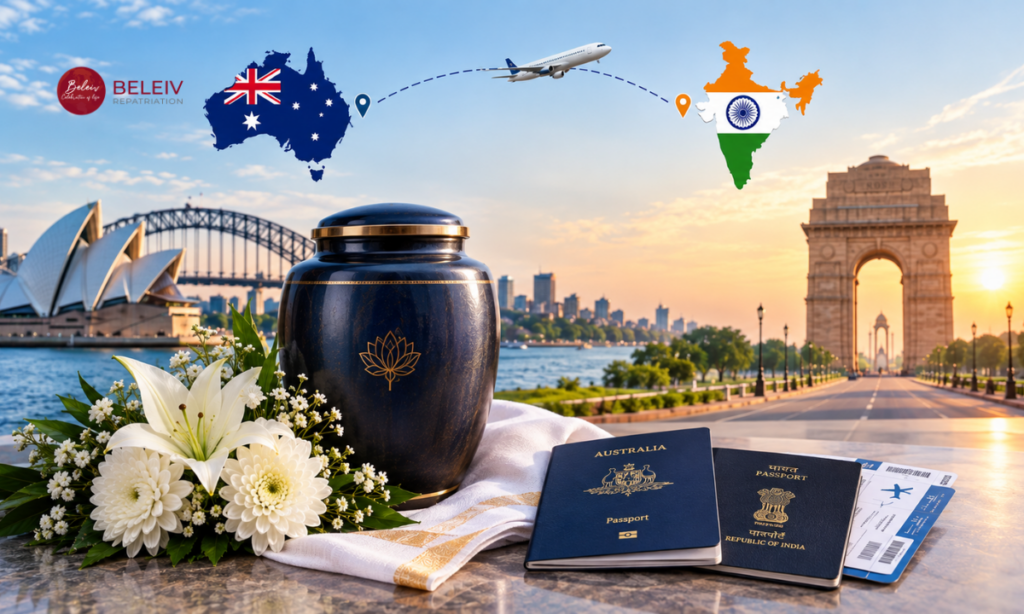
When a loved one passes away in Australia and the family wishes to bring the mortal remains back to India, several procedures need to be completed before the journey can take place.
The process generally involves registering the death, obtaining the required documents, arranging embalming and preparation, completing Indian Consulate formalities, booking airline cargo, arranging the required clearance for arrival in India, and organising transportation from the Indian airport to the final destination.
During such a difficult time, having an experienced repatriation service can help the family manage the documentation and coordination involved.
Beleiv provides Repatriation Services From Australia to India and assists families with the arrangements involved in bringing their loved ones back to India.
Can Mortal Remains Be Brought From Australia to India?
Yes, mortal remains can be transported from Australia to India after completing the required legal, documentation, preparation, consular and airline procedures.
The exact requirements can vary depending on:
- The Australian state or territory
- The circumstances of the death
- Whether a coroner or police investigation is involved
- The destination city in India
- The airline being used
- The type of transportation required
Because every case can be different, families should verify the documentation requirements before booking the shipment.
Step 1: Register the Death
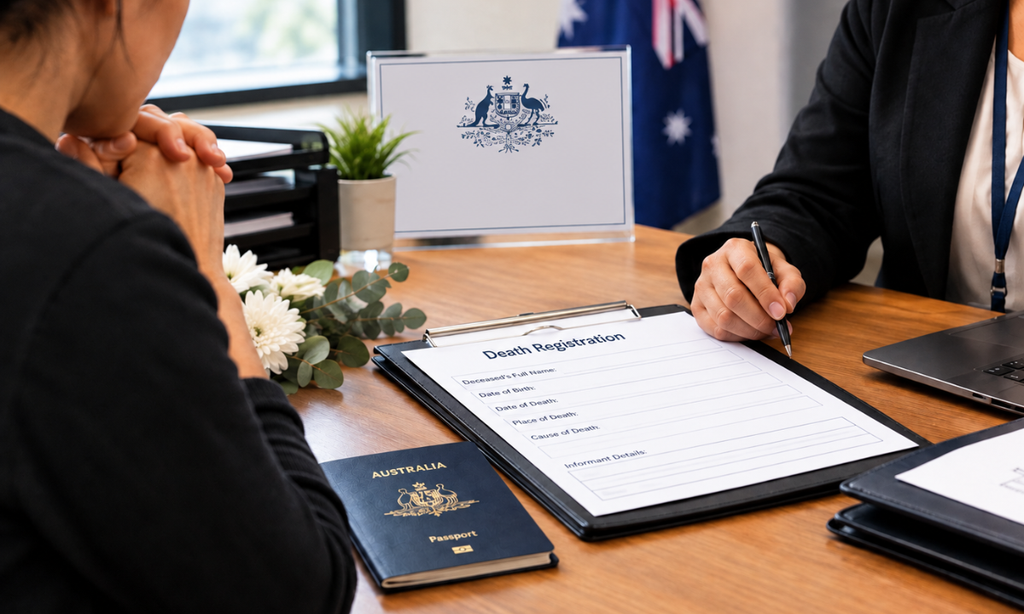
The first step is to ensure that the death is officially registered with the relevant Australian authorities.
Depending on the circumstances, a hospital, doctor, police authority or coroner may be involved.
If the death was sudden, accidental or requires investigation, the deceased may not be released immediately. The family may need to wait until the relevant procedures are completed.
Once the deceased has been released, arrangements for repatriation can proceed.
Step 2: Appoint a Funeral Director or Repatriation Service

The family should appoint a funeral director or a repatriation service experienced in international transportation of mortal remains.
The service provider can coordinate various parts of the process, including:
- Collection of the deceased
- Embalming
- Preparation of the mortal remains
- Coffin arrangements
- Documentation
- Consular formalities
- Airline cargo arrangements
- Airport handling
- Transportation in India
Beleiv can assist families through its Australia to India Repatriation Service.
Step 3: Obtain the Death Certificate
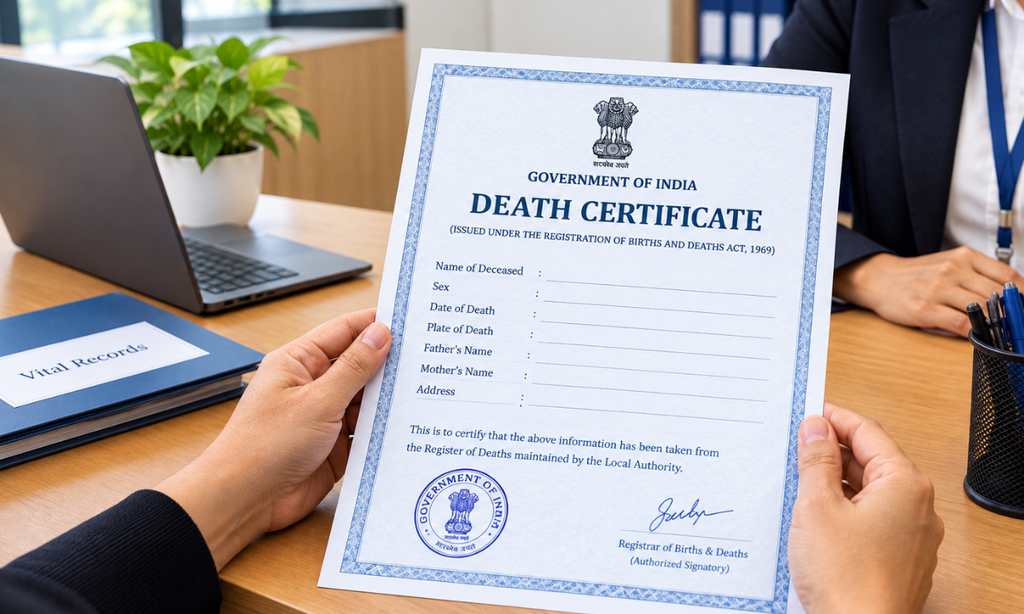
The death certificate is one of the most important documents required for repatriation.
The family should check that the information is accurate, including:
- Full name
- Date of birth
- Date of death
- Place of death
- Cause of death, where applicable
The details should match the deceased person’s identification and passport information wherever possible.
Step 4: Arrange Embalming and Preparation

The mortal remains generally need to be prepared appropriately for international transportation.
This can include:
- Embalming
- Dressing the deceased
- Preparation of the coffin
- Sealing of the coffin
- Preparation of the embalming documentation
- Other requirements related to international transportation
The funeral director or repatriation provider can coordinate these arrangements.
Step 5: Complete Indian Consulate Formalities
The required formalities with the relevant Indian Consulate or Mission in Australia should be completed before transportation.
Depending on the case, documentation may include information relating to:
- Identity of the deceased
- Passport details
- Death details
- Family or authorised representative
- Destination in India
- Repatriation arrangements
The exact requirements should be confirmed with the relevant authority or repatriation service for the specific case.
Step 6: Complete Passport Formalities
The deceased person’s passport is an important part of the documentation process.
Passport-related formalities may need to be completed before the mortal remains can be transported to India.
The family should keep all original identification and passport-related documents safely until the repatriation process has been completed.
Step 7: Arrange the Required Clearance for India
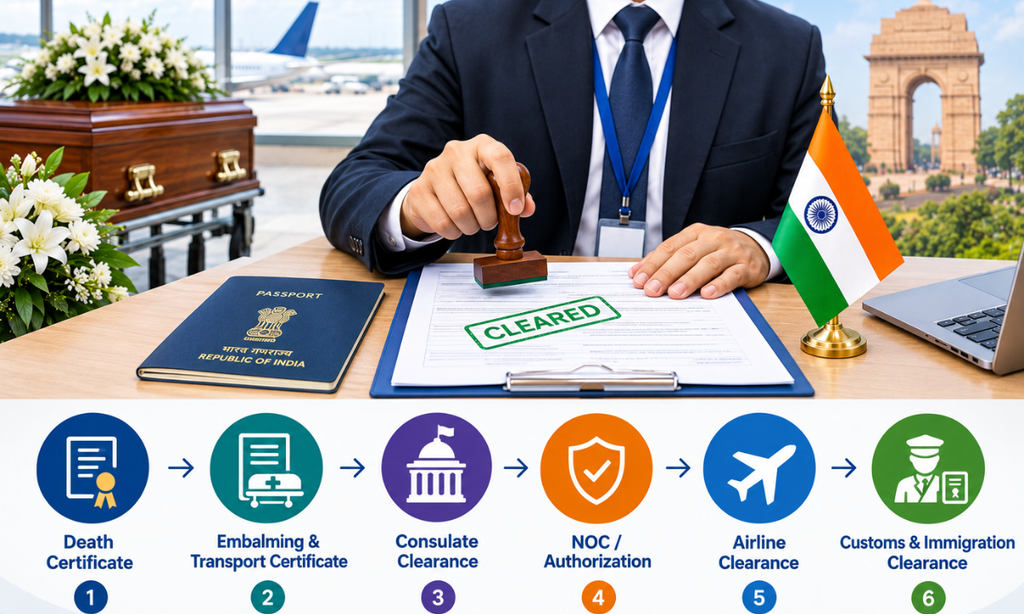
Before the mortal remains arrive in India, the necessary application and clearance procedures should be completed.
The documentation may include details such as:
- Name of the deceased
- Passport or identification details
- Date and place of death
- Embalming information
- Consular documentation
- Flight details
- Arrival airport
- Details of the person receiving the remains in India
Completing the documentation before arrival can help reduce delays at the airport.
Step 8: Book Airline Cargo

Mortal remains are generally transported through an airline’s cargo process.
The airline may request documentation relating to:
- Death certificate
- Embalming certificate
- Passport
- Consular documentation
- Coffin or packaging
- Cargo booking
- Consignee information
Airline requirements can differ, so the requirements should be confirmed before the flight is booked.
A repatriation service can coordinate the airline arrangements and help select an appropriate flight based on availability.
Step 9: Designate a Receiver in India

A person should be nominated to receive the mortal remains when they arrive in India.
This may be:
- A family member
- An authorised representative
- A funeral service provider
- Another person appointed by the family
The designated receiver should have the required identification and supporting documentation available when the remains arrive.
Step 10: Complete Airport Formalities in India
Once the flight reaches India, the required airport procedures and document verification need to be completed.
The receiving person or authorised representative may be required to present the original documents and identification.
After the relevant formalities are completed, the mortal remains can be released for onward transportation.
Step 11: Transport the Mortal Remains to the Final Destination
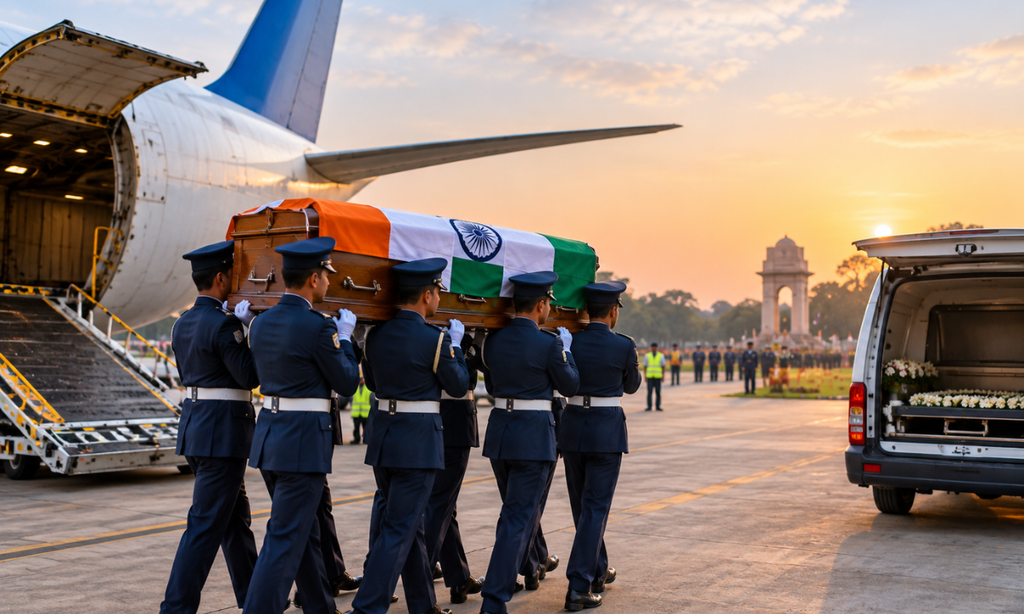
After airport clearance, the deceased can be transported to the final destination.
Depending on the family’s arrangements, this could be:
- Home
- Funeral home
- Crematorium
- Burial location
- Another city or state
It is advisable to arrange the onward transportation before the flight arrives.
Beleiv also provides Dead Body Transportation Services for transportation within India.
Documents Required to Bring Mortal Remains From Australia to India
The exact documents can vary from case to case, but families may be required to arrange:
- Death certificate
- Embalming certificate
- Indian Consulate or Mission documentation
- Passport and related documentation
- Coffin or packaging documentation
- Airline cargo documents
- Receiver or consignee details
- Police or coroner documents, where applicable
- Additional documents requested for the specific case
For a detailed checklist, see Documents Required to Bring Mortal Remains From Australia to India.
What Happens If the Death Is Accidental or Under Investigation?
If the death was accidental, sudden or otherwise requires investigation, the process may take longer.
Police or a coroner may need to complete their procedures before the deceased can be released.
This may affect:
- Release of the deceased
- Finalisation of the death certificate
- Embalming arrangements
- Consular formalities
- Airline booking
- Repatriation schedule
In such circumstances, the family should wait for the required release and documents before finalising transportation.
Can Cremated Ashes Be Brought From Australia to India?
Yes, families may choose to have the deceased cremated in Australia and then transport the ashes to India.
The procedure for transporting ashes is different from transporting a body and may involve different documentation and packaging requirements.
Families should check the applicable requirements before making travel arrangements.
How Long Does It Take to Bring Mortal Remains From Australia to India?
The time required depends on several factors, including:
- Release of the deceased
- Police or coroner procedures
- Availability of the death certificate
- Embalming
- Consular formalities
- Documentation
- Airline availability
- Cargo routing
- Airport clearance
- Transportation within India
Cases with straightforward documentation may be completed more quickly, while cases involving investigations or document delays can take longer.
Beleiv can assess the individual case and provide an estimated timeline based on the circumstances.
How Much Does It Cost to Bring Mortal Remains From Australia to India?
There is no single fixed cost for international repatriation.
The overall cost can depend on:
- Collection charges
- Funeral director charges
- Embalming
- Coffin
- Packaging
- Documentation
- Consular formalities
- Airline cargo charges
- Airport handling
- Transportation in India
- Final destination
The final quotation therefore depends on the specific requirements of the case.
How Beleiv Can Help With Repatriation From Australia to India
International repatriation involves several stages and multiple parties. During a difficult time, managing all these arrangements can be challenging for the family.
Beleiv can assist with:
- Repatriation planning
- Documentation guidance
- Collection of the deceased
- Embalming arrangements
- Coffin preparation
- Consular coordination
- Airline cargo arrangements
- Airport coordination
- Transportation within India
- Final delivery arrangements
Families can learn more about the complete process through Repatriation Services From Australia to India.
Australia to India Mortal Remains Repatriation Checklist
Before the flight, the family should confirm that:
- The death has been officially registered.
- The deceased has been released by the relevant authority.
- A funeral director or repatriation provider has been appointed.
- The death certificate is available.
- Embalming has been completed.
- Embalming documentation is available.
- Indian Consulate formalities have been completed.
- Passport formalities have been completed.
- Required clearance has been arranged.
- Airline cargo booking is confirmed.
- A receiver has been nominated in India.
- Original documents are available.
- Transportation from the Indian airport has been arranged.
Frequently Asked Questions
Can I bring a dead body from Australia to India?
Yes. Mortal remains can be transported from Australia to India after completing the applicable documentation, preparation, consular and airline formalities.
Is embalming required to transport mortal remains to India?
Embalming and an embalming certificate are generally part of the documentation required for international transportation. The exact requirements should be confirmed for the specific case.
Is Indian Consulate approval required?
Indian Consulate or Mission formalities are generally part of the repatriation process. The exact documents and procedures depend on the individual case.
Is the deceased person’s passport required?
Passport-related documentation is generally part of the repatriation process. The specific procedure depends on the circumstances and applicable requirements.
Can ashes be brought from Australia to India?
Yes. Families can choose to cremate the deceased in Australia and transport the ashes to India, subject to the applicable documentation and transportation requirements.
How long does Australia-to-India repatriation take?
The timeline depends on documentation, release of the deceased, consular procedures, airline availability and airport formalities.
Can Beleiv arrange transportation after arrival in India?
Yes. Beleiv can assist with onward transportation through its Dead Body Transportation Services.
Final Thoughts
Bringing mortal remains from Australia to India involves several important steps and documents. The process can become easier when the arrangements are coordinated by an experienced repatriation service.
The main steps are:
- Register the death.
- Obtain release of the deceased.
- Appoint a repatriation service.
- Obtain the death certificate.
- Complete embalming and preparation.
- Complete Indian Consulate formalities.
- Complete passport formalities.
- Arrange the required clearance.
- Book airline cargo.
- Complete airport procedures in India.
- Transport the deceased to the final destination.
Beleiv can assist families with bringing mortal remains from Australia to India and coordinate the different arrangements involved in the repatriation process.