
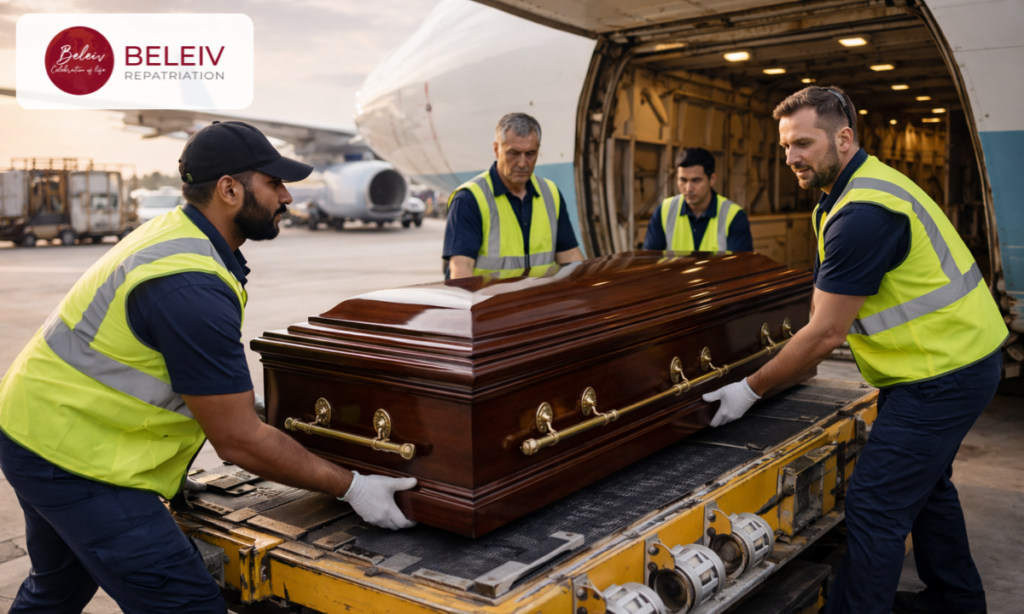
Losing a loved one while living or travelling abroad can be an extremely painful and confusing experience. In such situations, families often have to handle legal procedures, embassy coordination, and the repatriation of mortal remains, which can feel overwhelming during an already emotional time.
The process involves documentation, approvals from authorities, and careful planning for transportation of mortal remains, which is why many families choose professional dead body repatriation services in India for guidance and support.
When the death of an Indian citizen abroad occurs, or when a foreign national passes away in India, several government authorities become involved to ensure the process is carried out safely and legally. Understanding the steps involved in international repatriation can help families avoid delays and manage the process with more clarity.
In this guide, we will explain every step, document, and authority involved so you understand how repatriation works from start to finish.
Disclaimer
Procedures and requirements for repatriation may change depending on local laws and international regulations. Families are advised to contact the nearest embassy or a professional repatriation agency for the most updated guidance.
Key Points at a Glance
- Repatriation of mortal remains involves legal documentation, embassy approvals, and airline coordination.
- The Death certificate and embalming certificate are among the most important documents.
- The Indian Embassy or Consulate helps families when the death of an Indian citizen abroad occurs.
- International repatriation usually takes 3–14 days in cases of natural death.
- The Indian Community Welfare Fund (ICWF) may provide financial assistance in certain cases.
- Transportation for mortal remains is usually carried out via air cargo.
- Professional repatriation service provider teams help manage documentation and logistics.
Understanding Repatriation of Mortal Remains

Before going further, it is helpful to understand what transportation of mortal remains is. It refers to the process of returning the ashes of a deceased person from one country to another for funeral rites or burial.
This process is carefully regulated by governments, airlines, and international health authorities. Each stage involves verifying documents, preparing the body for travel, and obtaining legal approvals.
| Step | Purpose |
|---|---|
| Documentation | Verify identity and cause of death |
| Preservation | Ensure the body is safe for transport |
| Embassy clearance | Authorise international movement |
| Air transport | Transfer the remains to the destination country |
Because several authorities are involved, the process requires careful coordination.
When the Death of an Indian Citizen Abroad Occurs
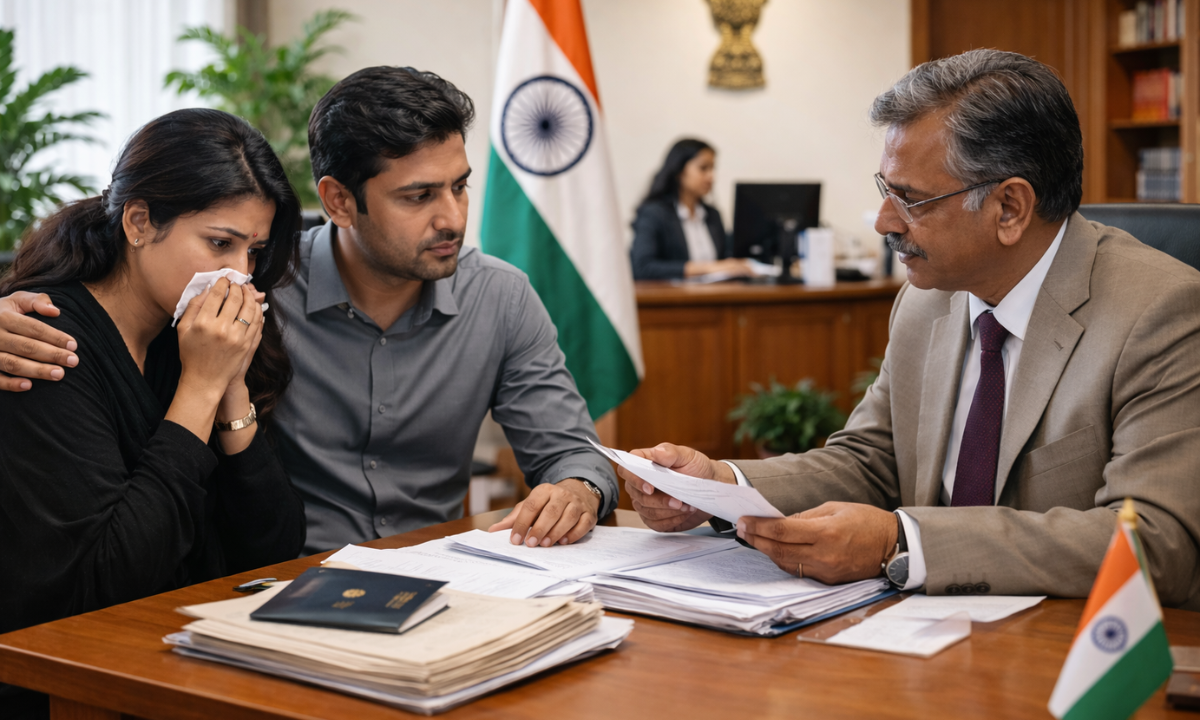
When there is the death of an Indian citizen abroad, the Ministry of External Affairs (MEA) and the Indian Embassy in that country play an important role in supporting families.
During such difficult circumstances, families often need guidance on legal procedures, documentation, and communication with local authorities. The embassy helps ensure that the process follows both the local country’s regulations and the Indian government requirements. Their support is important in speeding up approvals and helping families manage the repatriation process smoothly.
They help by:
- Verifying the Death certificate
- Issuing a No Objection Certificate (NOC)
- Coordinating with local authorities
- Assisting families with documentation
The embassy also registers the death officially and cancels the passport of the deceased before the repatriation process begins.
Key Documents Required for Repatriation
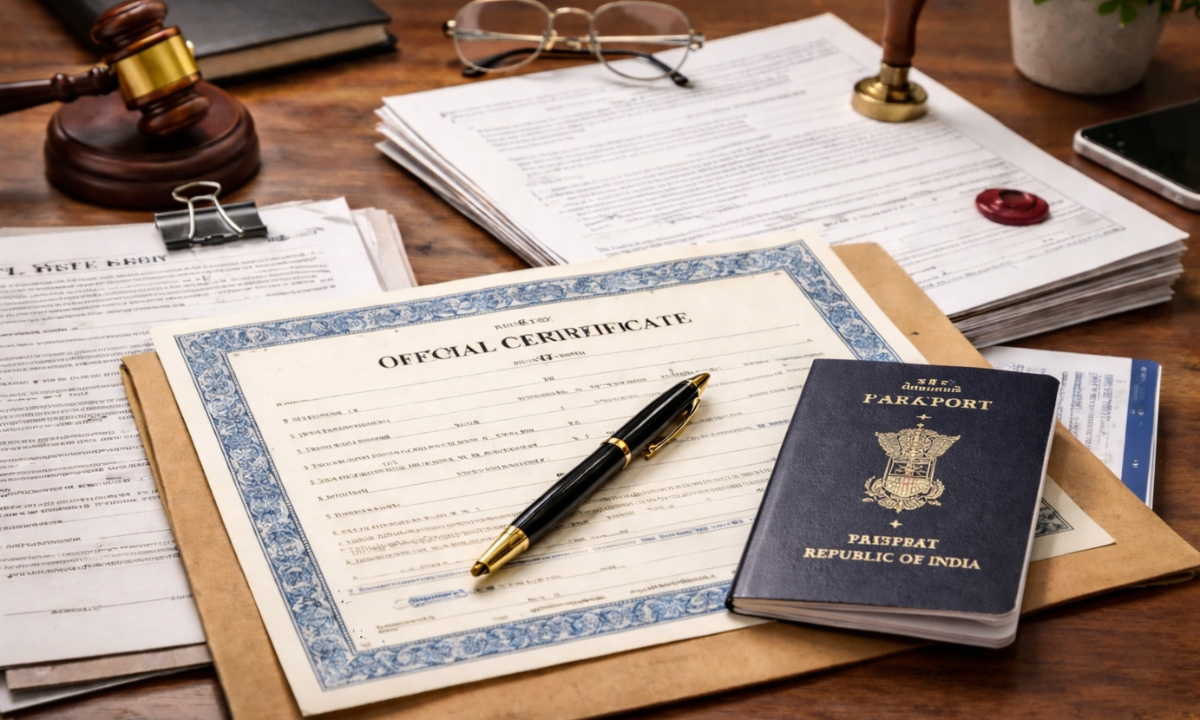
Several documents are required before transportation for mortal remains can take place. These documents confirm identity, cause of death, and health safety compliance.
In most cases, these documents are issued by different authorities, such as hospitals, police departments, embalmers, and embassy officials. Each document plays a specific role in verifying that the repatriation process meets legal and international health requirements. Ensuring that all paperwork is accurate and complete helps prevent delays during airport clearance and airline approvals.
| Document | Purpose |
|---|---|
| Death certificate | Confirms the official cause of death |
| Medical report | Provides medical details of death |
| Police report | Required for accidental or unnatural deaths |
| Embalming certificate | Confirms preservation of the body |
| Non-communicable disease certificate | Confirms the body is safe for travel |
| Passport of the deceased | Required for cancellation |
| Consent letter from next of kin | Permits repatriation |
| No Objection Certificate | Authorises transportation |
Preparing these documents correctly is one of the most important parts of international repatriation.
Role of the Embalming Certificate
Before the body can be transported internationally, it must be preserved through embalming. This process helps prevent decomposition during long-distance travel.
An embalming certificate is issued by a licensed embalming facility and confirms that the body has been properly prepared and sealed inside an airtight coffin. Airlines require this certificate before allowing transportation for mortal remains.
| Requirement | Explanation |
|---|---|
| Embalming | Preserves the body during travel |
| Sealed coffin | Prevents leakage and contamination |
| Certificate issuance | Confirms international transport compliance |
This step ensures the transportation process follows international health guidelines.
Role of Indian Missions and Consulates
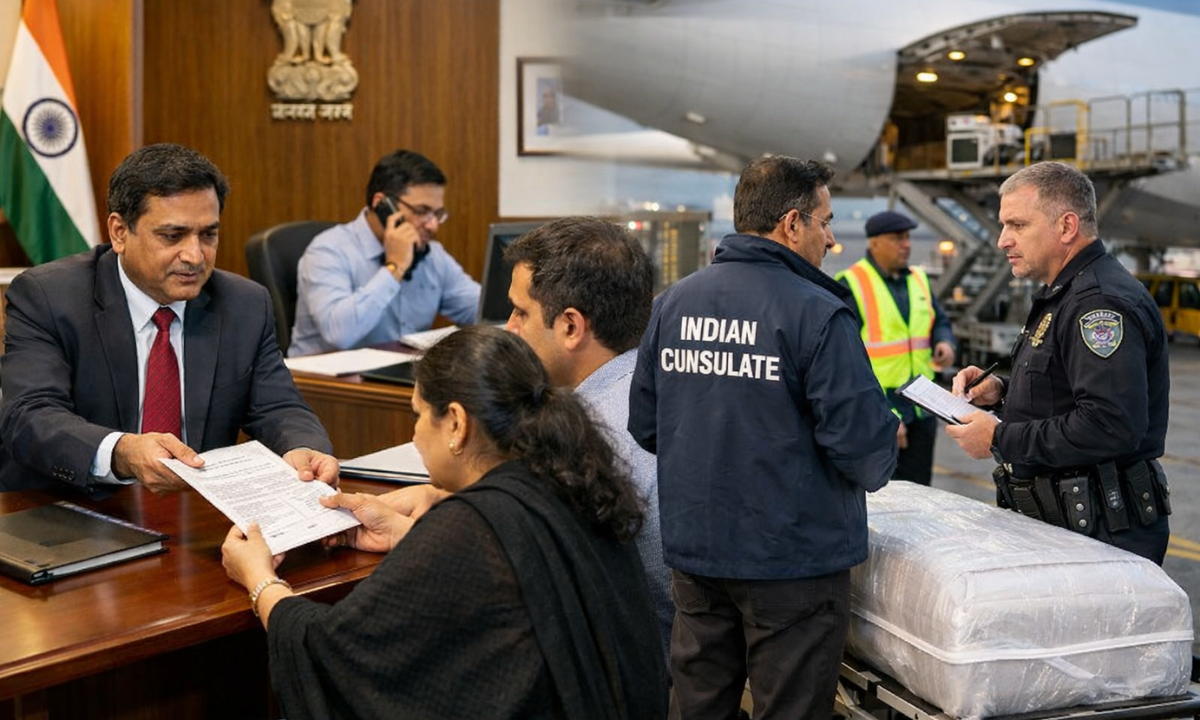
Indian embassies and consulates play a crucial role when an Indian citizen passes away abroad.
These missions act as an important link between the family in India and the local authorities in the country where the death occurred. They help ensure that all legal requirements are fulfilled and guide families through the documentation and approval process. Their involvement also helps speed up communication between hospitals, police departments, and airline authorities.
Their responsibilities include:
- Issuing the No Objection Certificate (NOC)
- Coordinating with local hospitals and police
- Helping families understand legal procedures
- Providing documentation support
In many situations, embassies prioritise repatriation requests and may even provide support during weekends or holidays.
Financial Assistance Through ICWF
In some cases, families may not have the financial resources to arrange international repatriation.
The Indian Community Welfare Fund (ICWF) helps in such situations. This fund is managed by Indian Embassies and Consulates to support Indian citizens facing emergencies abroad, including the transportation of mortal remains. Assistance is usually provided after the embassy reviews the family’s financial situation and confirms that no other support options are available.
The Indian Community Welfare Fund (ICWF) helps in such situations.
| Support Type | Details |
|---|---|
| Transportation cost assistance | Helps cover repatriation expenses |
| Local burial support | Provided that repatriation is not possible |
| Emergency financial aid | For families facing financial hardship |
This support is provided on a case-by-case basis depending on eligibility.
Repatriation for Foreign Nationals in India
The process is similar when a foreign national passes away in India. Authorities must ensure that the body is safely returned to the individual’s home country.
Steps typically include:
- Issuing an Indian death certificate
- Obtaining police clearance (if required)
- Embalming the body
- Receiving approval from the foreign embassy
- Arranging air cargo transport
The eCARe portal is also used to manage approvals from airport health authorities.
Time Required for International Repatriation
The time required for repatriation of mortal remains depends on the circumstances of the death and the documentation process.
| Situation | Estimated Time |
|---|---|
| Natural death | 3–14 days |
| Accidental or suspicious death | Several weeks |
| Complex legal cases | Longer, depending on the investigation |
Delays may occur if documents are incomplete or if police investigations are ongoing.
Costs Involved in Repatriation
International transportation of mortal remains can be expensive due to several logistical requirements.
| Expense | Estimated Cost |
|---|---|
| Embalming and a coffin | ₹40,000 – ₹80,000 |
| Documentation and legal procedures | ₹20,000 – ₹50,000 |
| Airline cargo charges | ₹100,000 – ₹200,000 |
| Total cost | ₹1.5 – ₹3 lakhs or more |
Travel insurance policies sometimes cover these costs, especially for NRIs working abroad.
Note: This is an estimate of the cost; the real cost may vary depending on the legal procedure and the airlines of the country where death occurred.
Helpful Tips for Families
Managing repatriation during a time of grief can be very difficult. A few practical steps can help make the process smoother.
- Contact the nearest embassy as soon as possible
- Keep multiple copies of all documents
- Verify airline cargo requirements
- Arrange embalming through authorised facilities
- Work with an experienced repatriation service provider
Professional assistance can help families focus on emotional healing while experts manage the logistics.
Final Thoughts
The repatriation of mortal remains is a sensitive and complex process that involves legal approvals, documentation, and coordination with embassies, airlines, and health authorities. From obtaining the death certificate and embalming certificate to arranging international transportation, every step must be handled carefully to ensure the deceased can return home with dignity.
Working with experienced dead body repatriation services in India can greatly reduce the stress for grieving families. At Beleiv Repatriation, we provide compassionate support and professional coordination to help families navigate the entire process of international repatriation smoothly and respectfully.
Frequently Asked Questions
1. What is the transportation of mortal remains?
Transportation of mortal remains refers to the process of transferring a deceased person’s body or ashes from one location to another, often across international borders. This process requires proper documentation, embalming, and airline cargo arrangements. Authorities verify all documents and approvals before allowing the body to be transported safely to the destination country.
2. Is embalming required for international repatriation?
Yes, embalming is generally required for international transportation of a body. The process preserves the body during long-distance travel and ensures compliance with international health regulations.
After the procedure, a certified embalming certificate is issued, confirming that the body has been properly prepared and sealed in an airtight coffin.
3. Who helps families when an Indian citizen dies abroad?
When there is the death of an Indian citizen abroad, the Indian Embassy or Consulate in that country assists the family. They help with documentation, issue the No Objection Certificate, coordinate with local authorities, and guide families through the repatriation process. In certain cases, they may also provide financial support through the Indian Community Welfare Fund.
4. How long does international repatriation take?
The process of international repatriation usually takes between 3 and 14 days in cases of natural death. However, if the death involves an accident or legal investigation, the process may take several weeks. The timeline depends on how quickly documents are issued and approvals are obtained from authorities.
Reference
1. From Google