
When a loved one passes away in the United States and the family wishes to bring the cremated ashes to India, having the correct documents ready is an important part of the process.
The documentation required for transporting ashes is different from the documentation required for transporting a body. Depending on the circumstances, families may need the death certificate, cremation certificate, identification documents, consular paperwork, urn packing documents and airline-related details.
The exact documents can vary depending on the U.S. state where the death occurred, the nationality of the deceased, the Indian destination, the airline and how the ashes will be transported.
Beleiv Repatriation can help families understand the documentation and coordinate the arrangements required to bring ashes from the USA to India.
For complete assistance, visit Beleiv Repatriation.
What Documents Are Required to Bring Ashes From USA to India?
The documents commonly required may include:
- Death certificate
- Cremation certificate
- Packing and sealing certificate for the urn
- Passport or identification documents of the deceased
- OCI card, where applicable
- Indian Consulate or Embassy documentation, where applicable
- Identification of the person carrying or receiving the ashes
- Airline or cargo documents
- Travel details
- Additional supporting documents depending on the case
The exact requirements should be confirmed before travelling because documentation can differ depending on the circumstances.
1. Death Certificate
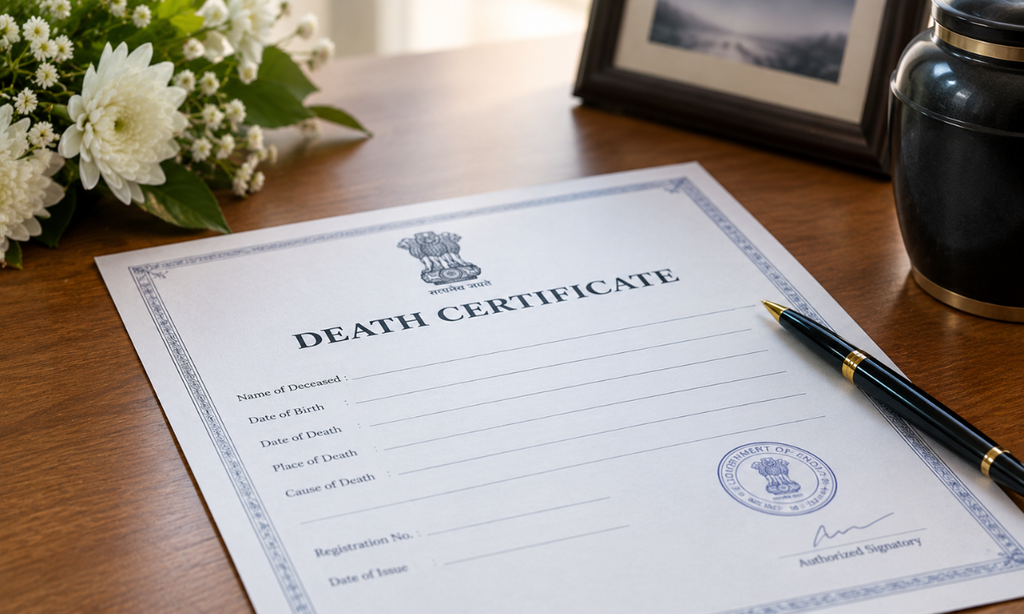
The death certificate is one of the most important documents in the process.
It confirms the death and provides the basic identity and death information of the deceased.
The family should check the document carefully for:
- Full name
- Date of birth
- Date of death
- Place of death
- Other identifying details
The information should match the deceased person’s passport or other identification documents as closely as possible.
Errors in names, dates or identification details can lead to additional documentation requirements and delays.
2. Cremation Certificate
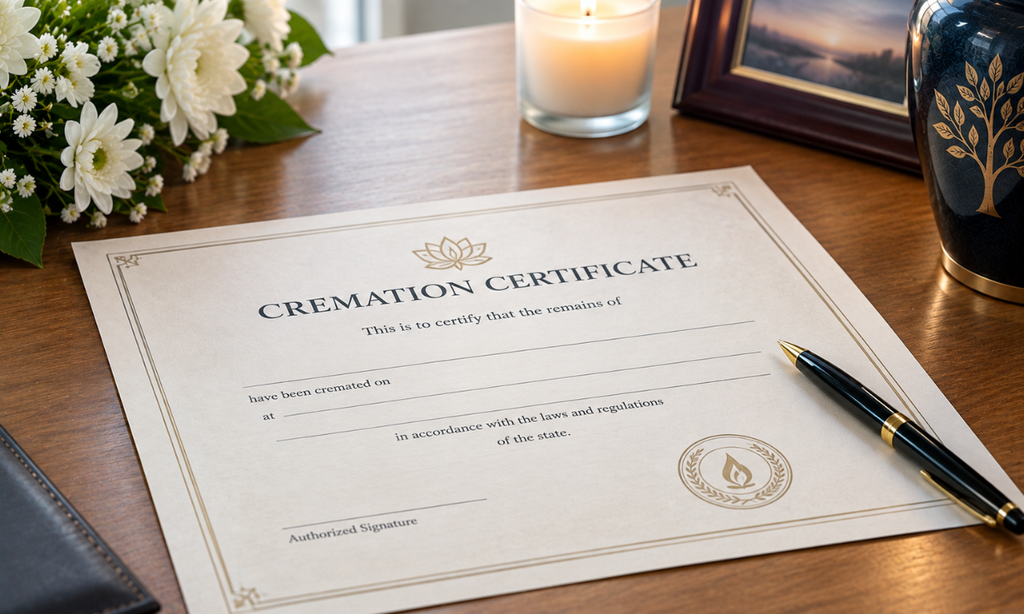
The cremation certificate confirms that the cremation has taken place.
It is an important supporting document when transporting ashes internationally.
The crematorium or funeral service provider in the USA generally provides this document after the cremation.
Families should keep the original document safely and carry copies where appropriate.
3. Packing and Sealing Certificate
Documentation confirming the packing and sealing of the urn may also be required for international transportation of ashes.
This document can establish that the cremated remains have been placed in an appropriate container and prepared for transportation.
The family should obtain the relevant documentation from the crematorium or funeral service provider before arranging transportation to India.
4. Passport of the Deceased
The deceased person’s passport may form part of the documentation required for repatriation.
Families should keep the passport and related identification documents available during the process.
Depending on the nationality and circumstances of the deceased, additional passport-related formalities may also apply.
For an Indian citizen, the family may need to complete the applicable formalities concerning the deceased person’s Indian passport.
5. OCI Card, Where Applicable
If the deceased was a foreign national of Indian origin and held an OCI card, the family may need to provide the relevant OCI documentation.
The documentation requirements can differ between:
- Indian citizens
- OCI cardholders
- U.S. citizens of Indian origin
- Other foreign nationals
The family should confirm which documents apply to the deceased before starting the transportation process.
6. Indian Consulate or Embassy Documentation
Depending on the case, documentation from the relevant Indian Mission in the USA may be required.
The applicable Indian Consulate will depend on the location and circumstances of the death.
Consular documentation may involve information such as:
- Name of the deceased
- Passport details
- Date of death
- Place of death
- Cremation details
- Details of the family member handling the process
- Transportation details
Families should check that all information submitted to the Consulate is consistent with the death certificate and identification documents.
7. Identification of the Person Carrying the Ashes
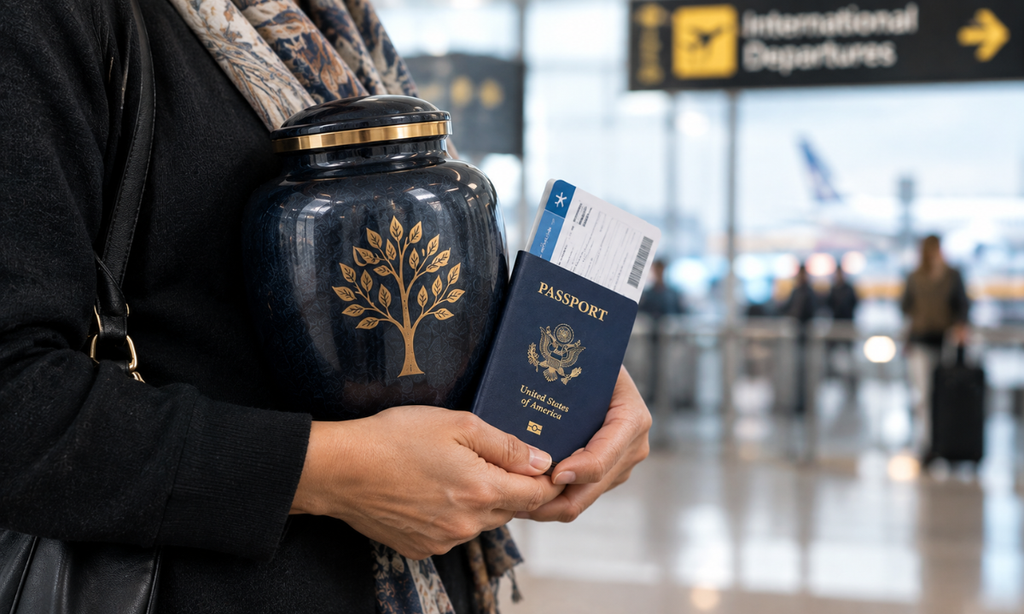
If a family member is travelling from the USA to India with the ashes, that person’s identification documents may also be relevant.
The traveller should keep:
- Passport
- Travel documents
- Contact information
- Copies of the deceased person’s documents
- Required consular documentation
- Airline-related information
Keeping these documents easily accessible during the journey can make the process more straightforward.
8. Airline Documents
Airlines can have their own requirements for transporting cremated remains.
Before booking the flight, the family should confirm:
- Whether ashes can be carried in hand baggage
- Whether ashes can be placed in checked baggage
- Whether cargo transportation is available
- Whether advance notification is required
- What type of urn is accepted
- What supporting documents must be carried
Do not assume that the requirements are identical across airlines.
The airline operating the actual journey should be contacted before travel.
9. Urn and Packaging Documents
The urn itself is also an important part of the transportation process.
Families should ensure that:
- The urn is properly sealed.
- The ashes are securely contained.
- The outer packaging is suitable for travel.
- The required packing documentation is available.
- The urn can undergo airport screening if required.
Some materials may create difficulties during security screening, so the family should consider airline and airport requirements when selecting the urn.
10. Transportation Details
The method used to transport the ashes can affect the documentation required.
Ashes may be transported through:
- Hand baggage
- Checked baggage
- Cargo
- A specialised repatriation service
The family should decide how the ashes will reach India before completing the final paperwork.
For cargo transportation, additional information such as shipment details and receiving arrangements may be required.
11. Receiving Person’s Details in India
The person receiving the ashes in India may also need to provide identification and contact information.
This may include:
- Full name
- Relationship to the deceased
- Address
- Phone number
- Identification documents
- Arrival airport
- Final destination
Having a designated receiver can make the process easier, particularly when the ashes are transported separately rather than carried by a family member.
12. Travel and Flight Details
Once the airline booking is confirmed, the family should retain all relevant travel information.
This may include:
- Flight number
- Departure airport
- Arrival airport
- Date of travel
- Passenger details
- Cargo details, where applicable
- Receiving information in India
If the ashes are being carried by a family member, the traveller should keep the relevant travel documents together with the supporting documents for the ashes.
Documents for eCARe or Indian Arrival Formalities
When ashes are being brought into India, the family may also need to complete applicable clearance procedures before or during arrival.
Depending on the circumstances, the application or clearance process may require information about:
- The deceased
- Passport or identification
- Death
- Cremation
- Transportation method
- Arrival airport
- Person receiving the ashes
The documentation requirements can change, so families should confirm the current requirements applicable to their case before travel.
What If the Passport of the Deceased Is Not Available?
A missing passport can complicate the documentation process.
The family should inform the relevant authority or repatriation provider as early as possible rather than waiting until the date of travel.
Depending on the circumstances, alternative documentation or an explanation may be required.
The important thing is to identify the issue early so that it does not create a last-minute delay.
What If the Death Certificate Has Incorrect Information?
Check the death certificate before making transportation arrangements.
Important details to verify include:
- Spelling of the name
- Date of birth
- Date of death
- Place of death
- Identification details
If there is a mismatch between the death certificate and passport, the family should clarify the issue before submitting the documents for transportation.
What If the Documents Are Not in the Required Format?
Some documents may need to be issued, certified, translated or otherwise prepared before they can be used for international transportation.
The family should not assume that a document issued by one authority will automatically satisfy another authority’s requirements.
A repatriation service can help identify missing documents before the transportation is booked.
Documents Required if a Family Member Carries the Ashes
When a family member personally carries the ashes from the USA to India, it is sensible to keep a complete document folder.
Documents for the deceased
- Death certificate
- Cremation certificate
- Passport or identification
- OCI documentation, where applicable
- Other supporting documents
Documents for the ashes
- Cremation documentation
- Packing certificate
- Sealing certificate
- Urn-related documents
Traveller documents
- Passport
- Flight ticket
- Boarding pass
- Identification
- Relevant consular paperwork
Receiving details
- Contact information of the family in India
- Final destination
- Arrival airport details
Documents Required When Ashes Are Sent Separately
When the ashes are transported through cargo or a repatriation service rather than being carried by a relative, additional shipment-related documents may be required.
These can include:
- Cargo booking details
- Shipment information
- Consignee details
- Airway bill, where applicable
- Receiving person’s information
- Airport handling documentation
The exact requirements depend on the transportation method and service provider.
Common Documentation Mistakes to Avoid
Name Mismatch
Make sure the name is consistent across the death certificate, passport, cremation certificate and other documents.
Missing Cremation Certificate
Do not leave the crematorium without confirming that the appropriate cremation documentation has been received.
Incorrect Urn Documentation
Confirm that the packing and sealing documentation corresponds to the urn being transported.
Not Checking Airline Rules
Government or consular documentation alone does not guarantee airline acceptance.
Leaving Documentation Until the Last Minute
Start the paperwork early so there is time to correct errors or obtain missing documents.
How Beleiv Repatriation Can Help
Bringing ashes from the USA to India can involve the crematorium, family, Indian Consulate, airline, airport authorities and receiving relatives.
Beleiv Repatriation can help families coordinate the process, including:
- Documentation guidance
- Cremation-related arrangements
- Consular coordination
- Urn and packaging coordination
- Airline coordination
- Transportation arrangements
- Arrival coordination in India
- Final transportation support
For more information, see Repatriation Services From USA to India.
Checklist: Documents Required to Bring Ashes From USA to India
Before the ashes leave the USA, check that you have:
- Death certificate
- Cremation certificate
- Packing and sealing certificate
- Passport or identification of the deceased
- OCI documentation, where applicable
- Indian Consulate documentation, where applicable
- Passport of the person carrying the ashes
- Airline documentation
- Flight details
- Receiving person’s details in India
- Cargo documents, where applicable
- Any additional documents requested for the individual case
Keeping everything in one organised folder can make the process easier for the family.
Frequently Asked Questions
What documents are required to bring ashes from USA to India?
Common documents include the death certificate, cremation certificate, urn packing and sealing documentation, identification documents of the deceased and applicable consular and transportation documents.
Is a cremation certificate required?
A cremation certificate is an important document confirming that the cremation has taken place and should be retained by the family.
Is the passport of the deceased required?
Passport-related documentation may be required depending on the nationality and circumstances of the deceased.
Is an Indian Consulate document required?
Depending on the case, Indian Consulate or Embassy formalities may apply. Families should confirm the requirements relevant to their location and circumstances.
Can a family member carry the ashes to India?
This may be possible, depending on the airline and applicable travel requirements. The family member should confirm the airline’s rules before travelling.
Can ashes be sent from the USA to India without a family member travelling?
Yes, arrangements may be possible through cargo or a specialised repatriation service, depending on the applicable requirements.
What type of urn can be used?
The urn should be suitable for transportation and airport screening. The family should confirm the requirements before selecting the urn.
How long does it take to prepare the documents?
The timeline depends on the availability of the death certificate, cremation certificate, consular paperwork and transportation arrangements. Starting the process early can help avoid delays.
Final Thoughts
Bringing ashes from the USA to India requires careful preparation of both personal and transportation documents.
The main documents families should prepare include:
- Death certificate
- Cremation certificate
- Urn packing and sealing documentation
- Passport or identification documents
- OCI documentation, where applicable
- Indian Consulate documentation, where applicable
- Airline and transportation documents
- Receiver details in India
The exact requirements can vary from one case to another. Families should therefore confirm the applicable documentation before the ashes are transported.
Beleiv Repatriation can help families coordinate the documentation and arrangements involved in bringing cremated ashes from the USA to India. Learn more about Repatriation Services From USA to India.