
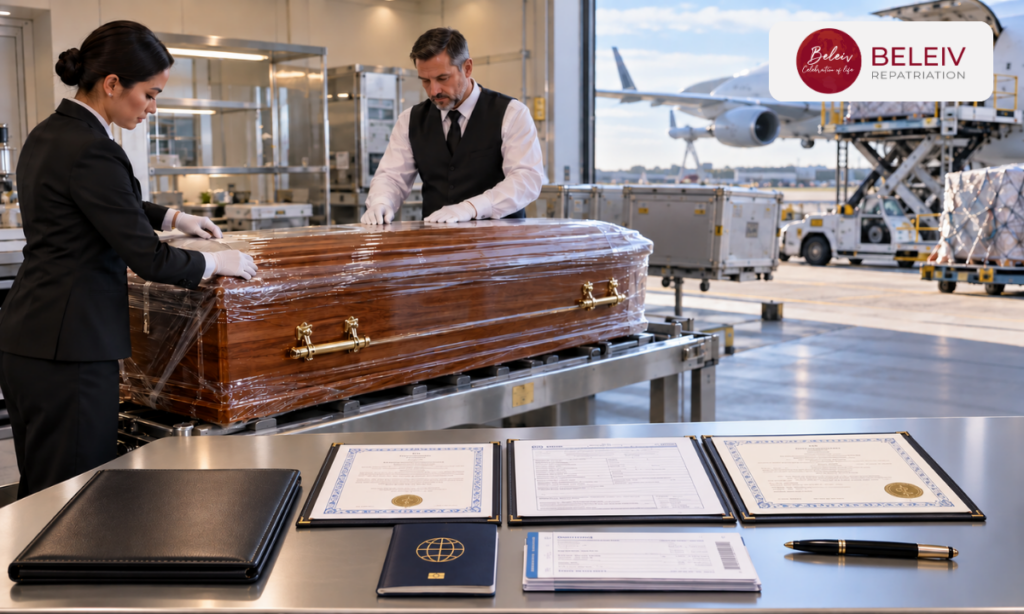
When a loved one passes away in another country and the family wishes to bring the mortal remains back to India, embalming is an important part of the international repatriation process.
Embalming helps preserve the body during transportation and prepares the deceased for long-distance travel. It is also associated with the documentation and packaging requirements involved in international transportation.
The exact embalming procedure and documentation can vary depending on the country where the death occurred, the circumstances of death, the destination country, the airline and the applicable health regulations.
Beleiv Repatriation helps families coordinate embalming, documentation, transportation and other arrangements required for international repatriation.
For complete assistance, visit Beleiv Repatriation.
What Is Embalming?

Embalming is a process used to temporarily preserve a deceased person’s body and slow down natural decomposition.
For international repatriation, embalming is carried out by a qualified professional according to the applicable regulations and the requirements of the destination country.
The process generally involves treatment of the body using approved preservation methods, followed by preparation for transportation.
Embalming should not be confused with permanent preservation. It is primarily intended to preserve the body for a period of time while funeral, transportation and final arrangements are completed.
Why Is Embalming Important for International Repatriation?
International transportation can involve considerable travel time.
A body may need to be:
- Collected from a hospital or mortuary
- Transported to a funeral home
- Prepared for international transportation
- Stored before the flight
- Transported by air
- Cleared at the destination airport
- Transported to another city in India
Embalming can help preserve the body’s condition during this process.
It also forms part of the documentation required for many international repatriation arrangements.
Is Embalming Required for International Repatriation?
The requirements depend on the destination country, the circumstances of the death and the transportation method.
For transportation of human remains to India, an embalming certificate is generally an important part of the documentation for airport health clearance.
The certificate may need to contain information about the embalming procedure and preparation of the body.
However, special circumstances can result in different preparation or packaging requirements. Families should therefore confirm the applicable requirements for the individual case before transportation is arranged.
What Does the Embalming Process Involve?
The exact procedure is carried out by a qualified embalmer and can vary according to the condition of the deceased and applicable regulations.
The preparation may include:
1. Identification
The identity of the deceased is confirmed using the available official documentation.
2. Preparation of the Body
The body is carefully cleaned and prepared before the preservation procedure begins.
3. Embalming Procedure
Approved embalming methods are used by the embalmer according to the applicable professional and regulatory requirements.
4. Personal Care
The deceased may be dressed and prepared according to the family’s wishes and the requirements for transportation.
5. Final Preparation
After embalming, the deceased is prepared for placement in the coffin or other approved transportation container.
6. Documentation
The embalmer or funeral home prepares the required embalming certificate and other supporting documentation.
What Is an Embalming Certificate?
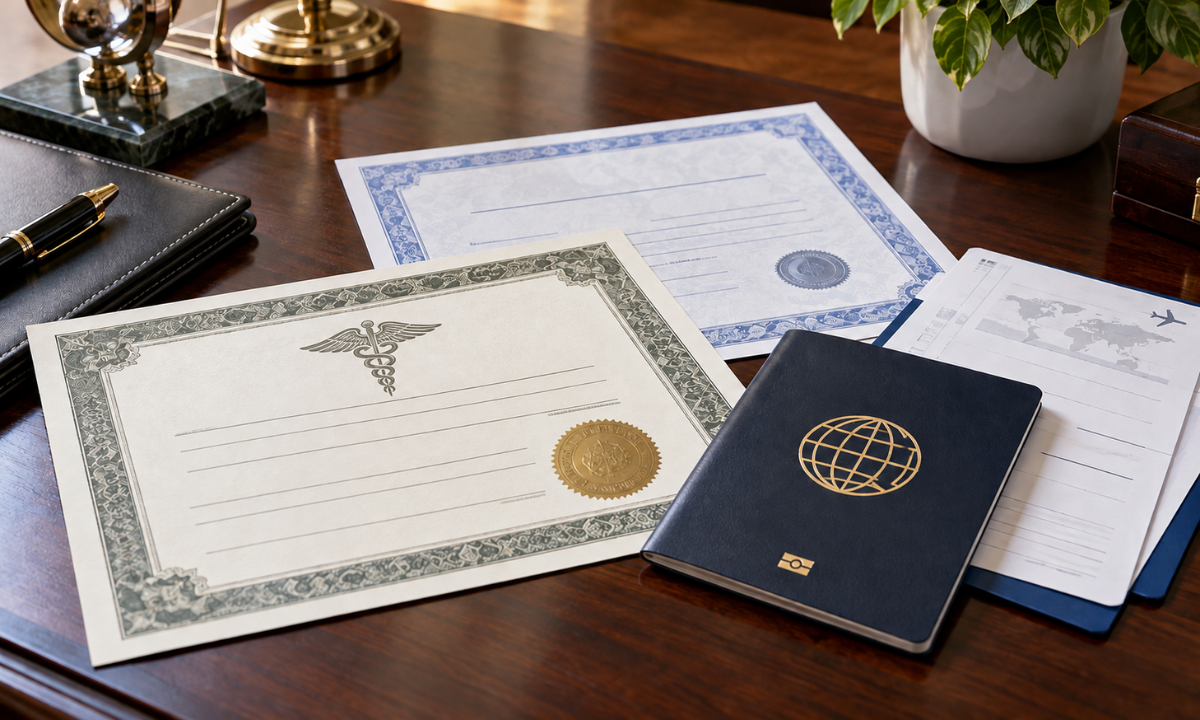
An embalming certificate is a document confirming that the deceased has been embalmed and prepared for transportation.
It is an important document for international repatriation.
Depending on the requirements applicable to the destination, the certificate may include information such as:
- Name of the deceased
- Date of birth or age
- Date of death
- Date of embalming
- Place of embalming
- Details of the embalming procedure
- Information about the chemicals or preservation method used, where required
- Packaging or sealing information, where applicable
- Name and details of the authorised embalmer
Families should review the certificate carefully before the flight is booked.
What Information Should Be Correct on the Embalming Certificate?
The information on the embalming certificate should match the other repatriation documents.
Pay particular attention to:
- Spelling of the deceased’s name
- Passport number
- Date of birth
- Date of death
- Place of death
- Date of embalming
A mismatch between documents can result in additional verification or delays.
Does the Embalming Certificate Need to Be in English?
When mortal remains are being transported to India, the documents used for clearance may need to be in English or accompanied by an appropriate translation.
If the embalming certificate is issued in another language, the family should arrange the required translation before the repatriation process is completed.
The translated document should follow the applicable certification requirements.
Who Performs the Embalming?
Embalming should be carried out by a qualified professional authorised to perform the procedure in the country where the death occurred.
The funeral director or repatriation provider generally coordinates with the appropriate funeral home or embalmer.
The family should avoid arranging embalming through an unqualified provider, particularly when the body will be transported internationally.
When Is Embalming Performed?
Embalming is generally arranged after the deceased has been released by the hospital, police, coroner or other relevant authority.
The timing can depend on:
- Cause of death
- Police investigation
- Coroner procedures
- Funeral home availability
- Documentation
- Flight schedule
If the death is under investigation, embalming may have to wait until the relevant authority releases the deceased.
What Happens After Embalming?
After embalming, several further arrangements may need to be completed before the deceased can travel.
These may include:
- Preparing the embalming certificate
- Preparing the coffin
- Completing sealing and packaging
- Completing consular documentation
- Arranging required clearance
- Booking airline cargo
- Confirming the receiving person in India
- Preparing airport arrangements
This means embalming is one part of the overall repatriation process rather than the final step.
Coffin and Packaging After Embalming
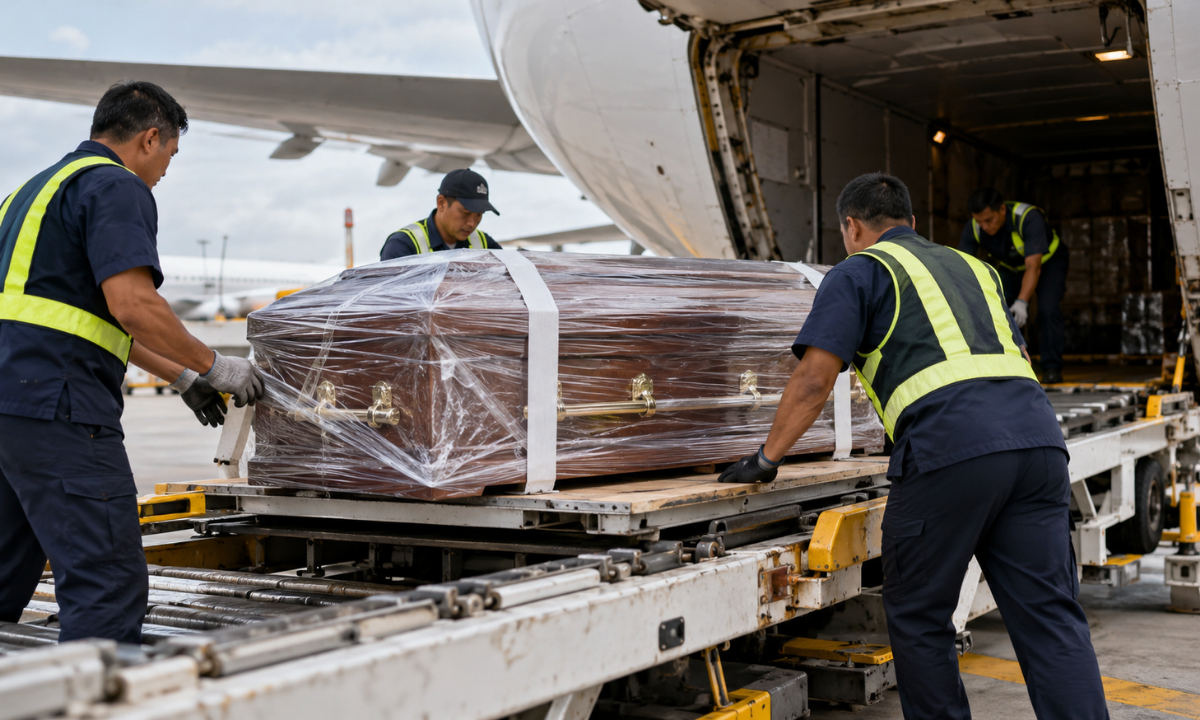
The deceased must be prepared and packaged according to the transportation and destination requirements.
Depending on the applicable regulations, international transportation may involve:
- A suitable inner container
- A sealed coffin
- Protective outer packaging
- Required documentation
- Airline-approved handling arrangements
The funeral director should confirm the packaging requirements before the coffin is finalised.
Can a Body Be Repatriated Without Embalming?
Some cases may involve different preparation requirements rather than standard embalming.
For example, the circumstances of death, the condition of the body or other health and safety considerations can affect the preparation procedure.
When embalming is not undertaken, additional packaging or documentation requirements may apply.
Families should not assume that the same process applies to every case.
The appropriate procedure should be confirmed with the funeral director, repatriation provider and relevant authorities before transportation is booked.
Embalming After an Accidental or Unnatural Death
An accidental or unnatural death may require additional procedures before embalming can take place.
The police, coroner or another authority may need to complete an investigation and release the deceased first.
This can affect:
- Timing of embalming
- Availability of the death certificate
- Funeral arrangements
- Consular documentation
- Airline booking
- Overall repatriation timeline
For such cases, families should allow additional time for the necessary procedures.
Embalming for Repatriation From Australia to India
When bringing a body from Australia to India, the embalming process needs to be coordinated with the Australian funeral provider and the requirements applicable to arrival in India.
Families may need:
- Death certificate
- Embalming certificate
- Passport documentation
- Consular documentation
- Packaging documentation
- Airline documents
- Required clearance for arrival in India
For complete Australia-to-India assistance, see Repatriation Services From Australia to India.
Embalming for Repatriation From USA to India
The process can be different depending on the U.S. state where the death occurred.
The family may need to coordinate:
- Funeral home
- Embalmer
- Cremation or burial decision
- Death certificate
- Indian Consulate requirements
- Coffin and packaging
- Airline cargo
- Receiving arrangements in India
For assistance with USA-to-India repatriation, see Repatriation Services From USA to India.
Embalming for Repatriation From UK to India
Families arranging repatriation from the UK may also need to coordinate embalming with the funeral director before the body is transported internationally.
The process can involve:
- Collection of the deceased
- Funeral home preparation
- Embalming
- Death documentation
- Required consular paperwork
- Coffin preparation
- Airline arrangements
- Transportation in India
The exact procedure depends on the circumstances and destination.
How Long Does Embalming Take?
The time required can vary depending on:
- Condition of the deceased
- Type of preparation required
- Funeral home availability
- Documentation
- Cause of death
- Release by the relevant authorities
- Transportation schedule
Embalming itself may be completed within a relatively short period, but the overall preparation for international repatriation can take longer because several other procedures need to be completed.
Families should therefore distinguish between embalming time and the total repatriation timeline.
How Much Does Embalming Cost for International Repatriation?
There is no single fixed embalming price.
The cost can depend on:
- Country and city
- Funeral home
- Condition of the body
- Type of preparation required
- Documentation
- Coffin requirements
- Transportation arrangements
- Additional services
Embalming may be included as part of a complete repatriation package or listed as a separate service.
Families should ask for an itemised quotation so they know whether embalming, the certificate and related preparation are included.
What Documents Are Usually Associated With Embalming?
Depending on the case, documentation may include:
- Embalming certificate
- Death certificate
- Medical documentation
- Non-infectious disease certificate, where applicable
- Packaging certificate
- Sealing documentation
- Consular documents
- Airline documents
For a detailed documentation guide, see Documents Required to Bring Mortal Remains From Australia to India.
Common Mistakes Families Should Avoid
Booking the Flight Before Preparation Is Complete
The flight should be coordinated after confirming that the deceased can be released and the required documentation can be completed.
Not Checking the Embalming Certificate
Make sure the certificate contains the information required for the destination and transportation process.
Name Mismatches
The name on the embalming certificate, death certificate, passport and other documents should be consistent.
Ignoring Packaging Requirements
Embalming alone does not complete the requirements for international transportation. Coffin, sealing and packaging also need to be arranged correctly.
Choosing an Unqualified Embalmer
International repatriation involves stricter requirements than ordinary funeral arrangements. The embalmer should be suitably qualified and authorised.
How Beleiv Repatriation Can Help
International repatriation requires coordination between the funeral home, embalmer, authorities, Consulate, airline and receiving family.
Beleiv Repatriation can assist with:
- Funeral home coordination
- Embalming arrangements
- Embalming documentation
- Coffin arrangements
- Consular coordination
- Airline cargo booking
- Airport arrangements
- Documentation guidance
- Transportation in India
- Final delivery
For complete assistance, see Beleiv Repatriation.
Embalming for International Repatriation Checklist
Before the body is transported internationally, families should confirm:
- The deceased has been formally released.
- A qualified embalmer has been appointed.
- Embalming has been completed.
- An embalming certificate is available.
- Details on the certificate are correct.
- Death certificate is available.
- Required translations are complete.
- Coffin and packaging requirements are satisfied.
- Consular documentation is complete.
- Required clearance has been arranged.
- Airline cargo booking is confirmed.
- Receiving arrangements in India are ready.
Frequently Asked Questions
Is embalming required for international repatriation?
Embalming is commonly required or strongly associated with international transportation of mortal remains, but the exact requirements depend on the destination country and the circumstances of the death.
Why is embalming done before international transportation?
Embalming helps preserve the body during transportation and preparation for the journey. It also supports compliance with documentation and transportation requirements.
Who performs embalming?
A qualified and authorised embalmer or funeral professional should perform the procedure according to the applicable local requirements.
Is an embalming certificate required?
An embalming certificate is an important part of the documentation for international transportation of human remains and may be required for clearance at the destination.
What should an embalming certificate contain?
It should contain accurate identification information and details of the embalming and preparation procedure required for the destination.
Can a body be transported without embalming?
Some cases may be handled using alternative preparation and packaging requirements. The applicable procedure depends on the circumstances and destination requirements.
Does embalming affect the cost of repatriation?
Yes. Embalming is generally one of the costs that can form part of an international repatriation quotation.
How long does embalming take?
The procedure itself can vary in duration, but the overall preparation for international repatriation can take longer because documentation, packaging, consular procedures and airline arrangements may also be required.
Can Beleiv Repatriation arrange embalming?
Beleiv Repatriation can coordinate embalming and other preparation arrangements as part of the international repatriation process.
Final Thoughts
Embalming is an important part of many international body repatriation arrangements. It helps prepare the deceased for transportation and is closely connected with the documentation, coffin, packaging and health-clearance requirements that apply when mortal remains are transported internationally.
The overall process generally involves:
- Release of the deceased
- Appointment of a qualified embalmer
- Embalming and preparation
- Issuance of the embalming certificate
- Coffin and packaging
- Consular documentation
- Required clearance
- Airline cargo arrangements
- Airport handling
- Transportation to the final destination
Because requirements vary depending on the country and circumstances, families should confirm the applicable procedures before finalising the transportation.
Beleiv Repatriation can assist families with embalming coordination, documentation, airline arrangements and transportation when bringing a loved one back to India.