

Losing a loved one is an emotionally overwhelming experience. The weight of that loss compounds significantly when their passing occurs far from home. Navigating the complex logistical and legal landscape to bring them back to their final resting place can feel incredibly daunting when your family simply needs the time to grieve.
Whether you are arranging local cremation services in Bangalore or desperately searching for international repatriation help to cross global borders, understanding the strict regulatory requirements is vital to ensuring a dignified and delay-free journey.
Among the maze of administrative clearances required to transport a deceased individual, the certificate of embalming stands out as one of the most critical documents.
This certificate is much more than a mere administrative formality. It is a legally mandated health declaration required by domestic airlines, global cargo networks, and government border authorities alike.
During sudden emergencies, managing paperwork can feel deeply burdensome. However, these specific regulations exist to ensure the absolute highest standards of safety, dignity, and international public health compliance for your loved one’s final transit.
In this guide, we will break down exactly what this document entails, why it is an absolute requirement under Indian and international aviation laws, and the exact steps you need to take to obtain it efficiently during a time of crisis.
Key Points at a Glance
- Absolute Necessity: An embalming certificate is a non-negotiable legal requirement for all forms of dead body transportation involving domestic air cargo or international flights.
- Dual Purpose: The procedure ensures public health biosecurity by sanitising the remains and provides necessary preservation to delay natural decomposition during long-distance transit.
- Strict Disclosures: To pass customs and Airport Health Organisation (APHO) clearance, the document must explicitly state the embalmer’s credentials, the specific chemicals used, and a formal “free from infection” declaration.
- The Paperwork Ecosystem: The certificate does not stand alone; it must be presented alongside a certified death certificate, an Indian Embassy NOC (for cross-border travel), and a cancelled passport.
What is an Embalming Certificate and Why is it Legally Required?
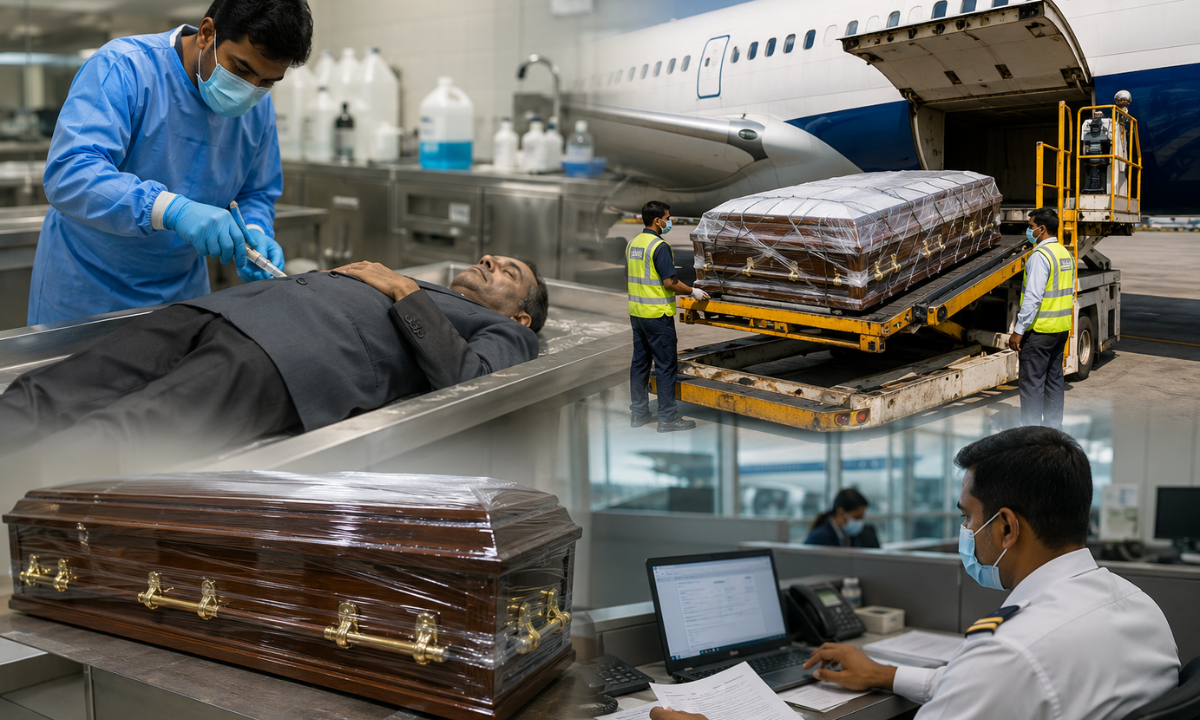
The embalming of a body is a highly specialised medical procedure that involves treating human remains with a precise mixture of chemical fixatives and sanitising fluids.
This respectful and meticulous process serves two profound purposes: it temporarily delays natural deterioration, keeping the body preserved for extended periods, and it sanitises the remains to ensure there is no risk of public health hazards during the journey.
When a family is arranging dead body transportation, especially via domestic air cargo, international flights, or extensive rail lines, obtaining an official embalming certificate is a non-negotiable legal requirement.
Here is exactly why aviation and government authorities enforce this mandate so strictly:
1. Public Health and Biosecurity:
International and domestic aviation regulations require strict compliance with World Health Organisation (WHO) protocols. The certificate serves as an official medical declaration that the remains pose absolutely zero biosecurity risk to transit staff, flight crews, or the general public.
2. Airline Acceptance Mandates:
Commercial airlines will flatly refuse the carriage of human remains without a valid embalming certificate. Alongside this document, they require a formal declaration that the coffin or casket has been hermetically (airtight and waterproof) sealed.
3. Cross-Border and Customs Clearances:
For families managing the repatriation process through the Government of India’s eCARe (e-Clearance for Afterlife Remains) portal, this certificate is a mandatory upload. Without it, Airport Health Organisations (APHO) cannot grant final customs clearance, and the cargo will not be permitted to load at the origin airport.
It is important to note that while short-distance road transfers within the same city using a specialised freezer mortuary van might not always demand this level of documentation, any long-distance transit or air travel inherently makes embalming a mandatory step in honouring your loved one’s final journey.
We understand that the thought of medical procedures at this stage can be deeply distressing. However, authorised professionals approach this task with the utmost dignity, reverence, and care, ensuring your loved one is preserved respectfully and securely for their journey home.
Step-by-Step Process to Obtain an Embalming Certificate in India
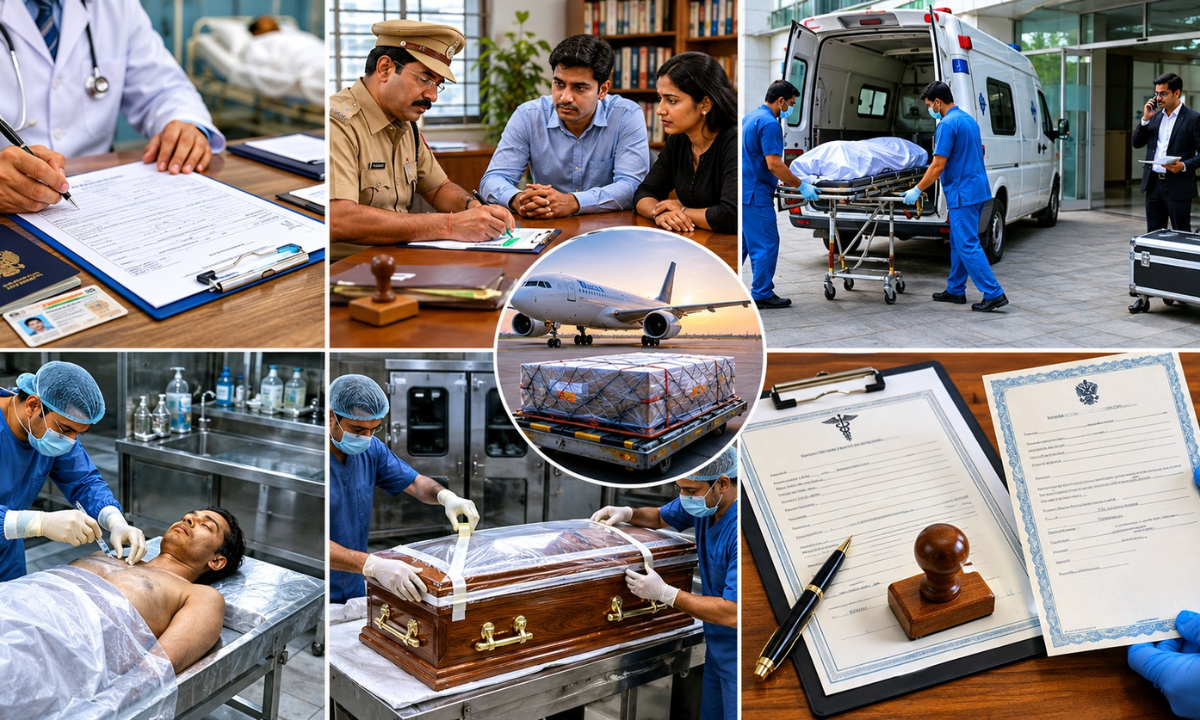
Securing an embalming certificate requires navigating a specific sequence of medical and administrative procedures. As the timeframe is often tight, particularly when coordinating with cargo flight schedules, understanding the exact chronological steps will help your family avoid unnecessary delays at the airport or hospital.
Here is the structured process you need to follow within India:
Step 1: Secure the Medical Cause of Death Certificate (MCCD)
Before any mortuary or embalming centre can accept a deceased individual, the primary cause of death must be officially documented. The treating physician or hospital will issue a Medical Cause of Death Certificate (often referred to as Form 4 or Form 4A).
Crucial Detail: Ensure that the exact spelling of the deceased’s name matches their official identification (like a passport or Aadhar card) perfectly. Discrepancies here will halt the entire repatriation process.
Step 2: Obtain Police Clearance (If Applicable)
If the passing was sudden, occurred at home, or was categorised as a medico-legal case (such as an accident), an autopsy and a subsequent Police No Objection Certificate (NOC) are legally mandatory. The mortuary cannot perform embalming procedures without this police clearance. For natural deaths occurring within a hospital environment, this step is usually bypassed.
Step 3: Coordinate with an Authorised Mortuary or Repatriation Service
Embalming cannot be performed by just anyone. It must be conducted by a licensed mortician or an authorised government hospital mortuary. Rather than managing hospital negotiations independently, families often engage specialised services at this stage. A professional team will handle the mortuary booking, arrange the freezer ambulance transfer, and ensure an authorised medical officer is available.
Step 4: The Embalming Procedure and Coffin Sealing
Once admitted to the facility, the medical professionals will carry out the preservation procedure. Immediately following the embalming, the remains are placed into a specialised transit coffin. For air travel, this coffin must be zinc-lined and hermetically sealed. This airtight sealing is an absolute prerequisite for international and domestic air cargo.
Step 5: Receiving the Official Certificates
Upon completion, the mortuary will issue the official paperwork. You will typically receive two deeply connected documents:
1. The Embalming Certificate:
Signed and stamped by the licensed embalmer, detailing the medical procedure.
2. The Packaging and Sealing Certificate:
Confirming that the coffin has been sealed according to World Health Organisation (WHO) and airline cargo guidelines.
Important Advisory for International Transit:
If you are repatriating a loved one out of India, these certificates must be uploaded to the Government of India’s eCARe (e-Clearance for Afterlife Remains) portal. The Airport Health Organisation (APHO) will review these digital uploads to grant final public health clearance before the flight.
Mandatory Disclosures on What Must the Document Contain?
When presenting an embalming certificate at an airport cargo terminal or uploading it to the Government of India’s eCARe portal, a simple letter from a doctor will not suffice. Airport Health Organisation (APHO) officials and customs authorities scrutinise this document rigorously.
If specific medical and procedural disclosures are missing, the cargo can be grounded immediately.
To ensure absolute compliance with Indian Aircraft (Public Health) Rules and International Health Regulations (IHR), the embalming certificate must explicitly contain the following mandatory disclosures:
1. The Embalmer’s Official Credentials:
The document must be printed on the official letterhead of an authorised hospital mortuary or a licensed embalming centre.
It must clearly display the presiding mortician’s medical registration number, signature, and the official facility stamp.
2. Chemical Disclosures and Procedure Details:
The certificate must explicitly state the nature of the procedure performed.
Furthermore, it must disclose the primary chemical fixatives and sanitary fluids used (typically formalin-based solutions) to preserve the body. This assures health officials that standard, legally approved preservation methods were applied.
3. The “Free from Infection” Declaration: This is a critical medical disclosure.
The attending professional must certify that the deceased did not pass away from and the remains do not carry any highly contagious diseases (such as yellow fever, anthrax, or plague) that could endanger public health during transit.
4. The Hermetic Sealing Declaration:
Often included within the embalming certificate or provided as an immediate supplementary document, there must be a formal declaration stating that the human remains have been placed inside a casket that is hermetically sealed (airtight and waterproof) in strict accordance with World Health Organisation (WHO) guidelines.
5. English Language Translation:
If the embalming was performed in a non-English speaking country before entering India, or in a regional hospital issuing documents in a local state language, the certificate must be accompanied by a certified, stamped English translation.
A Note on eCARe Compliance:
The eCARe portal system requires all uploaded documents to have simple file names without special characters (e.g., “embalming_certificate.pdf”) to pass security filters. A professional funeral agency will ensure these digital hygiene standards are met to prevent frustrating technical rejections.
While this list of technical requirements may appear overwhelming, please be assured that you are not expected to draft or verify these medical terms yourself.
When you appoint a specialised repatriation agency, their primary duty is to liaise directly with the mortuary to ensure every single one of these disclosures is flawlessly recorded before you ever reach the airport.
Critical Documents Required for Repatriation
While the embalming certificate is a cornerstone of the health clearance process, it does not stand alone. Bringing a loved one home requires compiling a highly structured ecosystem of paperwork.
Government border agencies, international customs, and airline cargo departments operate under a strict zero-error policy. Missing a single supporting document can cause deeply distressing delays at cargo terminals.
To help your family prepare seamlessly, here is the comprehensive checklist of the mandatory documents required for repatriation, particularly when clearing the Government of India’s official eCARe portal:
1. The Official Death Certificate:
This must be issued by the local municipal authority, hospital, or government registry where the passing occurred. It must explicitly state the clinical cause of death. If this document is issued in a regional or foreign language, an official, stamped English translation must be attached.
2. The Certified Embalming Certificate:
As detailed in the previous sections, this must be issued by a registered mortician on an official hospital or facility letterhead, declaring successful preservation and a non-infectious status.
3. No Objection Certificate (NOC) from the Indian Embassy:
When a death occurs abroad, the nearest Indian Embassy, High Commission, or Consulate must officially register the passing. They will issue an external NOC permitting the mortal remains to be transported back to India.
4. The Cancelled Passport of the Deceased:
The original passport of your loved one must be presented to the consular office for formal cancellation. A clear, colour-scanned copy of this cancelled passport is a mandatory upload for airport health clearance.
5. WHO Packaging and Sealing Certificate:
This document is issued by the funeral director or the handling mortuary. It officially certifies that the human remains have been packed in strict compliance with World Health Organisation guidelines, utilising a zinc-lined, hermetically sealed coffin, which is then securely placed inside a sturdy outer wooden travel crate.
6. The Consignee’s Endorsement Certificate:
A formal declaration signed by the receiving relative or the appointed repatriation agency. This document confirms that the sealed casket contains only the mortal remains of the specific individual named in the accompanying paperwork and absolutely nothing else.
A Quick Overview of Document Requirements
| Document Name | Issuing Authority | Primary Purpose in Transit |
|---|---|---|
| Death Certificate | Local Hospital / Registrar | Establishes the legal and medical cause of death. |
| Embalming Certificate | Licensed Mortuary / Hospital | Proves public health safety and biosecurity compliance. |
| Embassy NOC | Indian Diplomatic Mission | Grants official governmental permission to cross borders. |
| Cancelled Passport | Passport / Consular Office | Formally updates identity records and terminates travel validity. |
| WHO Packaging Slip | Handling a Funeral Director | Assures the airline that the coffin structure is safe for air flight. |
Gathering these documents whilst navigating intense personal grief can feel incredibly overwhelming. Please remember that you do not have to walk this path alone. A dedicated repatriation service can step in to handle the entire administrative burden, liaising directly with embassies, doctors, and airport health authorities on your behalf.
Why Trust Beleiv Repatriation During Your Time of Need?
When a family is confronted with the sudden loss of a loved one far from home, the overwhelming administrative and legal burden should be the very last thing on their minds.
Beleiv Repatriation is founded by alumni of the Indian Institute of Management Bangalore (IIM-B) specifically to bring structure, transparency, and deep empathy to the repatriation sector. We handle every single operational detail, allowing your family the vital space to grieve, remember, and heal.
Here is why families and institutions across the globe place their absolute trust in our services during their most difficult hours:
- 24/7 Global Emergency Assistance: Crisis does not watch the clock. Our dedicated international repatriation help lines are open 24 hours a day, 7 days a week, ensuring you always speak to a compassionate coordinator, no matter the time zone.
- Deep Institutional Trust: We operate with a level of compliance and precision that has earned us the trust of highly esteemed organisations, including the Indian Armed Forces, for complex nationwide and global transfers.
- End-to-End Legal Liaison: From securing the initial death certificate and arranging the certified embalming of a body to navigating the intricate Indian government eCARe portal, we manage the entire documentation lifecycle seamlessly.
We believe that every final journey deserves the highest level of dignity. Our teams are expertly trained to respect and accommodate distinct religious customs, ensuring all traditional rites are honoured flawlessly upon arrival.
The Way Forward
The path to bringing a deceased family member home is governed by strict public health laws, international aviation frameworks, and diplomatic protocols. Securing a certificate of embalming is not merely a paperwork exercise; it is a vital safeguard that ensures your loved one is preserved with the utmost medical reverence, clearing the way for a smooth and dignified transit across borders.
During moments of profound grief, you should not have to double as a logistics manager. Let our family support yours. Whether you require immediate coordination for cross-border transit or are setting up local arrangements, our experienced teams are standing by to carry the weight for you.
Connect with Beleiv Repatriation today for immediate assistance. Let us handle the complexities, so you can focus entirely on saying your final, peaceful goodbyes.