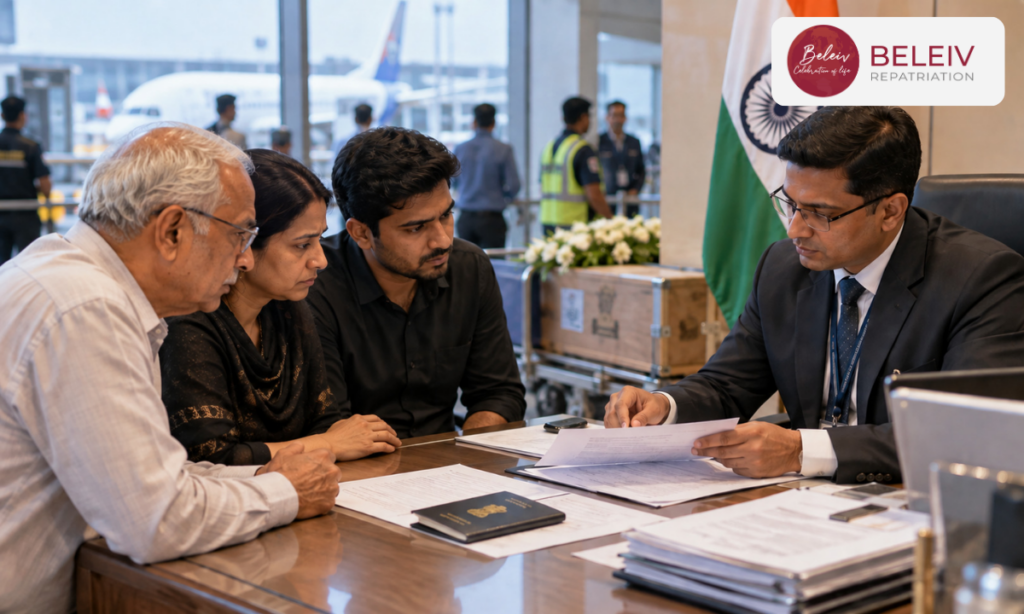
When an Indian citizen passes away abroad, the family may need to complete several formalities before the mortal remains can be brought back to India.
The Indian Consulate or Embassy plays an important role in this process. Depending on the country and circumstances of the death, the Consulate may assist with registration of the death, verification of documents, issuing the required No Objection Certificate (NOC), coordinating with local authorities and supporting the repatriation process.
The exact requirements can vary from one country to another. Families should therefore check the requirements applicable to the specific Indian Mission responsible for the location where the death occurred.
Beleiv Repatriation helps families coordinate the documentation and arrangements involved in bringing mortal remains back to India.
For complete assistance, visit Beleiv Repatriation.
What Is the Role of the Indian Consulate in Mortal Remains Repatriation?
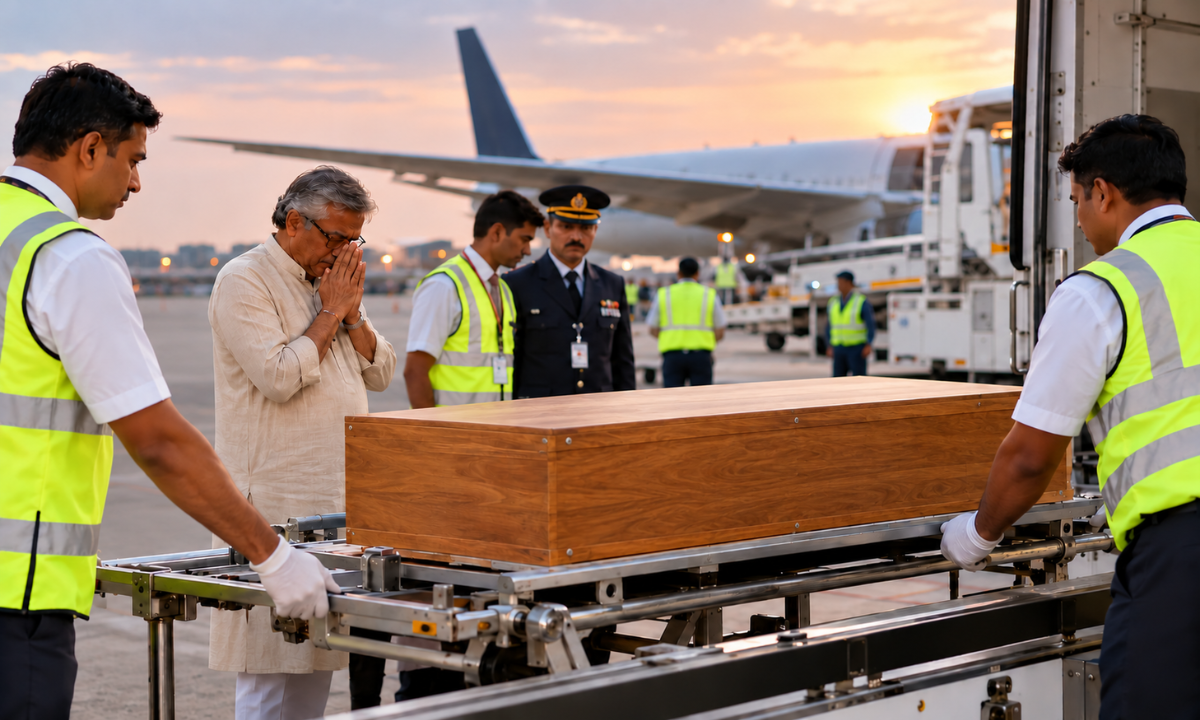
When an Indian citizen dies abroad, the Indian Embassy or Consulate can assist the family with the procedures required to bring the mortal remains back to India, including understanding the Embassy role in the repatriation process.
Depending on the circumstances, the Consulate may be involved in:
- Registration of the death
- Verification of identity and documents
- Coordination with the family
- Issuing the required NOC
- Coordination with local authorities
- Supporting documentation for transportation
- Passport-related formalities
- Assistance with repatriation arrangements
The exact role can differ depending on the country, local regulations and circumstances surrounding the death.
What Documents Are Generally Required by the Indian Consulate?
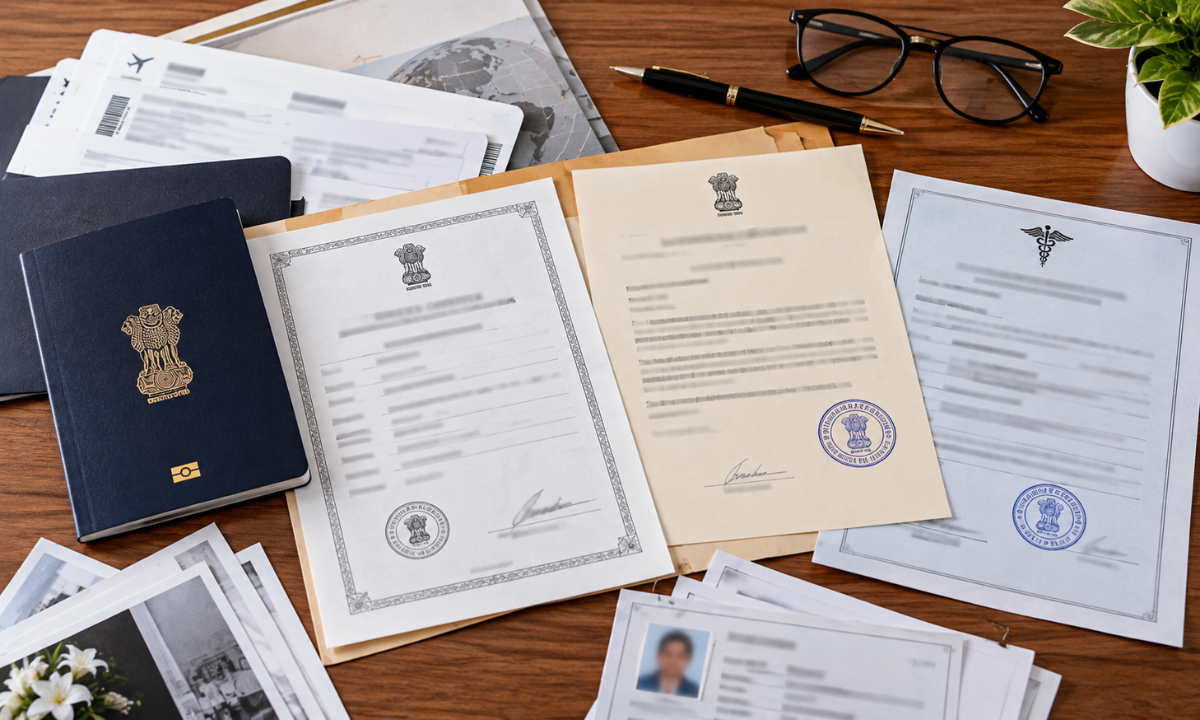
Families may be asked to provide documents such as:
- Death certificate or medical death certificate
- Passport of the deceased
- Visa or immigration documents, where applicable
- Police report in cases of accidental or unnatural death
- Consent from the next of kin
- Power of attorney, where applicable
- Embalming certificate
- Non-infectious or non-communicable disease certificate, where required
- Details of the funeral home
- Transportation details
- Other documents requested by the Consulate
The final checklist may differ according to the country where the death occurred.
1. Death Certificate
The death certificate is one of the most important documents required.
It confirms the identity of the deceased and records the date and place of death.
The family should check that the following information is correct:
- Full name
- Date of birth
- Date of death
- Place of death
- Cause of death, where applicable
Any spelling or identification mismatch should be addressed before submitting the documents to the Consulate.
2. Medical or Hospital Death Certificate
Depending on the circumstances, the Consulate may require a medical report or death certificate issued by the hospital or relevant medical authority.
This document establishes the circumstances surrounding the death and may be required before the Consulate can proceed with the repatriation documentation.
3. Passport of the Deceased
The deceased person’s passport is an important identification document.
The Consulate may require a copy of the passport, including relevant personal information and visa or immigration pages where applicable.
Passport formalities may also need to be completed before the mortal remains are transported to India.
4. Visa or Immigration Documents
Depending on the country where the death occurred, copies of the deceased person’s visa, residence permit or other immigration documents may be requested.
These documents can help establish the deceased person’s legal status in the country of death.
The exact requirement depends on the country and the deceased person’s immigration status.
5. Police Report for Accidental or Unnatural Death
If the death occurred due to an accident, suicide, homicide or another unnatural circumstance, the Consulate may request a detailed police report.
Additional investigation documents may also be required.
The police or coroner investigation can delay the repatriation because the deceased may not be released until the relevant authorities complete their procedures.
Families should therefore allow additional time for cases involving an investigation.
6. Consent From the Next of Kin
Consent from the next of kin may be required for the transportation of the mortal remains to India.
The consent confirms that the legal family representative wishes to repatriate the deceased.
Depending on the country and Consulate, the consent may need to be:
- Written
- Signed
- Notarised
- Submitted along with identification documents
The required format should be confirmed with the relevant Indian Mission.
7. Power of Attorney
A power of attorney may be required when the family authorises another person or organisation to handle the repatriation process.
This can be useful when:
- The family is not present in the country where the death occurred.
- A funeral director is handling the arrangements.
- A repatriation company is coordinating the process.
- The next of kin cannot personally complete every procedure.
The specific format and notarisation requirements can vary.
8. Embalming Certificate
An embalming certificate is an important document for international transportation of mortal remains.
It generally confirms that the deceased has been embalmed and prepared for transportation.
The certificate may need to contain details such as:
- Name of the deceased
- Date of embalming
- Embalming procedure
- Chemicals used, where applicable
- Preparation and packaging details
Families should make sure the certificate is complete before the airline booking is finalised.
9. Non-Infectious Disease Certificate
Depending on the circumstances, a certificate confirming that the death was not caused by a communicable or infectious disease may be required.
This requirement can vary depending on the country, cause of death and prevailing health regulations.
Where the cause of death is unclear or still under investigation, additional health documentation may be requested.
10. Indian Consulate NOC
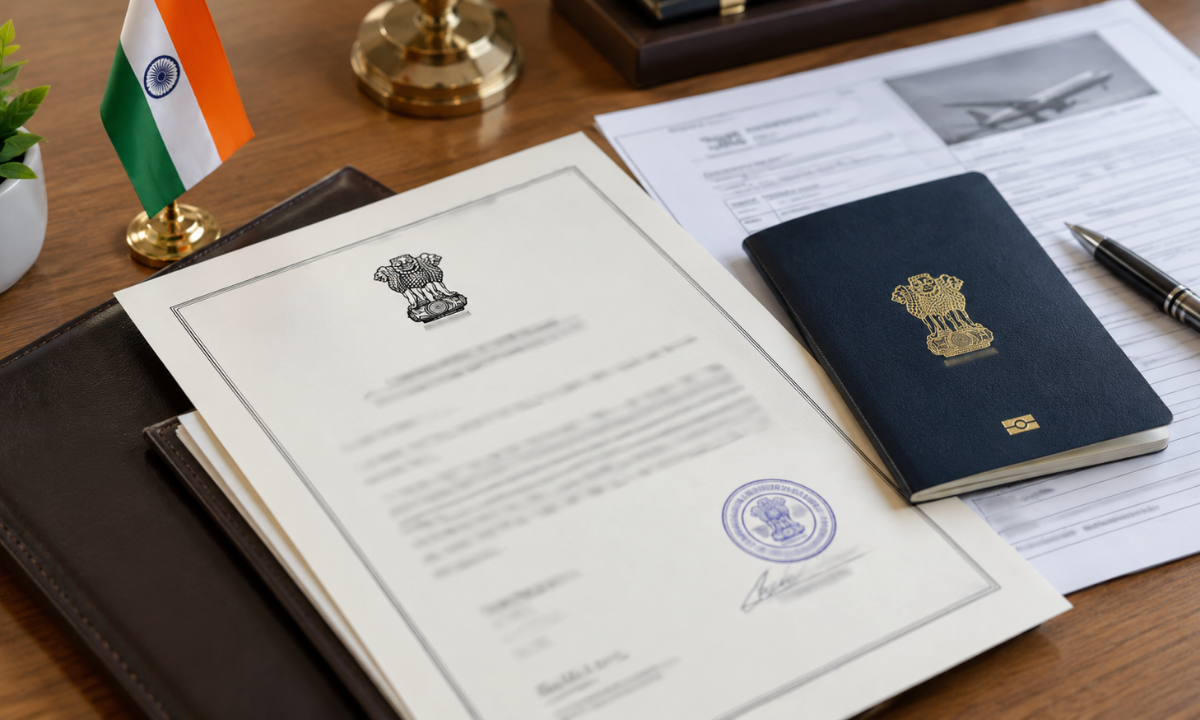
The No Objection Certificate (NOC) is an important part of the repatriation process.
The Indian Consulate NOC confirms that the Indian Mission has completed the applicable consular formalities for transportation of the mortal remains to India.
The information in the NOC should correspond with the deceased person’s documents.
Depending on the applicable process, the NOC may contain information such as:
- Name of the deceased
- Passport number
- Date of birth or age
- Gender
- Date of death
- Place of death
- Other identification details
The NOC may then be used as part of the clearance process for transportation to India.
11. Cancelled Passport
Passport cancellation or related passport formalities may be required before the mortal remains are transported.
The passport is used to establish the identity and nationality of the deceased.
Families should not dispose of or lose the original passport before confirming the applicable Consulate requirements.
12. Embalming and Packaging Documents
In addition to the embalming certificate, documentation relating to the preparation and packaging of the mortal remains may be required.
Depending on the circumstances, this can include:
- Coffin details
- Sealing certificate
- Packaging certificate
- Transportation certificate
- Other funeral home documentation
These documents may also be required by the airline or Indian airport authorities.
Indian Consulate Requirements vs India Airport Requirements
It is important to understand that Consulate requirements and Indian airport clearance requirements are not exactly the same thing.
The Indian Consulate generally deals with the consular side of the repatriation process.
After the mortal remains arrive in India, additional health and airport clearance procedures may apply.
For this reason, completing the Consulate formalities does not necessarily mean that all arrival procedures have been completed.
A repatriation provider can help coordinate both stages.
What Is Required for Clearance in India?
Before the mortal remains arrive in India, the required clearance process should be arranged.
The documentation can include:
- Embalming certificate
- Death certificate
- Indian Consulate NOC
- Cancelled passport
- Packaging documentation
- Health-related certificates where applicable
- Transportation details
The exact documents required can depend on the circumstances of the case.
Does the Indian Consulate Requirement Differ by Country?
Yes, the general framework may be similar, but the actual documentation and procedures can vary according to the country where the death occurred.
For example, the requirements for bringing mortal remains from the USA, UK, Australia, Canada or the Middle East may differ because each country has its own laws and procedures concerning deaths, embalming, coroners, funeral homes and transportation.
For Australia-specific assistance, families can explore Repatriation Services From Australia to India and USA-specific arrangements, see Repatriation Services From USA to India.
What Happens If the Death Was Natural?
When a death occurs due to natural causes and there is no investigation, the repatriation process may be more straightforward.
The family can generally proceed with:
- Obtaining the death certificate
- Registering the death with the Indian Mission where required
- Completing the applicable Consulate formalities
- Arranging embalming
- Preparing the coffin
- Obtaining the required NOC
- Completing transportation arrangements
- Arranging clearance in India
The exact timeline depends on the country and availability of the required documents.
What Happens If the Death Was Accidental?
Accidental deaths can require additional procedures.
Police or a coroner may investigate the circumstances before releasing the deceased.
Additional documents can include:
- Police report
- Coroner documentation
- Medical records
- Cause-of-death documentation
- Non-infectious disease certificate
- Release or authorisation documents
These investigations can add time to the overall repatriation process.
What If the Passport Is Missing?
A missing passport can make the documentation process more complicated.
The family should inform the Indian Consulate as early as possible.
Depending on the circumstances, the Consulate may require:
- A written explanation
- Alternative identification
- Additional proof of identity
- Supporting documents
- Other documentation specific to the case
Families should avoid waiting until the flight date to address a missing passport.
What If the Death Certificate Is Not in English?
If the death certificate or another required document is issued in a language other than English, an authorised translation may be required.
The family should confirm the applicable translation and certification requirements before submitting the documents.
Incorrect translations or inconsistent names can lead to delays.
How Long Does Indian Consulate Approval Take?
There is no single processing time that applies to every country or case.
The timeline can depend on:
- Completeness of documents
- Cause of death
- Police or coroner investigation
- Local funeral procedures
- Embassy or Consulate workload
- Availability of supporting certificates
- Airline availability
A straightforward case can move faster when all documents are ready, while cases involving investigation can take considerably longer.
Can the Indian Consulate Help Arrange Transportation?
In certain circumstances, Indian Missions can assist families with arrangements for transporting mortal remains.
However, the family may also appoint a funeral director or professional repatriation company to coordinate the practical arrangements.
Beleiv Repatriation can help coordinate the funeral home, documentation, airline and receiving arrangements required for bringing the deceased back to India.
What Does the Family Need to Do?
The family should ideally:
- Contact the relevant Indian Consulate.
- Appoint a funeral director or repatriation service.
- Obtain the death certificate.
- Collect the deceased person’s passport.
- Obtain police or coroner documents if applicable.
- Complete next-of-kin consent.
- Arrange embalming.
- Obtain the embalming certificate.
- Complete the Consulate’s NOC process.
- Arrange airline transportation.
- Complete the required clearance for arrival in India.
- Arrange transportation to the final destination.
Indian Consulate Mortal Remains Checklist
Before the deceased is transported, check whether the following documents have been arranged:
- Death certificate
- Medical death certificate, where applicable
- Passport of the deceased
- Visa or immigration documents, where applicable
- Police report for accidental or unnatural death
- Coroner documents, where applicable
- Next-of-kin consent
- Power of attorney, where applicable
- Embalming certificate
- Non-infectious disease certificate, where required
- Indian Consulate NOC
- Cancelled passport
- Packaging and sealing documentation
- Airline documents
- Transportation details
- Receiver details in India
Common Mistakes Families Should Avoid
Booking the Flight Too Early
The flight should not be finalised before confirming that the deceased can be released and the necessary documents can be obtained.
Ignoring the Consulate Jurisdiction
The correct Indian Mission depends on where the death occurred.
Submitting Inconsistent Documents
Names, passport numbers and dates should match across the available documents.
Forgetting the NOC
The Consulate NOC is an important part of the documentation process and should be arranged before transportation.
Not Checking Airline Requirements
Even when Consulate paperwork is complete, the airline may have additional requirements.
Waiting Until the Last Minute
International repatriation involves several organisations. Starting the documentation process early can reduce avoidable delays.
How Beleiv Repatriation Can Help
International repatriation can require coordination between the family, funeral home, Indian Consulate, airline and authorities in India.
Beleiv Repatriation can assist with:
- Documentation guidance
- Funeral home coordination
- Embalming arrangements
- Consular coordination
- NOC-related arrangements
- Coffin and packaging arrangements
- Airline coordination
- Airport arrangements
- Transportation in India
- Final delivery
Families can learn more about Beleiv Repatriation and the services available for bringing mortal remains back to India.
Frequently Asked Questions
What documents are required by the Indian Consulate for mortal remains?
Common documents include the death certificate, passport, next-of-kin consent, police or coroner documents where applicable, embalming documentation and other country-specific paperwork. The Consulate may request additional documents depending on the case.
Is an NOC from the Indian Consulate required?
An Indian Mission NOC is an important part of the standard process for bringing mortal remains to India. The exact procedure depends on the country and the individual case.
Is a death certificate required?
Yes. A death certificate or appropriate medical death documentation is an important part of the process.
Is an embalming certificate required?
For international transportation of a body to India, an embalming certificate is generally part of the required documentation.
What happens if the death was accidental?
A police or coroner investigation may be required, and additional documentation can be requested before the deceased is released.
Is next-of-kin consent required?
Next-of-kin consent may be required for transportation of the mortal remains. The applicable format can vary depending on the country and Indian Mission.
Can Beleiv Repatriation handle the Consulate process?
Beleiv Repatriation can assist families with documentation and coordination related to the repatriation process, including communication and arrangements involving the relevant authorities.
Do Consulate requirements differ between USA, UK and Australia?
Yes. While many core documents are similar, local laws and procedures differ between countries. Families should follow the requirements applicable to the country and Indian Mission handling the case.
Final Thoughts
Indian Consulate requirements are an important part of bringing mortal remains back to India.
The core documentation generally revolves around:
- Death registration and death certificate
- Identity and passport documents
- Next-of-kin consent
- Police or coroner documents where applicable
- Embalming documentation
- Health-related certificates where required
- Indian Consulate NOC
- Passport cancellation or related formalities
- Packaging and transportation documents
- Airline and arrival-clearance documentation
Because requirements can vary by country and individual circumstances, families should confirm the specific checklist with the relevant Indian Mission before making final transportation arrangements.
Beleiv Repatriation can help families coordinate the documentation and practical arrangements involved in bringing a loved one home to India.