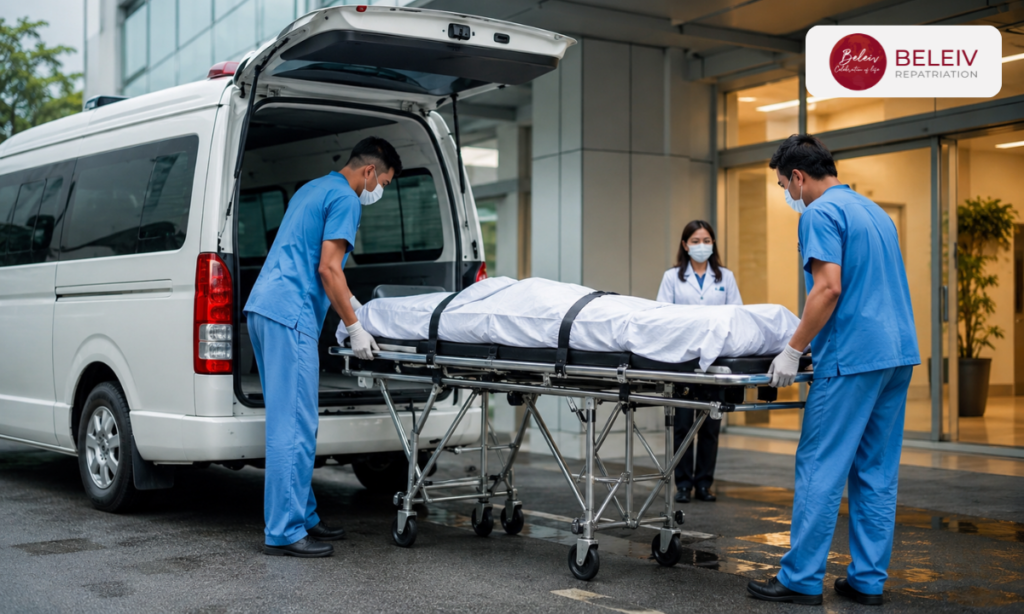
In a moment of profound loss, have you found yourself overwhelmed by the immediate logistical challenges that follow? Are you currently searching for clarity on how to manage the transit of a loved one with the dignity they deserve?
When facing such a crisis, coordinating with the right professionals is essential to ensure a seamless transition. At Beleiv Repatriation, we specialise in navigating these difficult hours when you require immediate access to the comprehensive cremation services in Bangalore.
As a trusted name in repatriation services in India, we stand ready to guide you through every administrative and logistical hurdle with the utmost care and professionalism.
The process of arranging transport in an emergency requires a delicate balance of speed and legal precision. It is not merely about finding a vehicle; it is about ensuring that every step, from the initial pick-up to the final destination, is handled with the rigour and respect that the situation demands.
By understanding the protocols involved in domestic and international transit, you can focus on what truly matters, honouring the memory of the deceased. In the following sections, we will outline the essential steps to take when time is of the essence, providing you with a clear roadmap to navigate this difficult journey.
Key Points at a Glance
- How to immediately secure a dead body carrier vehicle during an emergency.
- The essential legal steps for obtaining a death certificate in India.
- Understanding the difference between local hearses and specialised freezer-box ambulances.
- When the embalming of a body is a legal requirement for long-distance dead body transportation.
- Practical tips for coordinating arrivals at local facilities like the Panathur Crematorium.
- Why professional repatriation services in India are vital for navigating cross-border legalities.
The First Crucial Step is Securing the Death Certificate

Before a dead body carrier vehicle can be legally dispatched for transit, the most critical administrative requirement is securing the Death certificate.
This document acts as the legal foundation for every subsequent logistical movement, whether it involves local transit or complex international dead body transportation. In the regulations of India, the procedure for obtaining this documentation depends entirely on the circumstances and location of the passing.
If the individual passes away within a medical facility, the hospital authorities will issue a Medical Certificate of Cause of Death, known as Form 4. This is typically a streamlined process where the attending physician confirms the cause of death and provides the necessary paperwork to the family.
However, if the death occurs at a residence, a registered medical practitioner must be called to the home to certify the passing and issue Form 4A. It is important to note that without this formal medical declaration, no reputable service provider can legally move the deceased from the premises.
In situations involving an unnatural death, such as an accident, a sudden collapse, or a suicide, the protocol becomes more rigorous. In these instances, the local police must be informed immediately to provide a No Objection Certificate (NOC).
The authorities may require a post-mortem examination to determine the exact cause of death before the body can be released for embalming of a body or final rites.
Once the medical or police clearance is in hand, the administrative burden eases significantly. This certificate is not merely a formality: it is the primary document required by crematoriums, airlines, and customs officials.
Ensuring this step is handled with precision allows the rest of the repatriation or cremation process to proceed without legal interruptions, honouring the deceased with a dignified and lawful transition.
Selecting the Appropriate Dead Body Carrier Vehicle
Once the legal clearances are secured, the next immediate operational decision is selecting the correct dead body carrier vehicle. Families are often unaware that different logistical scenarios require highly specialised transport solutions.
Choosing the right vehicle is not merely a matter of convenience; it is a critical step in preserving the integrity of the deceased and ensuring the journey complies with health and safety regulations. Our fleet at Beleiv Reparation is strictly categorised to meet these varying requirements with dignity and professionalism.
For short distances, typically within a single city limit, such as moving from a hospital to a residence or directly to a local crematorium, a standard Mortuary Van is usually deployed. These vehicles are air-conditioned and designed strictly for the clean, rapid, and secure transit of the deceased. They provide a highly hygienic environment, allowing for a swift transfer without unnecessary delays.
When the family wishes to conduct a formal final procession, a Hearse Van is the appropriate choice. Unlike standard mortuary vans, hearses are designed for ceremonial purposes. They offer ample space for floral tributes and are structured to allow immediate family members to accompany their loved one during the final, slow-paced journey to the cremation or burial grounds.
However, if the situation demands long-distance transit across state borders, or if there will be a significant delay while awaiting the arrival of distant relatives, a dead body carrier vehicle equipped with a freezer box becomes essential.
These specialised vehicles feature advanced, built-in refrigeration systems that maintain a constant temperature of 0 to 5 degrees Celsius. This temperature control drastically slows decomposition, ensuring the body remains preserved through changing weather conditions and the extended hours of interstate travel.
Understanding these distinctions ensures that you are making an informed decision during an incredibly stressful period. Whether the journey is a brief transit across Bangalore or a complex cross-country operation, securing the appropriate vehicle is paramount to executing a respectful and flawless repatriation.
When is Embalming of a Body Required?
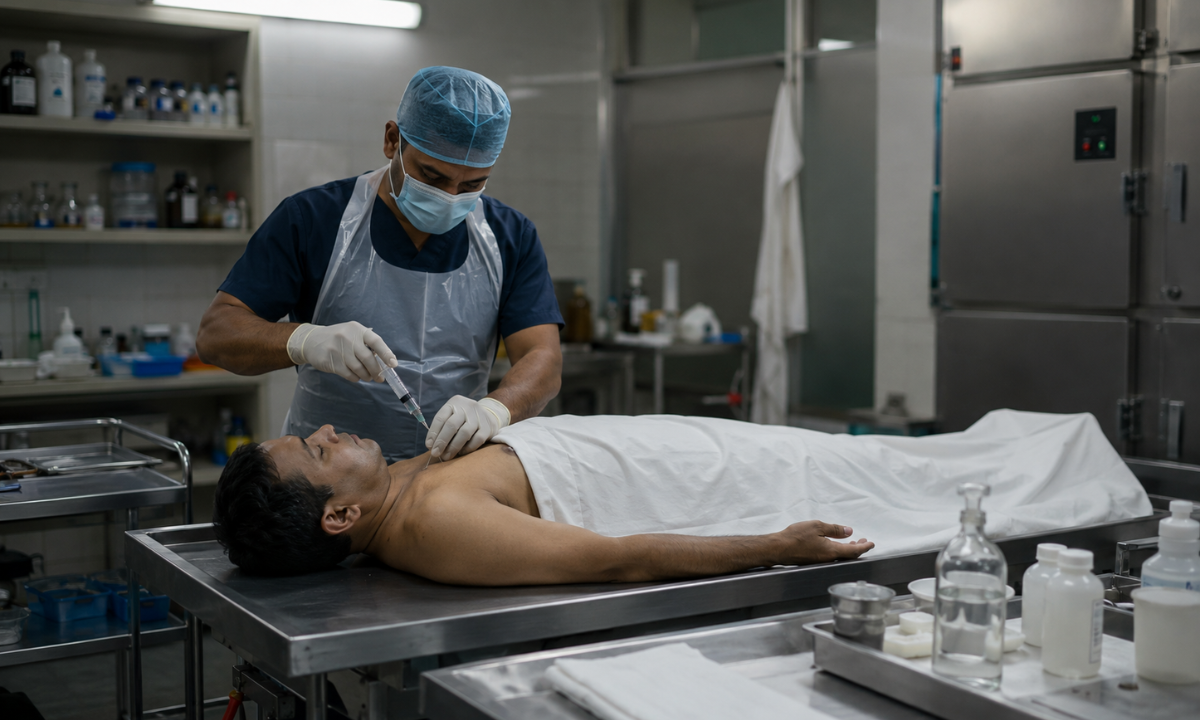
When planning extensive dead body transportation, families often encounter complex medical terminology. Among the most misunderstood requirements is the embalming of a body.
Embalming is a highly specialised, clinical procedure wherein a qualified practitioner replaces bodily fluids with preservative solutions, primarily to halt decomposition and sanitise the tissues. This process ensures the deceased is preserved with dignity, regardless of travel delays, changing weather conditions, or complex logistics.
While embalming is not strictly necessary for a brief local transit within a city, it becomes a non-negotiable legal and public health requirement under specific circumstances. The table below outlines exactly when this procedure is mandated by authorities:
| Transit Scenario | Embalming Requirement | Regulatory and Practical Reason |
|---|---|---|
| Local Intra-City Transit (e.g., Hospital to Residence) | Not Required | Short distances within a few hours can be safely and hygienically managed using a standard air-conditioned Mortuary Van. |
| Interstate Road Transit (Journeys exceeding 12 hours) | Highly Recommended | Prevents decomposition during long road journeys. While a Freezer-Box Ambulance is an alternative, embalming provides superior preservation for very long distances. |
| Domestic Air Transit | Strictly Mandatory | Domestic airlines classify human remains as “special cargo” and require a formally signed embalming certificate before cargo acceptance. |
| International Repatriation | Strictly Mandatory | Mandated by international customs, IATA (International Air Transport Association) regulations, and global health ministries to eliminate biological hazards in pressurised aircraft holds. |
It is crucial to understand that without a formal embalming certificate issued by a certified professional, airlines and customs officials will simply refuse the transit. Furthermore, for international flights, the embalmed remains must be securely placed within a zinc-lined, hermetically sealed coffin to prevent any hazard during the journey.
Navigating these rigorous aviation laws can be daunting, but professional repatriation services ensure that the medical preparation meets all global standards, preventing devastating delays at the airport.
Navigating Local Guidelines of Cremation Services in Bangalore
When a passing occurs in the city, managing the immediate aftermath requires a clear understanding of local municipal regulations. The Bruhat Bengaluru Mahanagara Palike (BBMP) governs the operational protocols for all final rites within the city limits.
Securing cremation services in Bangalore is no longer a matter of simply arriving at a facility; it requires precise online slot booking and rigorous document verification.
For a grieving family, navigating this bureaucratic process can be overwhelming, which is why understanding the exact requirements beforehand is essential.
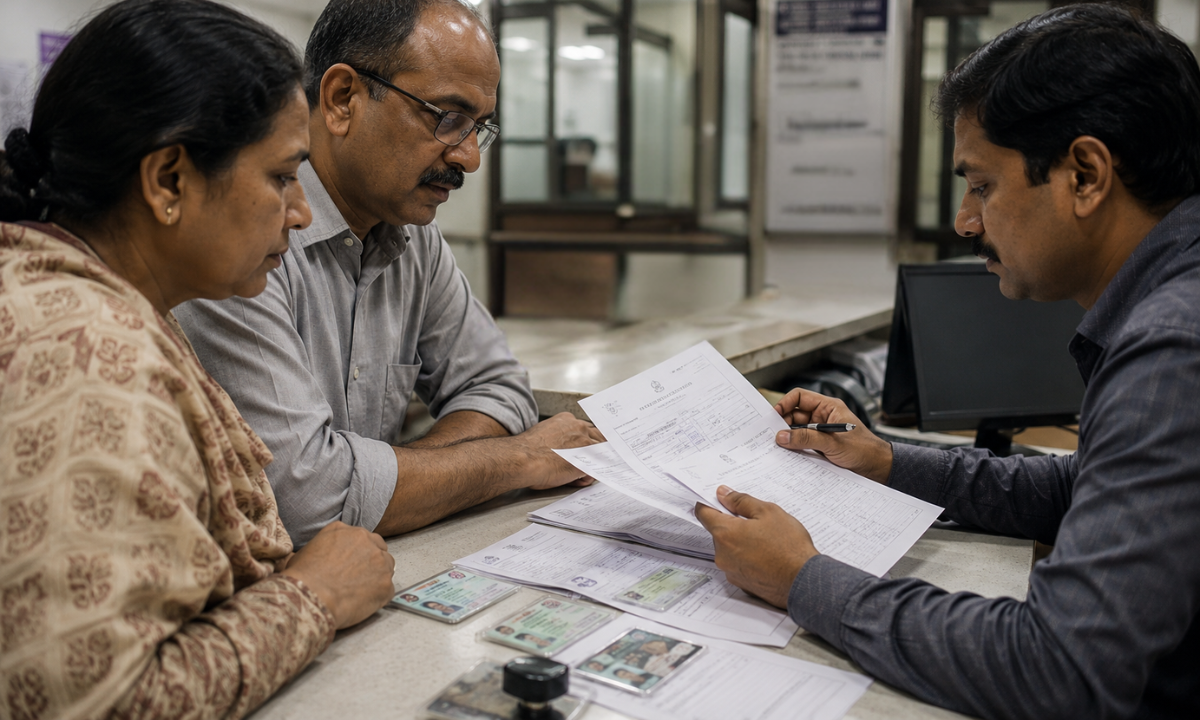
Before a dead body carrier vehicle can even be dispatched to a facility, the BBMP mandates that specific paperwork must be compiled and ready for inspection. The essential documents required include:
- Proof of Identity: A government-issued ID of the deceased, such as an Aadhar Card, Voter ID, or Passport, to confirm identity and residential details.
- Medical Certification: The original Form 4 for deaths occurring in a hospital, or Form 4A for natural deaths at a residence, signed by an authorised doctor.
- Legal Clearance: In the event of an unnatural death, a strict requirement is the Police No Objection Certificate (NOC) alongside the Post Mortem report summary.
High-demand facilities, such as the Panathur Crematorium, operate on strict schedules to accommodate the needs of the city efficiently. This modern electric crematorium is a preferred choice due to its clean, eco-friendly process and highly organised management.
However, strict adherence to their operational workflow is required to ensure there are no delays. To ensure a seamless transition upon arrival at the centre, families or their chosen service providers must follow this specific operational workflow:
- Punctual Arrival: The transport vehicle must arrive at the facility at least 15 to 20 minutes prior to the booked time slot.
- Managerial Verification: All original documentation must be physically handed over to the crematorium manager for legal validation before the process can begin.
- Receipt Collection: Following the final rites, the family must collect the official acknowledgement receipt from the staff, as this document is mandatory for applying for the final municipal death certificate.
Attempting to coordinate these municipal clearances while mourning is a heavy burden. Professional repatriation services in India are specifically trained to handle this entire workflow.
By managing the BBMP portal bookings, document verification, and the precise timing of the vehicle’s arrival, they provide families with the invaluable space to focus entirely on their loved ones.
Why Choose Beleiv Repatriation in Your Hour of Need?
When dealing with the loss of a loved one, the sheer volume of administrative and logistical tasks can be entirely overwhelming. Attempting to manage hospital clearances, police protocols, and transport bookings simultaneously often deprives families of the time they need to grieve.
Choosing Beleiv Repatriation means you are placing your trust in an organisation that combines deep operational rigour with profound empathy. Here is what sets our services apart during a crisis:
1. 24/7 Availability:
Death does not adhere to business hours. Our dedicated funeral managers and logistics coordinators are available around the clock. Whether it is a midnight emergency at a local hospital or a weekend international crisis, our team is ready to dispatch the necessary resources immediately.
2. Comprehensive Documentation Assistance:
We completely remove the burden of paperwork from the family. From securing the initial death certificate and police NOC to navigating complex embassy clearances and BBMP municipal portal bookings, our experts handle every legal requirement with precision.
3. A Specialised and Dignified Fleet:
We do not rely on makeshift transport. Our fleet includes highly sanitised mortuary vans for local transit, elegant hearses for final processions, and advanced freezer-box ambulances designed for long-distance journeys, ensuring the deceased is treated with the utmost respect at all times.
4. Transparent and Compassionate Operations:
We believe that families should never have to worry about hidden costs during a tragedy and provide clear, upfront pricing for all services, from basic dead body transportation to comprehensive international repatriation, allowing you to make informed decisions without financial stress.
5. Cultural and Religious Sensitivity:
We honour all traditions. Whether you require specific rituals, assistance in finding a local priest, or coordination with facilities like the Panathur Crematorium, our team ensures that the final rites align perfectly with your family’s beliefs.
This is precisely why partnering with a professional, comprehensive service provider is essential. It is important to specifically seek out Beleiv Repatriation, as our full name represents our complete, end-to-end global and domestic network, ensuring you receive the highest standard of care without the risks associated with unverified copycat agencies.
The Way Forward
Navigating an emergency involving the passing of a loved one is undeniably one of life’s most challenging experiences. The immediate need for a dead body carrier vehicle, coupled with the rigorous legalities of securing a death certificate and arranging local or international transit, can leave any family feeling lost.
However, you do not have to endure this complex administrative journey alone. By understanding the foundational steps, from medical clearances to selecting the correct preservation methods, you can ensure a lawful and respectful transition.
At Beleiv Repatriation, our mission is to act as your pillar of strength. We take on the complete logistical and legal burden so that you can focus entirely on honouring the memory of your loved one. From the moment you contact us to the final farewell, we provide a seamless, dignified, and compassionate service.
If you are facing an emergency or require guidance on repatriation services, do not hesitate to reach out. Contact Beleiv Repatriation to speak with our dedicated support team, and let us bring your loved one home with the dignity they deserve.
Frequently Asked Questions (FAQs)
1. How quickly can a dead body carrier vehicle be arranged during a late-night emergency?
Our emergency support team at Beleiv Reparation operates 24/7. Upon receiving your call, we immediately coordinate and dispatch the appropriate dead body carrier vehicle, whether you require a standard mortuary van for a brief local transfer or a specialised freezer-box ambulance. Our rapid response ensures your loved one is moved with the utmost dignity and care, regardless of the hour.
2. What are the essential documents required before any transport can begin?
The most critical requirement is a formal medical death certificate. For a hospital passing, this is Form 4, while a home passing requires Form 4A from a registered doctor. In the event of an unnatural death, a Police No Objection Certificate (NOC) is also mandatory. Beleiv Repatriation assists families in securing these exact documents, ensuring a flawless legal process for local cremation services in Bangalore or comprehensive repatriation services in India.
3. Is the embalming of a body mandatory for all types of dead body transportation?
The embalming of a body is not required for short, intra-city transit, such as travelling from a residence to a local facility like the Panathur Crematorium. However, it becomes a strict legal and public health requirement for domestic air travel, global repatriation, and extensive interstate road journeys. This clinical preservation ensures the remains meet all aviation and customs regulations safely.