

When a loved one passes away abroad and the family needs to bring the mortal remains to India, a transit permit may form part of the documentation required for international transportation.
A transit permit is generally a document issued by the relevant local authority in the country or jurisdiction where the death occurred. It permits the deceased to be transported from the place of death to another location, including an international destination.
The requirement is not identical in every country or case. India’s eCARe system currently lists a transit/burial permit as a supporting document that may be requested by the authorities, while some Indian Consulates specifically include a transit permit in their checklist for transportation of mortal remains.
For families arranging international repatriation, it is therefore important to determine whether a transit permit is required in the country and jurisdiction where the death occurred.
Beleiv Repatriation can help families coordinate documentation, funeral arrangements, airline transportation and other requirements involved in bringing mortal remains to India.
For assistance, visit Beleiv Repatriation.
What Is a Transit Permit for Mortal Remains?
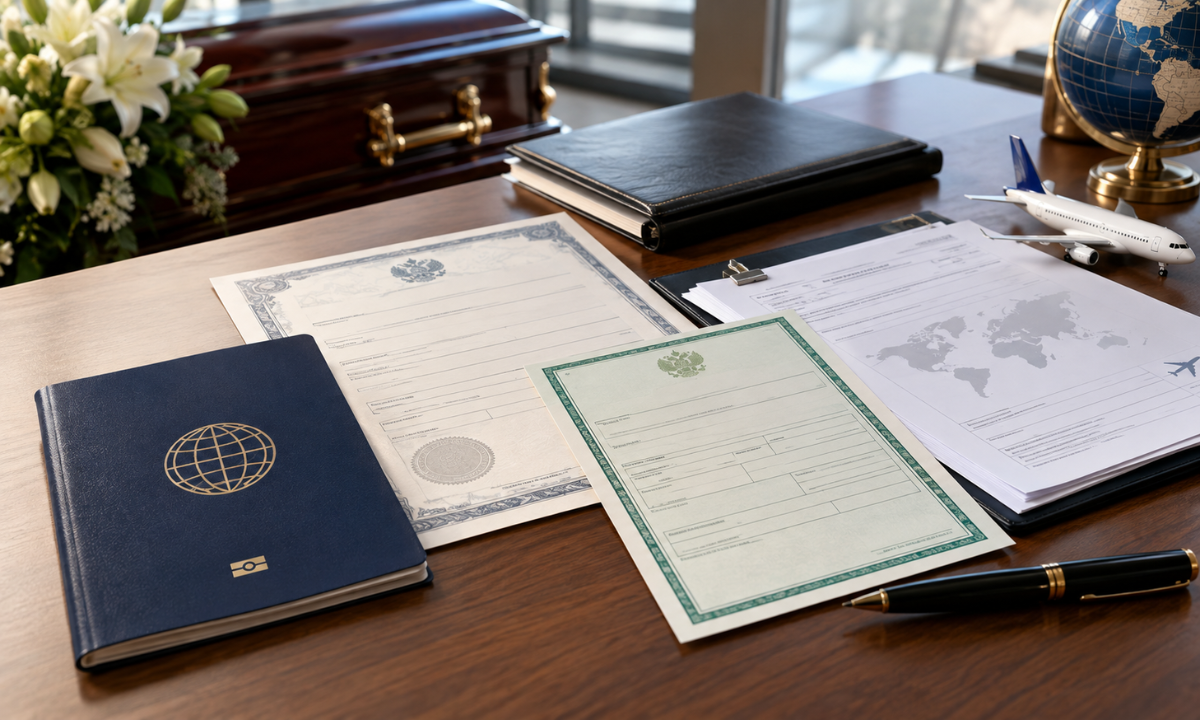
A transit permit is an official document that authorises or records the transportation of human remains from one location to another.
Depending on the country, it may be issued by:
- Local health authorities
- Vital records authorities
- Funeral or public health authorities
- Local government authorities
- Another authority responsible for transportation of human remains
The terminology can also differ. Some jurisdictions may use terms such as:
- Transit permit
- Burial permit
- Permit for transportation of human remains
- Permit for disposition of human remains
- Burial-transit permit
The exact name and issuing authority depend on the country and local jurisdiction.
Is a Transit Permit Required to Bring Mortal Remains to India?
A transit permit is not necessarily a mandatory document in every case at the initial eCARe application stage.
India’s current eCARe FAQ lists the transit/burial permit under non-mandatory documents and states that the concerned authorities may request it while reviewing an application.
However, requirements can differ by country and Indian Mission. For example, Indian Consulate checklists in the United States can specifically require a transit permit along with the embalming certificate and non-communicable disease certificate for transportation of mortal remains.
This means families should not assume that a transit permit is either always required or never required.
The requirement should be confirmed according to the country, state or local jurisdiction where the death occurred and the relevant Indian Consulate.
Why Is a Transit Permit Needed?
A transit permit helps establish that the deceased can legally be transported from the place where the death occurred to another location.
It may provide authorities with information such as:
- Name of the deceased
- Date of death
- Place of death
- Cause of death
- Place of transportation
- Destination
- Funeral director or authorised representative
- Permit number
- Issuing authority
The document can therefore form part of the chain of documentation required before international transportation.
Who Issues the Transit Permit?

There is no single worldwide authority that issues transit permits.
The issuing authority depends on the country and local jurisdiction.
For example, the process may involve a local health department, vital records authority, funeral authority or another government department.
This is why families arranging repatriation should first identify the local authority responsible for the place where the death occurred.
A funeral director or repatriation provider can usually help identify the applicable authority.
Transit Permit for Mortal Remains From the USA to India

When a death occurs in the United States, the requirements can vary by state.
Some Indian Consulates in the USA specifically include a transit permit in their documentation requirements for transporting mortal remains to India.
The documentation may be handled alongside:
- Death certificate
- Deceased person’s passport
- Embalming certificate
- Non-communicable disease certificate
- Transit permit
- Consular documents
- Funeral home documentation
For families arranging transportation from the United States, it is important to check the requirements of the Indian Consulate responsible for the state where the death occurred.
Beleiv Repatriation can assist with Repatriation Services From USA to India.
Transit Permit for Mortal Remains From Australia to India
The procedure for Australia can differ depending on the state or territory where the death occurred.
The family may need to coordinate with:
- Funeral director
- Hospital or mortuary
- Local authorities
- Indian Consulate or High Commission
- Airline
- Indian airport authorities
The applicable permit and transportation documentation should be confirmed before the airline booking is finalised.
For Australia-to-India assistance, see Repatriation Services From Australia to India.
Transit Permit for Mortal Remains From the UK to India
The requirements in the United Kingdom can also vary depending on the circumstances of the death and local procedures.
Additional procedures may apply when:
- A coroner is involved
- The death is sudden
- The death is accidental
- The cause of death is under investigation
- The deceased has not yet been released
The family or funeral director should confirm what transportation permit or equivalent documentation is required before the body leaves the UK.
Difference Between a Transit Permit and an Embalming Certificate
These two documents serve different purposes.
Transit Permit
A transit permit relates to the authorisation or documentation for transportation of the deceased.
Embalming Certificate
An embalming certificate confirms that the deceased has undergone the required embalming or preservation procedure.
Both documents can be relevant to international repatriation, but one does not automatically replace the other.
For more information, see Embalming for International Repatriation.
Difference Between a Transit Permit and a Death Certificate
A death certificate records the death of the individual.
A transit permit relates to the transportation of the deceased.
The documents have different purposes and may both be required as part of the complete repatriation documentation.
Difference Between a Transit Permit and an Indian Consulate NOC
The documents are also different in purpose.
Transit Permit
Generally relates to permission or documentation for transporting the remains from the place of death.
Indian Consulate NOC
The Indian Mission’s NOC forms part of the consular documentation required for bringing the mortal remains to India.
The Ministry of External Affairs lists the Indian Embassy NOC among the documents used for transportation of mortal remains to India. (Ministry of External Affairs)
A transit permit should therefore not be treated as a substitute for the Indian Consulate NOC.
Documents Commonly Required Along With a Transit Permit
Depending on the case, families may need several documents in addition to the transit permit.
These can include:
- Death certificate
- Embalming certificate
- Indian Consulate NOC
- Cancelled passport
- Transit permit
- Non-communicable disease certificate, where applicable
- Packaging or sealing certificate
- Police report, where applicable
- Coroner documentation, where applicable
- Funeral home documents
- Airline cargo documents
- Receiver or consignee details
India’s eCARe system identifies the embalming certificate, death certificate, Indian Embassy NOC and cancelled passport as the standard mandatory documents for human-remains clearance, while additional documents can be requested according to the circumstances.
When Is a Transit Permit Usually Obtained?
The timing depends on the country and local procedure.
Generally, it is arranged after:
- The death has been formally registered
- The deceased has been released
- Required medical or death documentation is available
- The funeral director has been appointed
The transit permit should normally be obtained before the deceased is transported internationally.
The family should not wait until the flight date to find out whether a permit is required.
What Information Is Usually Needed for a Transit Permit?
The issuing authority may request information such as:
- Full name of the deceased
- Date of birth
- Date of death
- Place of death
- Cause of death
- Name of funeral director
- Place of release
- Destination
- Transportation details
- Next-of-kin information
The exact information can differ by jurisdiction.
What Happens If a Transit Permit Is Missing?
If the transit permit is required in the relevant jurisdiction and has not been obtained, transportation may be delayed.
The airline, airport, consular authority or other government authority may request the missing document before the body can be transported.
When a transit permit is not required by the local jurisdiction, the family should instead ensure that the other required documents are complete.
This is why the requirement must be checked for the particular case rather than assuming that every international repatriation follows the same checklist.
Does eCARe Require a Transit Permit?
The current eCARe guidance distinguishes between mandatory and supporting documents.
For a standard human-remains application, eCARe lists:
- Embalming certificate
- Death certificate
- NOC from the Indian Embassy
- Cancelled passport
The transit/burial permit is listed as a non-mandatory document that authorities may ask for depending on the case.
This distinction is important because the requirement at the Indian clearance stage may not be identical to the requirement imposed by the local authority in the country of death.
Can a Repatriation Company Arrange a Transit Permit?
A repatriation company may be able to coordinate the permit application with the local funeral director or relevant authority.
However, the permit itself is issued by the competent authority, not by the repatriation company.
A professional provider can help by:
- Identifying the applicable authority
- Collecting the required information
- Coordinating with the funeral home
- Preparing the documentation
- Checking whether the permit has been issued
- Coordinating it with the airline and other documents
What Happens After the Transit Permit Is Obtained?
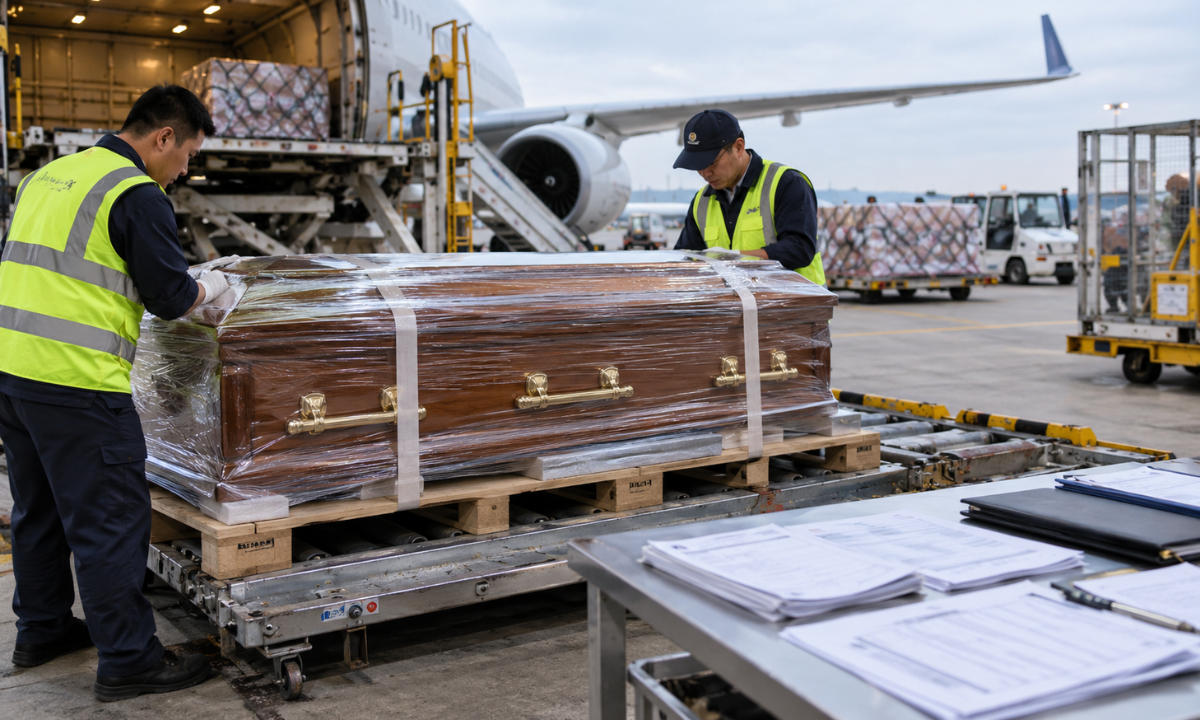
Once the necessary documentation is complete, the remaining repatriation arrangements can proceed.
These can include:
- Embalming
- Coffin preparation
- Packaging and sealing
- Consular formalities
- eCARe application
- Airline cargo booking
- Airport handling
- Arrival clearance in India
- Transportation to the final destination
For transportation assistance within India, see Dead Body Transportation Services.
Does the Transit Permit Have an Expiry Date?
The validity period depends on the issuing authority and local regulations.
Families should check the validity period printed on the permit and make sure the international transportation occurs within the applicable period.
If the flight is postponed significantly, the family or funeral director should confirm whether a new or updated permit is required.
What If the Flight Is Delayed?
If the airline changes the flight date after the transit permit has been issued, the family should check whether the permit remains valid.
Depending on the authority that issued it, the document may need to be updated or reissued.
The funeral director or repatriation provider should coordinate this before the new flight.
What If the Death Was Accidental or Under Investigation?
A death caused by an accident or another unnatural circumstance can require additional procedures before the deceased is released.
The Ministry of External Affairs notes that transportation can take longer when local authorities are investigating an unnatural death.
In these situations, the family may need:
- Police report
- Coroner documentation
- Medical reports
- Release authorisation
- Transit permit
- Additional consular documentation
The investigation must generally be completed before the final repatriation arrangements can proceed.
Transit Permit Checklist
Before arranging the flight, families should confirm:
- Death has been registered.
- The deceased has been released.
- Death certificate is available.
- The need for a transit permit has been confirmed.
- Transit permit has been obtained where required.
- Embalming has been completed.
- Embalming certificate is available.
- Indian Consulate NOC is available.
- Passport formalities are complete.
- Required health documentation is ready.
- Coffin and packaging requirements are complete.
- Airline cargo booking is confirmed.
- Receiver in India is identified.
- Arrival clearance arrangements are complete.
How Beleiv Repatriation Can Help
International repatriation requires coordination between the family, funeral home, local authorities, Indian Consulate, airline and authorities in India.
Beleiv Repatriation can help families coordinate:
- Transit permit documentation
- Death certificate documentation
- Embalming arrangements
- Consular formalities
- NOC coordination
- Coffin and packaging arrangements
- Airline cargo booking
- Airport handling
- Transportation within India
- Final delivery
Families can learn more about Beleiv Repatriation and its international repatriation services.
Frequently Asked Questions
What is a transit permit for mortal remains?
A transit permit is an official document that may authorise or document the transportation of a deceased person’s remains from one location to another.
Is a transit permit mandatory for bringing a body to India?
Not in every case. India’s eCARe system currently lists a transit or burial permit as a supporting document that authorities may request, while certain Indian Consulates specifically require it in their local checklist.
Is a transit permit the same as an NOC?
No. A transit permit and an Indian Consulate NOC are separate documents serving different purposes.
Who issues the transit permit?
The issuing authority depends on the country and local jurisdiction where the death occurred.
Is a transit permit required from the USA?
Requirements vary by U.S. state and Indian Consulate jurisdiction. Some Indian Consulates specifically include a transit permit in their requirements for transporting mortal remains.
Is a transit permit required from Australia?
The requirement depends on the state or territory and the specific repatriation case. The funeral director or repatriation provider should confirm the applicable local requirements.
Can Beleiv Repatriation help with the transit permit?
Beleiv Repatriation can help coordinate documentation and communicate with the relevant funeral and transportation parties. The actual permit is issued by the competent local authority.
What other documents are required for repatriation to India?
Common documents include the death certificate, embalming certificate, Indian Consulate NOC and cancelled passport, along with additional documents required according to the circumstances.
Final Thoughts
A transit permit can be an important document when bringing mortal remains from another country to India, but its requirement depends on the country, local jurisdiction and individual case.
Families should confirm the requirement before making final transportation arrangements rather than assuming that every repatriation follows the same documentation process.
The overall process may include:
- Registering the death
- Releasing the deceased
- Obtaining the death certificate
- Confirming the transit permit requirement
- Obtaining the transit permit where required
- Completing embalming
- Obtaining the embalming certificate
- Completing Indian Consulate formalities
- Obtaining the NOC
- Completing the required Indian clearance
- Booking airline cargo
- Transporting the deceased to the final destination
Beleiv Repatriation can help families coordinate these arrangements and provide support throughout the international repatriation process.