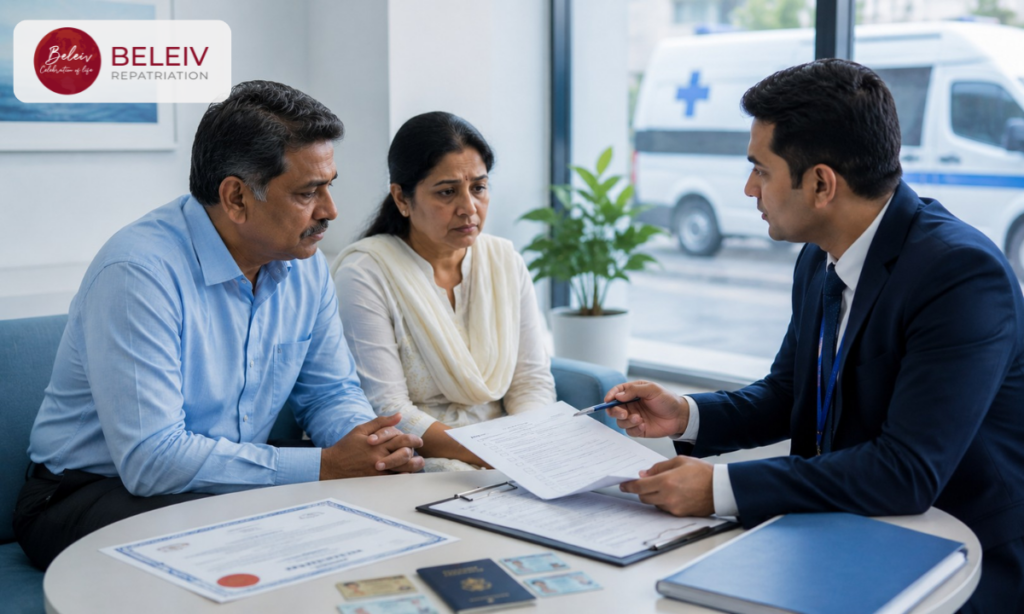
Knowing what to do after a death in the immediate hours is critical before arranging any physical movement or long-distance transport. Before making travel or funeral arrangements, establishing medical verification and securing mandatory legal paperwork must take priority.
Professional Repatriation Services in India step in during these critical moments to guide families through initial procedures with compassion, ensuring that whether arranging local Dead body transportation in Bangalore or coordinating inter-state transfers, every step is handled with dignity and care.
In the immediate aftermath of a passing, taking a moment to breathe and establish a calm sequence of action is essential. When grief takes over, attempting to book transport or contact funeral homes without first securing medical certification can lead to delays, administrative confusion, or legal complications.
Whether a passing occurs at home or within a hospital ward, specific statutory steps must be completed in a precise order before any ambulance, mortuary van, or airline can accept human remains for transit.
Understanding these initial obligations transforms an overwhelming situation into a manageable, step-by-step process. From securing the official Medical Certificate of Cause of Death (MCCD) to identifying whether a situation involves routine medical release or police coordination, being informed protects the dignity of the deceased and relieves unnecessary stress.
Our experienced coordinators at Beleiv Reparation are available around the clock to carry this administrative weight, allowing your family the time and quiet space needed to support one another.
Step 1: Immediate Medical Certification (Home vs. Hospital)

Before any funeral service, hearse van, or repatriation coordinator can legally move a deceased person, an official medical authority must formally certify the death.
Securing the Medical Certificate of Cause of Death (MCCD) forms the foundation of all subsequent legal formalities in India. The specific process for obtaining this document depends directly on where the passing occurred and the circumstances surrounding it.
Taking these first steps after death with care ensures that the deceased is formally registered, legally protected, and ready for whatever transit arrangements your family chooses.
Scenario A: A Natural Death at Home
When a loved one passes away at home due to old age or a known prolonged illness, the family must arrange for a registered medical practitioner to verify the death:
- Contacting the Primary Attending Doctor: If the deceased was under ongoing treatment, contact their attending MBBS physician immediately. The doctor will visit the residence, examine the deceased, and issue the official death certificate.
- Emergency Medical Verification (108 Services): If an attending doctor is unavailable, calling local emergency medical services (such as 108) allows an emergency medical officer to inspect the deceased, confirm the absence of vital signs, and provide an initial verification slip.
- Issuance of MCCD Form 4A: For natural home deaths, the examining doctor completes Form 4A (Medical Certificate of Cause of Death for non-institutional deaths), clearly stating the cause, time, and medical history.
Once Form 4A is signed and stamped by the physician with their medical council registration number clearly visible, your family holds the primary legal document required to move the deceased to a mortuary freezer box or begin local funeral preparations.
Scenario B: A Passing Within a Hospital Facility
When a passing occurs inside a healthcare facility, standard hospital death procedures are initiated automatically by the medical staff:
- Formal Pronouncement by the On-Duty Doctor: The attending medical team conducts clinical checks to confirm death, recording the exact time of passing in the patient’s medical chart.
- Issuance of MCCD Form 4: The hospital issues Form 4 (Medical Certificate of Cause of Death for institutional deaths), signed by the treating consultant or resident doctor.
- Administrative & Billing Handovers: The hospital administration completes final billing, returns the patient’s personal belongings to the next of kin, and issues a formal body release slip.
- Temporary Storage in Hospital Mortuary: Until transport or local arrangements are finalised, the hospital transfers the deceased to their climate-controlled mortuary cold storage unit.
Completing these hospital administrative steps provides your family with the official FORM 4 and body release authorization, allowing certified repatriation services or local hearses to safely take custody of your loved one.
Scenario C: Accidental, Unnatural, or Unattended Deaths (Medico-Legal Cases)
If a passing occurs unexpectedly, as the result of an accident, suicide, sudden collapse without prior medical history, or under suspicious circumstances, the law mandates a specific medico-legal pathway:
- Immediate Police Notification (100 / 112): The local police station holding jurisdiction over the area must be notified immediately. The scene should remain undisturbed until officers arrive.
- Police Inquest & Panchnama Report: Investigating officers conduct an on-site inquiry (Panchnama), recording observations and interviewing witnesses or family members to document the circumstances.
- Post-Mortem / Autopsy Examination: The deceased is transported to a designated government hospital mortuary for a forensic autopsy to determine the precise cause of death.
- Police No Objection Certificate (NOC) Release: Following the post-mortem, the police issue a formal NOC authorizing the hospital mortuary to release the body to the family.
While medico-legal procedures naturally introduce unavoidable administrative delays, following these statutory steps precisely protects your family from future legal complications and ensures that all documentation is completely cleared for transport.
Step 2: Securing Core Identity & Statutory Documents
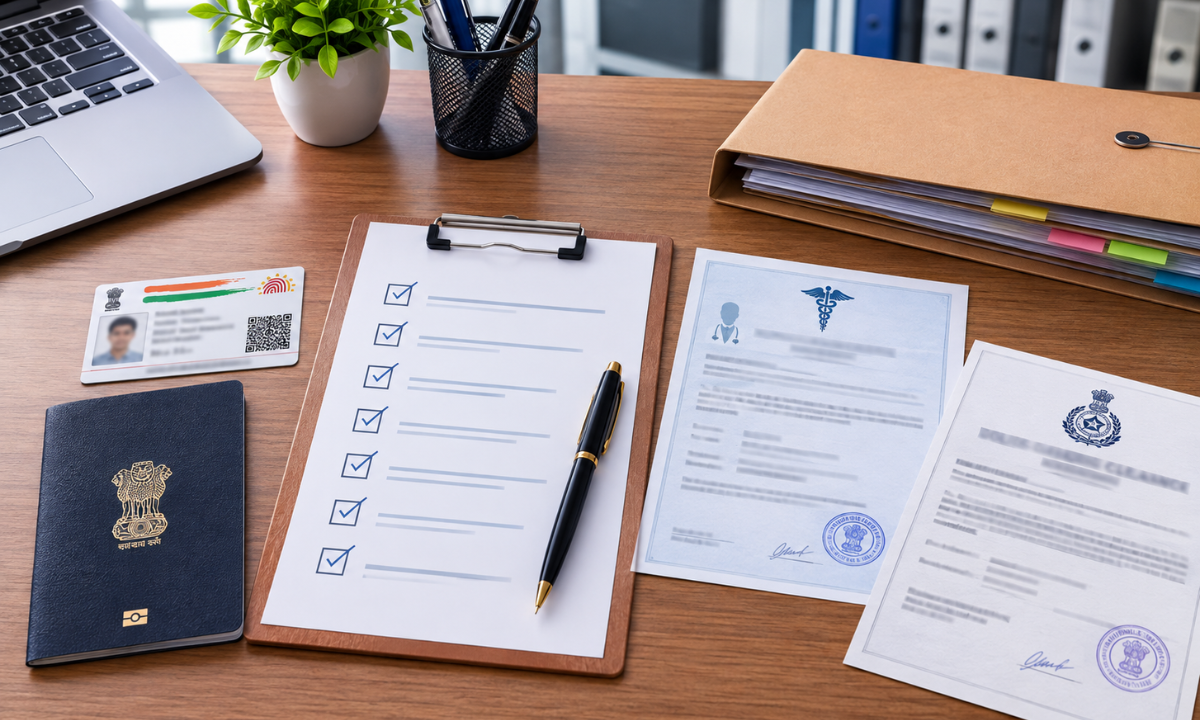
Once medical confirmation of death has been established, the next essential phase involves assembling the core identity records and statutory permissions.
Gathering these records promptly prevents administrative friction when fulfilling essential death formalities India mandates. Whether liaising with local municipal health officers, hospital administrative staff, or certified mortuary coordinators, having a complete, organized file of documents ensures that every authority can verify identities and issue necessary transport clearances without distressing delays.
Essential Document Verification Checklist
Before engaging an undertaker, booking an AC mortuary van, or initiating flight cargo reservations, ensure that the following core documents are collected and verified:
- Medical Certificate of Cause of Death (MCCD): The original Form 4 (institutional hospital death) or Form 4A (non-institutional home death), fully signed and stamped by a registered medical practitioner.
- Official Government Identity Proof of the Deceased: Original Aadhaar Card, Passport, Voter ID Card, or Driving Licence to confirm full name, age, residential address, and citizenship details.
- Government Identity Proof of the Primary Informant / Next-of-Kin: Aadhaar Card or Passport belonging to the immediate family member or authorised representative taking responsibility for the arrangements.
- Police No Objection Certificate (NOC) & Inquest Report: Mandatory documentation issued by the local police station holding jurisdiction, required for all medico-legal cases, accidental deaths, or inter-state transfers.
- Post-Mortem Examination Report: The formal forensic summary issued by a government hospital mortuary following an autopsy, certifying the precise medical cause of passing.
- Local Authority / RWA Intimation Letter: Written notification to the local Municipal Corporation or Resident Welfare Association, often required when positioning a portable freezer box at a residential location.
Having these documents verified and accessible creates an administrative foundation that protects your family from unexpected delays during subsequent clearance steps.
Managing Documents Efficiently During Bereavement
During moments of acute grief, keeping physical paperwork organized can feel burdensome. Placing all original documents alongside at least five physical photocopies and high-resolution digital scans on a smartphone within a single, dedicated document folder proves invaluable.
When hospital administrators, municipal officials, police personnel, or transport drivers request identity verification, presenting a complete folder eliminates panic and ensures that every official hand-over is executed smoothly and with complete dignity.
Step 3: Short-Term Preservation at Home / Mortuary
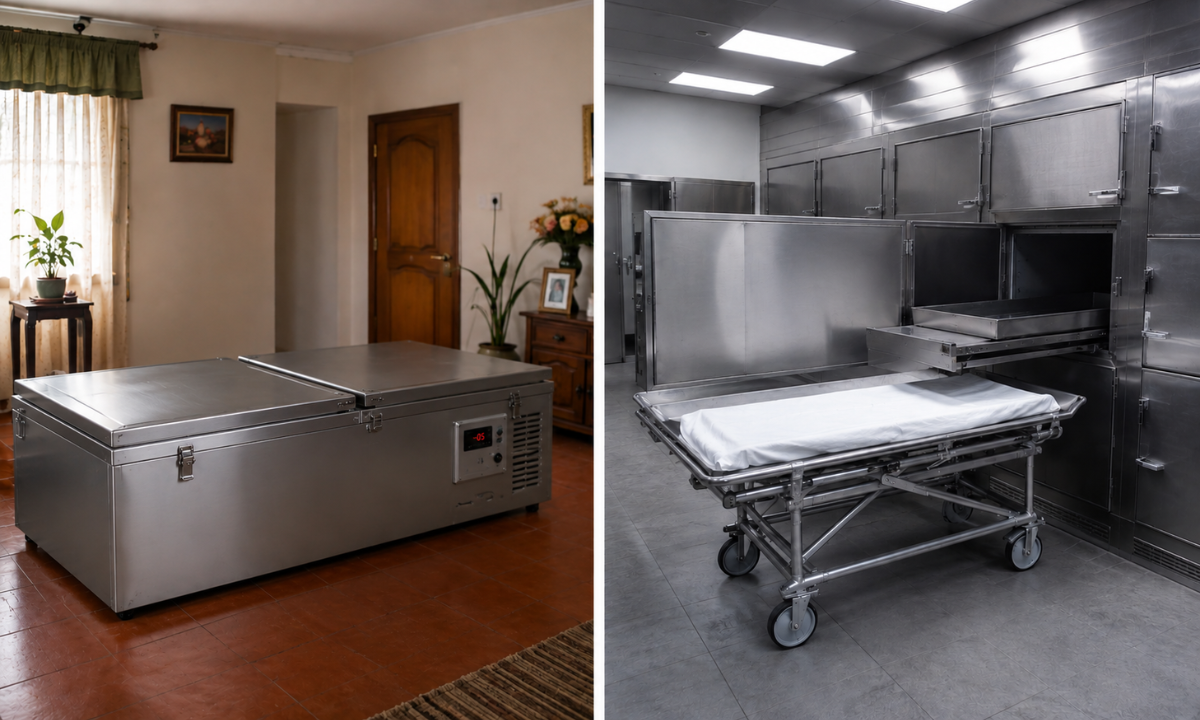
After securing medical verification and gathering initial documentation, managing the physical care of your loved one becomes the next critical priority. Depending on whether out-of-town family members are travelling, religious timing requirements, or administrative clearances for inter-state transport, several hours or even days may pass before final rites or long-distance journeys can begin.
Integrating short-term preservation into your broader funeral planning guide ensures that your loved one remains dignified, peaceful, and fully protected throughout this waiting period.
Option A: Residential Preservation Using a Mobile Freezer Box
When a passing occurs at home, and the family wishes to keep their loved one at the residence until out-of-station relatives arrive, hiring a portable mortuary freezer box offers a practical and dignified solution:
- Sub-Zero Climate Control: These specialized, stainless-steel cabinets feature glass viewing panels and integrated refrigeration units that maintain temperatures between 0°C and -5°C, effectively retarding natural cellular breakdown.
- Ease of Residential Installation: Designed to operate on standard domestic electrical outlets, mobile freezer units can be comfortably positioned in a spacious living room or main hall.
- Maintaining Emotional Closeness: Keeping your loved one at home inside a freezer box allows family members, neighbours, and friends to pay their respects and offer prayers in a quiet, familiar environment without rushing.
Placing a mobile freezer box at home provides a calm, supportive environment for mourning, allowing the family the necessary time to coordinate subsequent logistics without feeling pressured by time.
Option B: Hospital Mortuary Cold Storage Facilities
If keeping the deceased at home is not feasible due to space constraints, warm weather conditions, or multi-day travel delays, utilizing a hospital mortuary cold storage facility is the safest option:
- Professional Temperature Control: Hospital mortuaries maintain medical-grade refrigeration chambers set between 2°C and 4°C, ensuring optimal preservation for extended durations.
- Secure Custody During Formalities: Storage within a hospital mortuary is particularly helpful when waiting for police clearances in medico-legal cases, securing embassy NOCs, or finalising airline cargo schedules.
- Regulated Access for Authorized Relatives: Mortuaries operate strict identification and release protocols, ensuring that only authorised next of kin can request viewing or authorise body release for transport.
Selecting hospital cold storage offers absolute peace of mind regarding preservation quality, freeing your family to focus on administrative permits and long-distance travel arrangements.
Essential Immediate Care Practices at Home
In the hours immediately following a passing before a freezer box arrives or before moving to a mortuary, taking simple, respectful physical steps helps preserve dignity:
- Body Positioning & Alignment: Gently close the eyes and align the limbs. Placing a small pillow beneath the head elevates it slightly, preventing facial discoloration, while softly binding the jaw with a soft cloth keeps the mouth naturally closed.
- Room Temperature Optimization: Keep the immediate room as cool as possible by closing windows, drawing curtains to block direct sunlight, and running air conditioning units at their lowest temperature setting.
- Hygiene & Comfort Measures: Cover the deceased with a clean, light cotton sheet up to the shoulders. Avoid applying heavy blankets or tight synthetic coverings that retain body heat.
Attending to these immediate care details honours your loved one’s memory and ensures they remain comfortable and dignified while your family prepares for the next steps in the journey.
Step 4: Understanding the Decision Matrix
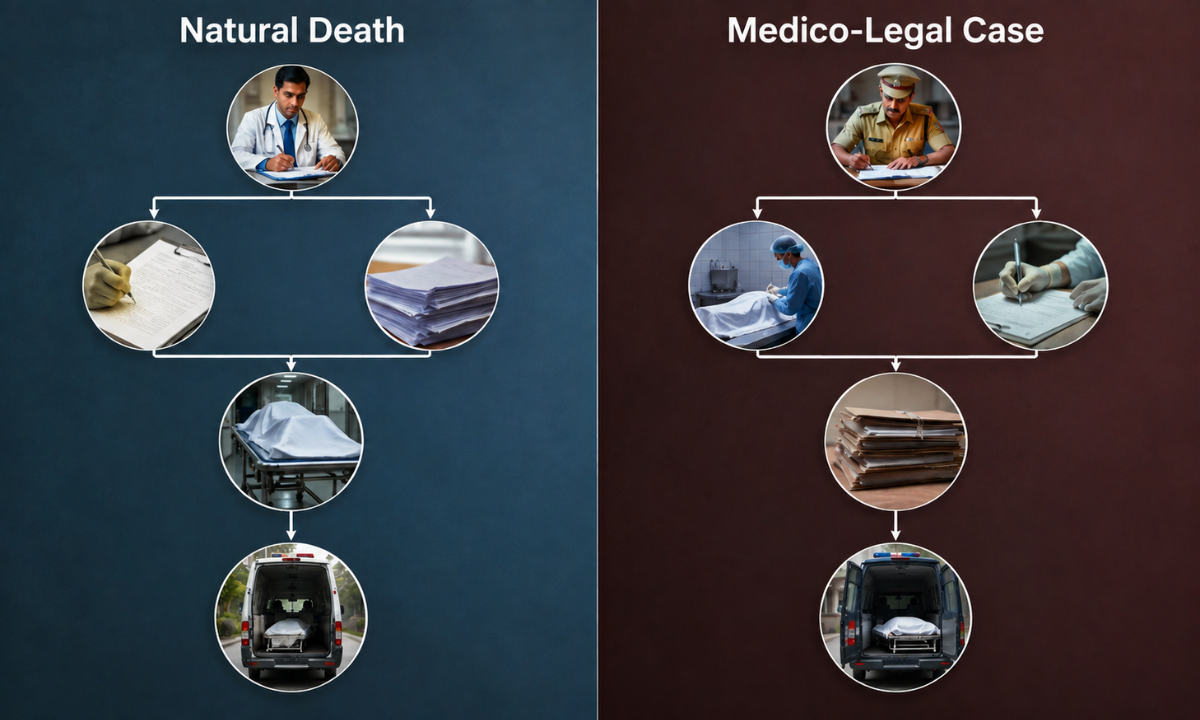
In India, every passing is legally classified under one of two procedural categories: a Natural Death or a Medico-Legal Case (MLC). Identifying which category your situation falls into is critical, as attempting to proceed with private transport without understanding these legal boundaries can lead to immediate halts by police checkpoints, municipal rejections, or severe legal complications.
Understanding these pathways clearly allows your family to take appropriate action, ensuring that all statutory obligations are fulfilled smoothly before long-distance transit or final rites begin.
Procedural Comparison: Natural vs. Medico-Legal Pathways
The following comparison table outlines the primary operational differences, required documentation, and administrative timelines for both case types:
| Procedural Parameter | Natural Death (Hospital or Home) | Medico-Legal Case (Accidental / Unnatural) |
|---|---|---|
| First Point of Contact | Attending MBBS Doctor or Hospital Staff | Local Police Station (100 / 112 Emergency) |
| Core Medical Document | Medical Certificate of Cause of Death (MCCD Form 4/4A) | Forensic Post-Mortem / Autopsy Report |
| Police Involvement Required? | No. Police notification is not required for natural deaths. | Yes. Police inquest, scene inspection, and formal NOC are mandatory. |
| Mandatory Autopsy? | No. Autopsies are not performed for natural, documented illnesses. | Yes. A government hospital autopsy is legally required to establish the cause. |
| Average Clearance Timeline | 1 to 3 hours from medical verification. | 6 to 24 hours (subject to police investigation and mortuary schedules). |
| Body Release Authority | Attending Physician or Hospital Administration | Investigating Police Officer & Government Forensic Mortuary |
Understanding these legal differences helps your family anticipate realistic timelines and avoid administrative confusion during an already distressing period.
Detailed Breakdown: The Natural Death Pathway
When a passing occurs as a result of advanced age, known chronic medical conditions, or documented terminal illness, the legal process is straightforward and respectful:
- Direct Medical Release: Once the attending physician verifies the absence of vital signs and reviews prior medical history, they issue the official MCCD (Form 4 for hospitals or Form 4A for home passings).
- Immediate Custody Transfer: No police intervention or post-mortem examination is required. The family receives immediate custody of their loved one and can proceed directly with local funeral arrangements, mobile freezer placement, or embalming for air travel.
- Simplified Municipal Registration: The MCCD, alongside identity documents, is submitted directly to the local municipal health officer or registrar of births and deaths to obtain the official Death Certificate.
As natural deaths involve minimal statutory delays, families can quickly transition toward arranging dignified transport and coordinating final religious rites.
Detailed Breakdown: The Medico-Legal Case (MLC) Pathway
If a passing involves a road accident, sudden collapse without prior medical history, industrial mishap, suspected suicide, or any circumstance where the cause of death is uncertain, statutory law mandates a strict investigative protocol:
- Police Inquest & Panchnama: Investigating officers visit the site or hospital to record statements from relatives and witnesses, creating an official inquest report (Panchnama).
- Government Forensic Autopsy: The deceased is transferred to a government medical college or district hospital mortuary, where certified forensic pathologists perform an autopsy to establish the exact cause of death.
- Issuance of Police No Objection Certificate (NOC): Upon completion of the autopsy, the investigating officer issues a formal Police NOC, authorizing the mortuary to release the deceased to the family.
While the MLC pathway requires patience and strict adherence to protocol, completed police clearances ensure that your family can transport your loved one anywhere across state lines or international borders without facing legal challenges along the way.
Step 5: Transitioning to Funeral Transport & Repatriation

Once medical certification is secured and legal release permissions are granted, your family reaches the pivotal transition point: arranging funeral transport to bring your loved one home or to their final resting place. Moving from administrative clearance to physical transportation requires careful evaluation of distance, travel time, and preservation needs to ensure the journey is conducted with uninterrupted dignity.
Whether moving a loved one across town, between neighboring districts, or across the country, selecting the appropriate transport pathway eliminates unnecessary delays and ensures complete safety throughout transit.
Selecting the Ideal Mode of Transportation
Depending on your destination, travel duration, and geographical terrain, transportation generally falls into three distinct categories:
- Local Hearse Vans: Purpose-built vehicles designed for short-distance intra-city transfers such as moving the deceased from a hospital mortuary to a family residence, or directly to a local crematorium or burial ground.
- Long-Distance Refrigerated Mortuary Ambulances: Equipped with active refrigeration or heavy-duty sub-zero freezer boxes, these specialised vehicles maintain controlled temperatures for inter-city ground journeys lasting up to 12 to 24 hours.
- Commercial Air Cargo & Air Ambulance Charters: Essential for inter-state journeys exceeding 500 kilometres or international repatriation. Air transit drastically reduces travel time, ensuring your loved one reaches distant hometowns in a matter of hours.
Evaluating these options based on your family’s specific geographical requirements guarantees that your loved one is moved safely, hygienically, and with complete solemnity.
Key Requirements when Preparing for Flight Transport
If your family selects air transportation, civil aviation health regulations mandate two essential preparation procedures before any commercial airline can accept human remains for cargo transit:
- Certified Medical Embalming: A specialised hygienic treatment performed by a licensed medical professional. Embalming chemically preserves the remains and neutralises biological hazards, ensuring stability during atmospheric pressure shifts in flight.
- Hermetically Sealed Zinc-Lined Coffin Box: Air cargo regulations strictly require the deceased to be placed inside a zinc-lined wooden casket. Once secured, the inner zinc lining is hermetically sealed (soldered airtight) to prevent any leakage or air pressure issues during flight.
Completing these preparation procedures ensures full compliance with international aviation protocols, allowing airlines to process cargo acceptance without risk of departure delays.
Seamless Doorstep Coordination in Bengaluru & Nationwide
Navigating hospital handovers, securing embalming certificates, and arranging airport terminal clearances can be exhausting during acute bereavement. For families seeking Dead body transportation in Bangalore or across major urban centres in India, Beleiv Repatriation provides complete, doorstep coordination:
- Direct Hospital & Mortuary Pickup: Our team handles all physical transfers directly from hospital wards, ICU mortuaries, or private residences.
- Turnkey Airport Liaison: We manage the entire air cargo logistics chain, including embalming, custom zinc-lined casket fabrication, police airport clearances, and airline booking confirmations.
- Receiving Support at Destination: We arrange receiving mortuary ambulances at the destination airport to ensure a smooth handover straight to your ancestral home.
By entrusting these complex logistical tasks to experienced professionals, your family is freed from operational stress, allowing you to focus entirely on honouring your loved one’s memory.
Note on Service & Transport Costs: Financial charges associated with medical certification fees, mortuary cold storage, embalming, and transport vehicles vary depending on hospital policies, distance, and municipal regulations. All costs are subject to change based on route and timing variables. Contact Beleiv Repatriation directly at +91 99012 24122 for a transparent, itemised, and accurate quotation tailored to your situation.
Why Choose Beleiv Repatriation?
Navigating the immediate aftermath of losing a loved one is one of life’s most emotionally overwhelming challenges. Attempting to manage medical certifications, police clearances, municipal paperwork, and transport logistics while experiencing acute grief can feel unbearable. You do not have to carry this heavy burden alone.
How Beleiv Repatriation Lightens Your Burden in the First Hours of Loss
When you reach out to our team, we take immediate responsibility for organizing statutory formalities and transport preparations, ensuring your loved one is treated with absolute dignity:
- 24/7 Immediate Response & Doorstep Guidance: Loss happens without warning. Our specialized care coordinators are available around the clock, 365 days a year, providing immediate on-site assistance at hospitals, private residences, or mortuaries in Bengaluru and across major urban centres in India.
- Turnkey Medical & Legal Facilitation: Gathering MCCD forms, coordinating with attending physicians, obtaining police No Objection Certificates (NOCs) for medico-legal cases, and securing local municipal permits can be exhausting. Our team handles all liaison work directly with authorities to prevent distressing administrative delays.
- Professional Preservation & Hygienic Care: Whether your family requires a portable mortuary freezer box delivered to your home or needs certified medical embalming for long-distance air transit, we provide complete, hygienic care adhering to international health standards.
- IATA-Compliant Flight & Mortuary Logistics: From custom-built, zinc-lined wooden coffins to airline cargo terminal bookings and airport health clearance approvals, we oversee every step of flight-based repatriation so your family can travel with complete peace of mind.
- Multi-Faith & Culturally Sensitive Protocols: We hold profound respect for sacred religious customs. Whether your traditions mandate rapid turnaround for Islamic or Jewish burials, specialized preparations for Hindu last rites, or specific Christian funeral services, we tailor our procedures to honour your family’s exact spiritual requirements.
We serve as a reassuring, empathetic support system for grieving families, stepping in immediately after a death occurs to manage every administrative, medical, and logistical detail on your behalf.
Conclusion
Taking the correct initial steps immediately after a passing securing medical verification, organizing core identity documents, and choosing appropriate short-term preservation ensures that your loved one’s final journey begins without unnecessary friction or legal distress. By approaching these mandatory formalities systematically, you protect your family from administrative panic and safeguard the dignity of the deceased.
Whenever you feel overwhelmed, remember that Beleiv Repatriation is ready to carry the operational weight, allowing your family the quiet space and time needed to support one another, grieve peacefully, and remember your loved one with love.
We Are Here to Support You 24 Hours a Day
If you have experienced a loss, require immediate guidance on initial formalities, or need to organize local or long-distance transport, our dedicated team is available to assist you at any time of day or night.
- 24/7 Emergency Helplines: +91 99010 43505
- Official Email: madhu@beleiv.com
- Official Website: beleivrepatriation.com