

Losing a loved one is an overwhelming experience, leaving families to navigate acute grief while facing urgent, unexpected logistical decisions.
When a passing occurs far from home, deciding on an air vs road ambulance for body transportation becomes one of the most significant choices you will make. During these distressing moments, compassionate repatriation services in India step in to lighten the burden, helping you assess various funeral transport options with absolute dignity and clarity.
Whether arranging dead body transportation in Bangalore or coordinating inter-state transfers across the country, selecting the right mode of transit ensures your loved one is returned home smoothly and respectfully.
When moving a deceased family member across cities or state boundaries, time and distance play crucial roles. Families often find themselves torn between the swiftness of air transit and the direct, ground-level flexibility offered by road transport. Each method carries its own set of practical considerations, regulatory mandates, and logistical steps.
The primary objective is always the same: to ensure that the journey is conducted with solemnity, safety, and unwavering respect for both the deceased and the grieving family.
Every family’s circumstances during a bereavement are unique. Factors such as geographical distance, terrain, weather conditions, urgency for religious rites, and financial considerations all influence which option is most suitable.
Understanding how air cargo, private charter flights, and specialised mortuary vehicles operate allows you to make an informed, calm decision during a period of intense grief. Our dedicated team at Beleiv Repatriation takes complete responsibility for these complex arrangements, allowing you the space and time to focus on honouring your loved one’s memory.
Road Ambulance Transport

When arranging final journeys over short to moderate distances, typically within 400 to 500 kilometres, ground transport remains one of the most practical and comforting choices for families.
Road transit provides direct, door-to-door continuity without the strict scheduling constraints, cargo terminal waiting times, or airport handovers associated with air travel. Utilizing specialised road ambulance services, families retain complete control over the departure time and can often travel alongside their loved one throughout the journey.
Vehicle Options for Ground Transportation
To accommodate varying distances, family preferences, and preservation needs, ground transit is carried out using distinct types of purpose-built vehicles:
- Hearse Vans: Designed primarily for local, intra-city transfers such as moving a loved one from a hospital or mortuary to home, or directly to a cremation ground or cemetery. These vehicles offer a clean, enclosed space with comfortable seating for immediate family members.
- Refrigerated Mortuary Vans: Fitted with active internal refrigeration units, these specialised vehicles maintain a consistent cool temperature (typically between 2°C and 8°C). They are ideal for regional, inter-city journeys lasting several hours across hot climates.
- Mortuary Ambulances with Integrated Freezer Boxes: For longer inter-state journeys by road, an ambulance for human remains equipped with a heavy-duty portable freezer box is deployed. These stainless-steel cabinets maintain sub-zero temperatures (ranging from 0°C to -5°C), preventing natural decomposition even during extended transit.
Each vehicle in the fleet is thoroughly sanitised, climate-controlled, and driven by respectful, experienced personnel who understand the solemnity of the journey.
When Is Road Transport the Right Choice?
Selecting road transit offers distinct practical advantages under specific geographical and timing circumstances:
- Distances Under 500 Kilometres: For travel between neighbouring cities or regional districts, road transport often matches total air transit time when factoring in airline cargo acceptance windows and airport clearance handovers.
- Direct Access to Remote & Rural Locations: Many ancestral villages and smaller towns lack nearby commercial airports. A mortuary van travels directly from the hospital or mortuary straight to the family home or final resting place, eliminating secondary vehicle transfers.
- Immediate Departure Without Flight Delays: Commercial flights operate on fixed timetables and require cargo booking windows before departure. A road ambulance can be dispatched immediately, day or night, as soon as local paperwork is ready.
- Accompanied Travel for Family Members: Grieving family members who wish to stay close to their loved one can travel in the same vehicle, providing immense emotional comfort during transit.
Removing intermediate handovers and administrative waiting periods, road transit offers a direct, gentle, and dignified solution for regional journeys.
Note on Transport Costs: All financial estimates and transport rates vary depending on distance in kilometres, vehicle specification (standard AC vs refrigerated freezer box), fuel fluctuations, and toll charges. Contact Beleiv Repatriation directly at +91 9901043505 for transparent, itemised costings tailored to your specific travel route.
Air Ambulance & Flight Cargo
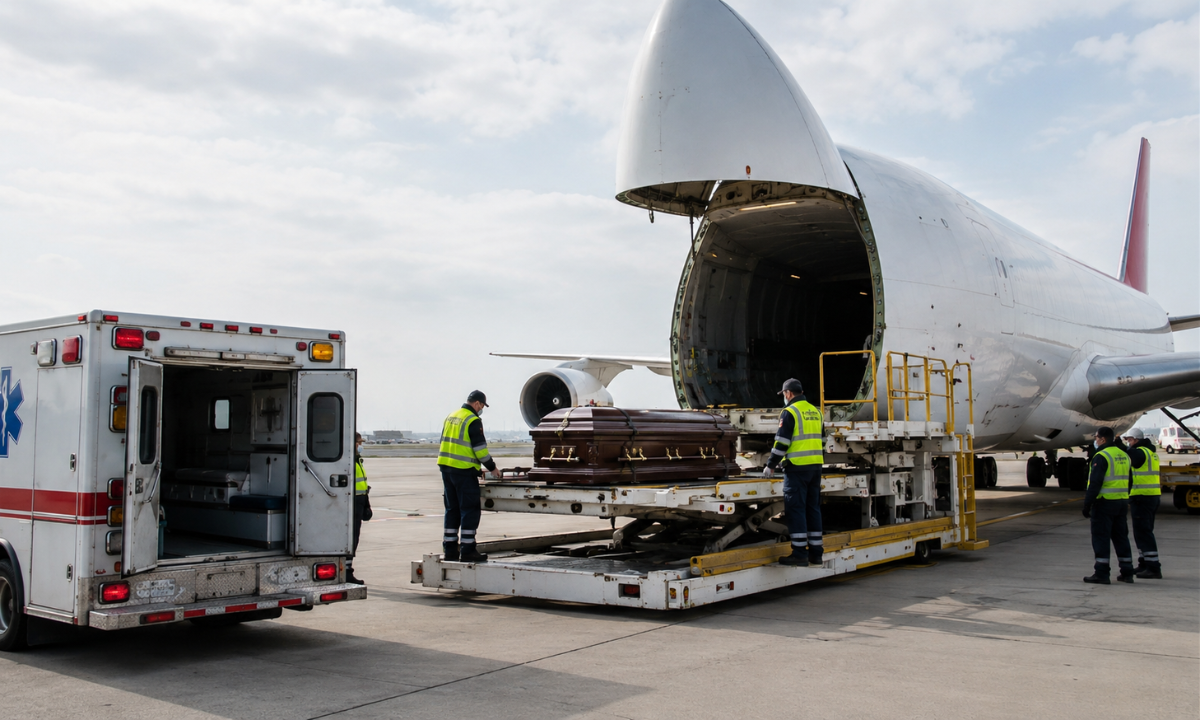
When a passing occurs thousands of kilometres away from a family’s ancestral home, time and geographical separation can significantly compound emotional distress.
In such delicate circumstances, body transport by air serves as a vital bridge, ensuring that distance does not stand in the way of bringing a loved one home for their final rites. Operating across major Indian aviation hubs and international air corridors, flight options provide the fastest, most dignified solution for long-distance transit.
Commercial Air Cargo vs. Private Air Ambulance Charters
Depending on the distance, urgency, and location of the origin and destination, aviation transit for human remains is broadly divided into two specialized pathways:
| Aviation Option | Operational Mechanism | Best Suited For |
|---|---|---|
| Commercial Air Cargo | The deceased is transported in a secured, temperature-regulated cargo hold of a scheduled commercial airliner (e.g., IndiGo, Air India). | Major domestic routes between cities with commercial airports (e.g., Bengaluru to Delhi, Mumbai, or Kolkata) and scheduled international repatriation flights. |
| Chartered Air Ambulance | A dedicated medical aircraft equipped with medical flight crew and specialized transport equipment is deployed exclusively for the journey. | Urgent remote-region evacuations where commercial flights are unavailable, or complex international transfers requiring private charter logistics. |
Using a commercial air cargo arrangement is the most common and cost-effective approach for long-distance transit between major urban centres
However, deploying a dedicated air ambulance for deceased transport becomes essential when commercial airline schedules cannot meet tight timeframes or when landing at smaller regional airstrips closer to home is required.
When Is Air Transport Essential?
While road travel offers flexibility for short distances, flight-based transit becomes the necessary choice under specific circumstances:
- Distances Exceeding 500 Kilometres: For inter-state journeys across India that would take 12 to 36 hours by road, air travel reduces total transit time to a matter of hours, minimizing physical disruption and stress.
- Time-Sensitive Religious Rites: Faith-based traditions often mandate that burial or cremation occur within a strict time frame. Flight travel accelerates long-distance repatriation so families can honour these sacred traditions without delay.
- International Repatriation: Crossing sovereign borders requires air transport. Whether returning a foreign national to their home country or bringing an Indian national home from abroad, air logistics provide the only viable passage.
Drastically reducing transit times, flight transport protects the physical condition of the deceased while alleviating the anxiety of grieving relatives waiting at home.
Mandatory Flight Compliance & Preservation Standards
Aviation authorities and international air transport regulations (IATA) enforce strict safety, hygiene, and documentation protocols for transporting human remains by air. Every flight transfer requires three fundamental compliance steps:
- Professional Embalming Treatment: Embalming is a mandatory medical procedure performed by a certified medical professional. It chemically preserves the physical remains, neutralizes biological hazards, and prepares the deceased for safe pressurized air travel.
- Hermetically Sealed Zinc-Lined Coffin Box: Air transport mandates the use of a specialized outer wooden coffin containing an inner zinc lining. Once the remains are placed inside, the zinc liner is hermetically sealed (soldered airtight) to prevent gas or fluid leakage during atmospheric pressure shifts in flight.
- Airport Health Authority & Customs Clearance: Before cargo acceptance, airport authorities verify the hospital death summary, embalming certificate, coffin box compliance letter, and police No Objection Certificate (NOC).
Navigating complex airline cargo desks, customs clearances, and health department approvals can feel overwhelming during a period of deep bereavement. Our dedicated airport liaison team oversees every document, airline booking, and terminal handover, ensuring your loved one is treated with solemnity and care at every stage of their flight.
Evaluating Funeral Transport Options
When navigating the deep grief of a sudden loss, processing complex logistical details can feel overwhelming. To help you evaluate your funeral transport options with clarity and calm, comparing the operational features of road and air transport side by side provides a clear, scannable overview.
Both methods are designed to uphold absolute dignity and respect; choosing between them depends primarily on the physical distance, geographical accessibility, and timing requirements of your family.
Air vs. Road Transportation Comparison Table

| Operational Parameter | Road Ambulance Services | Commercial Air Cargo / Air Charter |
|---|---|---|
| Recommended Distance | Best suited for journeys under 400 to 500 kilometres. | Essential for long-distance transit exceeding 500 kilometres or international repatriation. |
| Total Transit Timeline | Continuous ground travel (subject to highway traffic and road conditions). | Rapid transit (typically 2 to 6 hours flight time, plus 3 to 4 hours of airport cargo handling). |
| Preservation Mechanism | Temperature-controlled mobile freezer box (maintaining 0°C to -5°C) inside an AC mortuary van. | Professional medical embalming accompanied by a hermetically sealed, zinc-lined coffin box. |
| Documentation Requirements | Hospital Death Certificate, Doctor Summary, and Police NOC (for inter-state borders). | Death Certificate, Embalming Certificate, Coffin Box Certificate, Police NOC, and Photo IDs. |
| Family Accompaniment | Close family members can travel in the same vehicle alongside their loved one. | Family members travel on separate commercial passenger flights or dedicated charter seats. |
| Door-to-Door Continuity | Direct, seamless transport from hospital/mortuary straight to the family residence. | Requires ground ambulance transfers at both the departure and destination airports. |
Key Takeaways for Decision-Making
- Choosing Road Ambulance Transport: Selecting a specialized ambulance to transport human remains by road is often the most comforting option for short- to medium-distance travel. It eliminates airport cargo handovers, accommodates family members in the same vehicle, and travels directly to rural or residential destinations without requiring secondary transfers.
- Choosing Air Transportation: Opting for flight-based repatriation becomes vital when time is critical, when crossing international boundaries, or when travel across major domestic corridors would require a long, physically distressing journey by road. While it involves stricter compliance and documentation, it provides the fastest, most dignified route back to distant ancestral homes.
Balancing these factors ensures that your loved one’s final journey is conducted smoothly, allowing your family to prioritize peace of mind and shared remembrance.
Essential Legal & Documentation Checklist

During a period of sudden loss, managing statutory paperwork, police permissions, and medical clearances can feel overwhelming. Having a clear, structured understanding of the required documentation ensures that transit permissions are granted without distressing delays.
Whether arranging road transport or flight cargo, keeping these documents organised in a single folder will streamline clearances at municipal offices, police stations, and airport terminals.
1. Fundamental Documents Required for All Transits (Road & Air)
Before any transportation begins, whether by local hearse van, long-distance road ambulance, or aircraft, these core legal records must be secured:
- Official Death Certificate / Cause of Death Summary: Issued by the attending hospital doctor or registered medical practitioner (Form 4 for residential passing or Form 4A for hospital death).
- Government Identification of the Deceased: Original Aadhaar Card, Passport, Voter ID, or Driving Licence to confirm identity.
- Police No Objection Certificate (NOC): Issued by the local police station within whose jurisdiction the death occurred. This clearance certifies that no legal investigation or foul play is pending.
- Applicant & Receiver Identification: Government photo ID (Aadhaar Card, Passport, or PAN Card) and contact details of the family member or authorised representative organising the transport, as well as the receiver at the destination.
2. Mandatory Clearances for Air Cargo & Flight Transit
In addition to base legal records, commercial airlines and civil aviation health authorities strictly require specialised medical and packaging certifications before accepting human remains for flight cargo:
- Embalming Certificate: Issued by a licensed medical facility or certified embalming centre. This document certifies that the chemical preservation process has been completed according to health regulations, ensuring hygienic stability during atmospheric pressure shifts in flight.
- Coffin Sealing & Packaging Certificate: Issued by the undertaker or mortuary service. It confirms that the deceased has been placed inside a hermetically sealed, zinc-lined wooden casket compliant with international aviation security standards.
- Air Waybill (AWB) & Cargo Booking Reference: Issued by the airline cargo department upon document verification, detailing flight numbers, departure times, and destination terminal tracking.
3. Additional Documents for Medico-Legal or International Cases
For deaths involving post-mortem investigations, accidents, or international cross-border repatriations, specific statutory approvals are mandatory:
- Post-Mortem / Autopsy Report: Required in accidental, unnatural, or sudden unexpected deaths where a police investigation was initiated.
- Cancelled Passport & Foreign Embassy Clearance: For international repatriation, the original passport must be cancelled by the respective embassy or high commission, alongside a formal Consular No Objection Certificate and transit permit.
How Beleiv Repatriation Lightens Your Administrative Burden:
Gathering these certificates across hospitals, local police stations, municipal bodies, and airline cargo desks can be exhausting during bereavement. Beleiv Repatriation takes complete responsibility for liaising with authorities, obtaining certified translations, securing police NOCs, and verifying every document before departure so your family can focus on remembering your loved one.
Financial Cost Determinants: Understanding What Shapes Transportation Expenses

Discussing financial considerations while navigating the loss of a loved one can feel deeply uncomfortable. However, having a transparent, clear understanding of how transport expenses are calculated brings valuable peace of mind, protecting your family from unexpected complications during an already painful time.
Every repatriation or inter-state transfer is unique. Rather than relying on rigid, one-size-fits-all estimates, costs are determined by the specific logistical, medical, and administrative requirements of your chosen journey.
Key Factors Influencing Ground & Air Transport Costs
Whether arranging ground transit or air cargo repatriation, final expenses depend on several operational components working together:
1. Distance & Transit Route (Kilometres vs. Flight Sectors)
Road Ambulance Rates: Ground transport fees are primarily calculated based on the total distance in kilometres traveled from the point of pickup (hospital, mortuary, or residence) to the final destination. Factors such as whether the vehicle requires a specialized freezer box, continuous AC refrigeration, toll charges, and driver allowances for overnight inter-state journeys also contribute to the final route cost.
Air Freight Sectors: Flight charges depend on the specific domestic or international airline sector. Flying between major metro airports with frequent daily flights (such as Bengaluru, Delhi, or Mumbai) is structured differently from routes involving smaller regional airfields or multi-leg international flights.
2. Airline Chargeable Weight & Casket Specifications
Airlines do not charge air freight on a flat-rate basis; instead, fees are calculated on the total chargeable gross weight of the shipment at the cargo terminal.
- Combined Weight Assessment: This includes the physical weight of the deceased alongside the required inner zinc lining, the protective outer wooden coffin or casket, and external timber crating.
- Casket Selection: Standard certified wooden coffins designed for flight compliance provide a secure, dignified, and cost-effective option. Premium polished hardwoods or imported caskets increase total gross weight, which adjusts the overall airline cargo tariff accordingly.
3. Medical Embalming & Hygienic Preparation
Embalming is a mandatory statutory requirement for all air transit and long-distance road journeys exceeding 24 hours.
- Certified Medical Embalming: Performed by qualified medical practitioners, embalming procedures preserve physical remains and ensure public health safety during transit. Charges vary depending on whether the procedure is carried out at a government medical facility, private hospital mortuary, or specialized embalming centre.
- Sanitation & Sealing Documentation: The procedure includes the issuance of official Embalming and Coffin Sealing Certificates required by civil aviation health authorities and police checkpoints.
4. Ground Ambulance Coordination at Origin & Destination
Air transport requires a complete chain of ground support at both ends of the flight:
- Departure Terminal Logistics: A specialized mortuary van or freezer ambulance transports the deceased from the hospital or home to the airport cargo terminal, assisting through security screening and cargo acceptance.
- Destination Arrival Transfer: Upon arrival, a receiving hearse or AC mortuary ambulance meets the cargo terminal staff to transfer your loved one straight to your ancestral home, crematorium, or burial ground.
5. Statutory Permits, Consular Fees & Administrative Clearances
- Domestic Clearances: Administrative expenses cover police No Objection Certificates (NOCs), municipal registrar death permits, and official documentation verification.
- International Repatriation Fees: For cross-border repatriation, total costs encompass foreign embassy or high commission attestation fees, apostille seals, certified language translations, customs clearance handling, and airport health authority inspection charges.
How Beleiv Repatriation Ensures Absolute Pricing Transparency
During bereavement, families should never have to worry about hidden fees or sudden financial demands. At Beleiv Repatriation, we uphold absolute transparency at every step:
- Itemised Cost Breakdowns: We provide a clear, comprehensive quote outlining every service component from ground hearse transfers and embalming to airline cargo tariffs and terminal handling.
- Direct Coordination Without Middlemen: By managing relationships directly with airline cargo desks, certified embalmers, and logistics partners, we eliminate unnecessary third-party markups.
- Financial Clarity Before Commitment: Every detail is explained upfront so your family can make informed, confident choices aligned with your wishes and budget.
Managing every financial and administrative detail with integrity, Beleiv allows your family to focus entirely on honouring your loved one’s memory in peace.
Why Choose Beleiv Repatriation?
Navigating the loss of a loved one while managing complex logistical decisions across cities or international borders is one of life’s most difficult moments. Whether your family decides on a specialized road ambulance for a regional journey or opts for flight cargo repatriation across long distances, having a dedicated, experienced partner ensures that every detail is managed with solemnity, respect, and absolute care.
Key Pillars of Support from Beleiv Repatriation
When you entrust your loved one’s final journey to our team, we guarantee an end-to-end service grounded in dignity, efficiency, and complete transparency:
- 24/7 Immediate Emergency Assistance: Loss does not adhere to business hours. Our specialized repatriation coordinators operate around the clock, 365 days a year, providing immediate doorstep support in Bengaluru and across major urban centres throughout India.
- Turnkey Legal & Statutory Management: Gathering medical certificates, police No Objection Certificates (NOCs), municipal death permits, and embassy clearances can be overwhelming. Our team liaises directly with hospital authorities, police stations, local registrar offices, and foreign consulates to secure all mandatory permits swiftly.
- IATA-Compliant Flight & Mortuary Logistics: From professional, certified embalming and custom zinc-lined wooden coffins to commercial airline cargo bookings and airport health authority approvals, we manage the entire flight logistics chain to ensure smooth air transit.
- Multi-Faith & Culturally Sensitive Protocols: We hold profound respect for sacred religious customs. Whether your traditions require rapid turnaround for Islamic or Jewish burials, specialized preparations for Hindu last rites, or specific Christian funeral arrangements, we tailor every step to align with your family’s faith requirements.
- Integrated Nationwide & Global Network: Through our established relationships with commercial airlines, private charter fleets, and certified ground mortuary teams, we provide seamless door-to-door coordination across India and worldwide destinations.
We act as an empathetic support system for grieving families, taking full responsibility for ground logistics, medical embalming, statutory paperwork, police permissions, and airline clearances. Our mission is to remove every administrative burden from your shoulders, giving your family the emotional space to grieve and honour your loved one’s memory.
Conclusion
Deciding between air and road transport ultimately comes down to geographical distance, urgency, and your family’s personal comfort. Road ambulances offer direct, continuous, door-to-door transit for short and medium distances, allowing family members to travel alongside their loved one. Air transportation provides the fastest, most dignified passage across long distances, ensuring that physical separation never prevents a loved one from returning to their ancestral home.
Whichever path you choose, Beleiv Repatriation stands beside you to carry the operational weight, guaranteeing that your loved one’s final journey is conducted with solemnity, grace, and total peace of mind.
We Are Here to Help. Reach Out Anytime
If you require immediate assistance, wish to inquire about transport options, or need a transparent, itemised estimate for deceased transportation, our dedicated care team is available 24 hours a day.
- 24/7 Emergency Helpline: +91 99010 43505
- Official Email: madhu@beleiv.com
- Official Website: beleivrepatriation.com