

Losing a loved one is undeniably one of the most painful experiences a family can ever endure. When this profound loss occurs far away from home, the heavy grief is immediately compounded by sudden logistical challenges and overwhelming financial anxiety around funeral repatriation.
We deeply understand that during these darkest hours, your only desire is to bring your family member home through a dignified funeral repatriation process. However, the sudden need to navigate complex international laws and arrange urgent transportation often leaves grieving families feeling lost and terrified of unknown expenses.
We created this comprehensive guide to provide you with absolute clarity and peace of mind during this incredibly difficult time.
Understanding the exact cost of funeral repatriation is the very first step toward regaining a small sense of control over a chaotic situation. We will gently walk you through every single variable that influences the final financial outcome. Transparently breaking down the essential medical preparations, required legal paperwork, and complex travel logistics, we aim to demystify the entire process.
You do not have to walk this painful path blindly or alone. Our sincere goal is to empower you with honest, transparent information so you can focus entirely on honouring your loved one instead of worrying about unexpected financial burdens.
Factors Influencing the Final Price
When a family is suddenly faced with the loss of a loved one, the last thing they should have to worry about is complex pricing structures.
However, having a clear understanding of the fundamental variables that dictate the final expenses can help you make informed decisions and prevent unexpected financial stress. The total price of bringing your family member home is not a single flat fee. It is carefully calculated based on a few primary logistical factors that ensure their safe and dignified journey.
The most significant element influencing the overall budget is the distance and the required mode of transportation. Moving a loved one across a state border within India requires a very different logistical approach compared to navigating international aviation laws.
Below, we have provided a transparent breakdown of the typical 2026 pricing structures you can expect based on current industry standards.
Domestic Transportation Road Versus Air
For journeys within India, families generally choose between specialised road ambulances for shorter distances and domestic air cargo for rapid transit across the country.
| Mode of Transport | Approximate Pricing | Key Considerations Influencing the Price |
|---|---|---|
| Inter City Road Ambulance | ₹25 to ₹40 per kilometer | The total distance travelled, toll taxes, and whether a specialised freezer unit is required for longer journeys |
| Domestic Air Cargo | ₹25,000 to ₹60,000 | The specific airline chose the final chargeable weight of the coffin and the route availability |
| Local Airport Transfer | ₹3,500 to ₹10,000 | The ground ambulance is required to safely transport your loved one to and from the respective airports |
Note: The costs listed above are estimated industry averages and are subject to change without notice. Actual funeral repatriation pricing varies significantly based on real-time airline cargo tariffs, distance, destination regulations, embassy documentation fees, and specific family requirements.
The Complexities of International Repatriation
When a tragedy occurs overseas, the logistical requirements and the associated costs increase significantly. International transportation requires navigating complex foreign embassy regulations, strict aviation compliance and multi-country coordination.
| International Logistics | Approximate Pricing | Key Considerations Influencing the Price |
|---|---|---|
| Global Flight and Cargo Fees | ₹2,00,000 to ₹20,00,000 | The specific foreign country laws, international flight distances and massive differences in foreign currency exchange rates |
| Embassy and Consulate Clearances | Highly Variable | Required legal translations, specialised foreign notary services and mandatory international health department approvals |
Note: It is crucial to remember that airline cargo fees are almost always calculated based on the combined physical weight of the deceased and the required specialised coffin.
This means costs will naturally vary for each family. By understanding these core variables early, you can begin to mentally prepare for the logistical journey ahead, knowing exactly why certain expenses are necessary to bring your loved one home.
Essential Care in Medical and Physical Preparation
Preparing a departed loved one for their final journey is a deeply sensitive process that requires the utmost respect and gentle professional care.
When families arrange transportation across long distances, ensuring the physical preservation and dignity of the deceased becomes a priority. This critical phase involves specific medical and procedural steps that naturally factor into the overall financial considerations. We want to transparently explain these necessary procedures, so you understand exactly how your loved one is being cared for during transit.
Let us explore the core elements of physical care and why certain medical procedures are strictly mandated by domestic and international transportation authorities.
The Phases of Respectful Physical Preparation
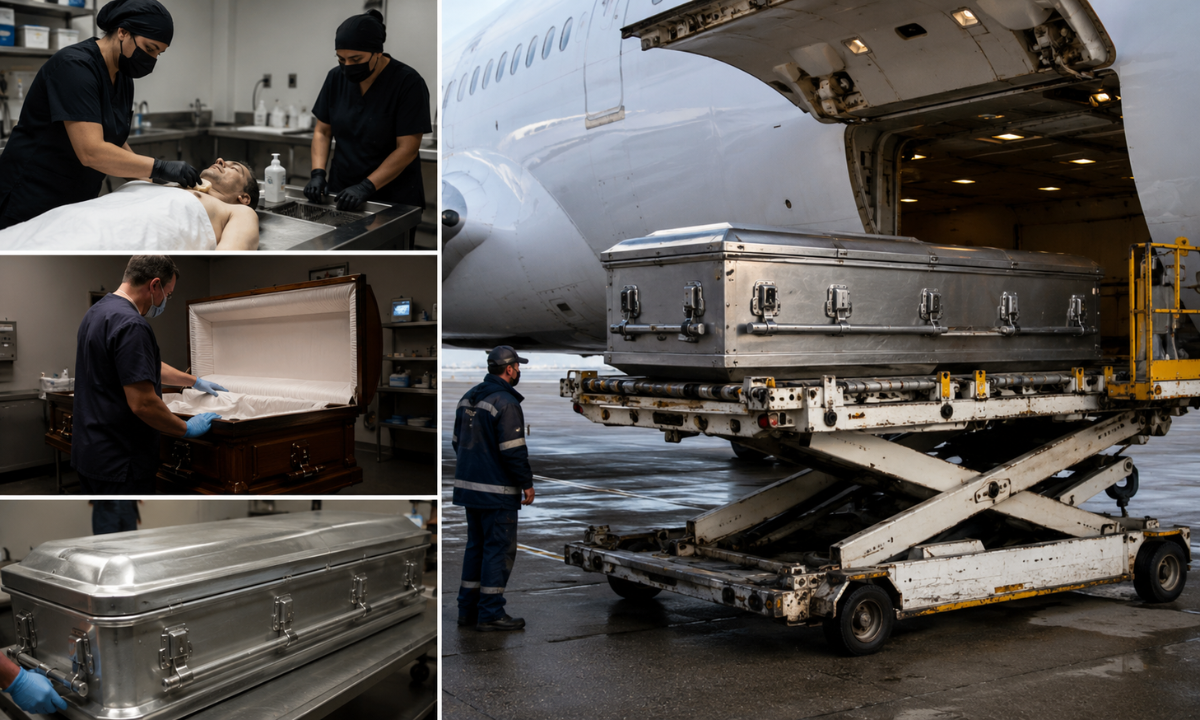
The costs associated with preparing your loved one are directly tied to preserving their dignity and ensuring strict compliance with global health regulations.
1. Respectful dead body preparation
This process involves gently cleaning, dressing and grooming the deceased according to the specific cultural and religious wishes of your family.
The associated costs generally cover the highly specialised services of mortuary experts, the use of a sterile preparation facility and the provision of a dignified standard coffin. Our primary goal is to ensure they look peaceful and deeply cared for.
2. The Mandatory Requirement of Embalming
When families need to fly their loved ones across the country or across international borders, embalming is absolutely never considered an optional luxury.
It is a strict mandatory legal requirement heavily enforced by all major airlines and global health departments. This specialised medical procedure temporarily preserves the physical body, preventing any natural deterioration during long stressful transit hours or unexpected flight delays.
3. Specialised Sealing and Casketing
For international air travel, standard wooden coffins are not legally permitted on their own.
Aviation laws require the deceased to be placed inside a specialised zinc-lined coffin, which is then hermetically sealed. This strict sealing process ensures maximum safety for airline staff and guarantees the complete security of your loved one during high-altitude flights.
Without a valid certificate proving these medical procedures were professionally completed, no commercial airline in the world will legally accept the deceased for transport.
While these procedures do add to the total financial budget, they are unavoidable expenses that guarantee your family member arrives home safely and in a peaceful condition. This essential physical care directly paves the way for the complex legal paperwork required to officially authorise the journey.
Paperwork Legal and Administrative Documentation
Facing a long procedure of paperwork is undeniably the most exhausting hurdle for any grieving family. While you are desperately trying to process an immense emotional loss, you are suddenly forced to interact with local police stations, hospitals and government municipal offices.
We deeply understand how utterly overwhelming this feels. Our goal is to bring clarity to this complex administrative matter by transparently explaining exactly what paperwork is mandatory, the realistic timeframes you should expect and the standard administrative fees involved.
The entire transportation process legally hinges on securing one foundational document. You must obtain a localised official death certificate before any airline or ground transport will legally accept your loved one. This process typically involves two distinct phases.
First, the attending doctor or local hospital issues a preliminary medical cause of death declaration. Second, this medical declaration must be formally registered with the local municipal corporation to generate the finalised government-issued certificate.
To ensure you are never caught off guard, we have categorised the exact documents required for funeral repatriation alongside the standard financial expectations and typical waiting periods.
Phase One Local Medical and Police Clearances
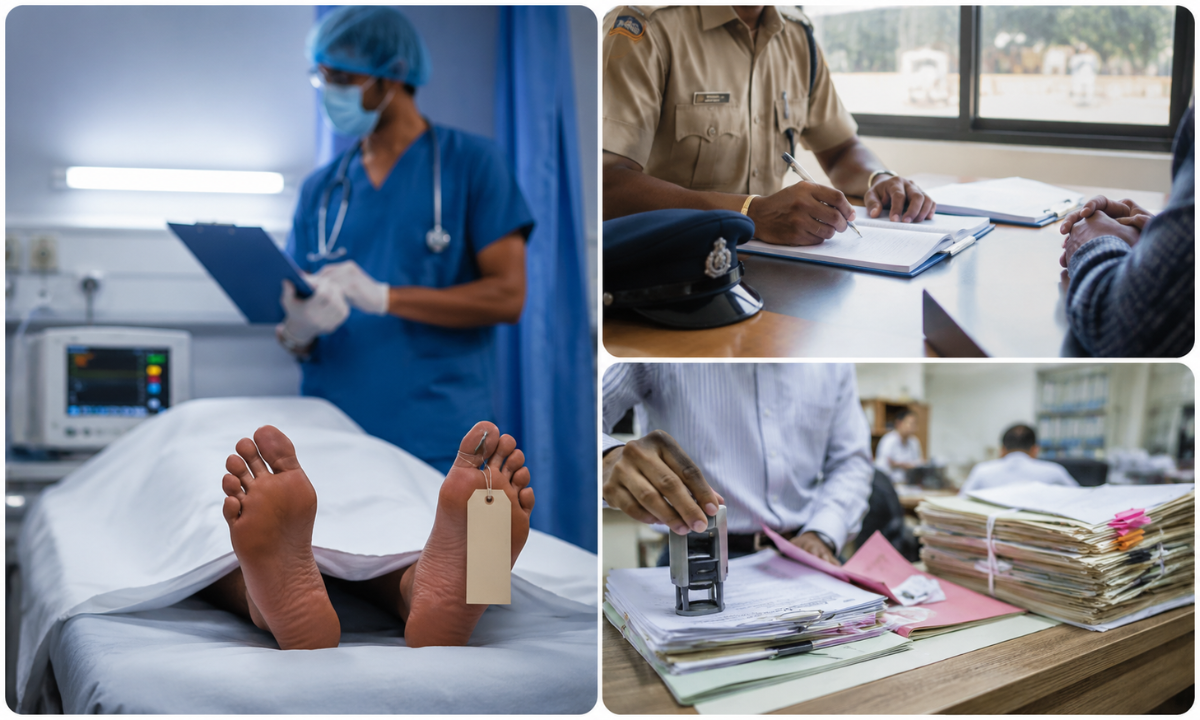
Before any physical movement can occur, local authorities must officially clear the circumstances of the passing.
1. The Hospital Declaration
This is usually provided immediately upon passing by the attending medical staff at zero administrative cost.
2. The Police No Objection Certificate
This clearance is strictly mandatory for accidental or sudden passing outside of a hospital. While officially a free government service, securing this clearance can occasionally delay the overall process by 24 to 48 hours, depending on local police jurisdictions.
3. The Official Municipal Certificate
Getting multiple original copies from the local government office usually costs between ₹100 and ₹500. We strongly advise securing at least ten original stamped copies because various airport and health authorities will permanently retain them.
Phase Two Transit and Health Department Approvals
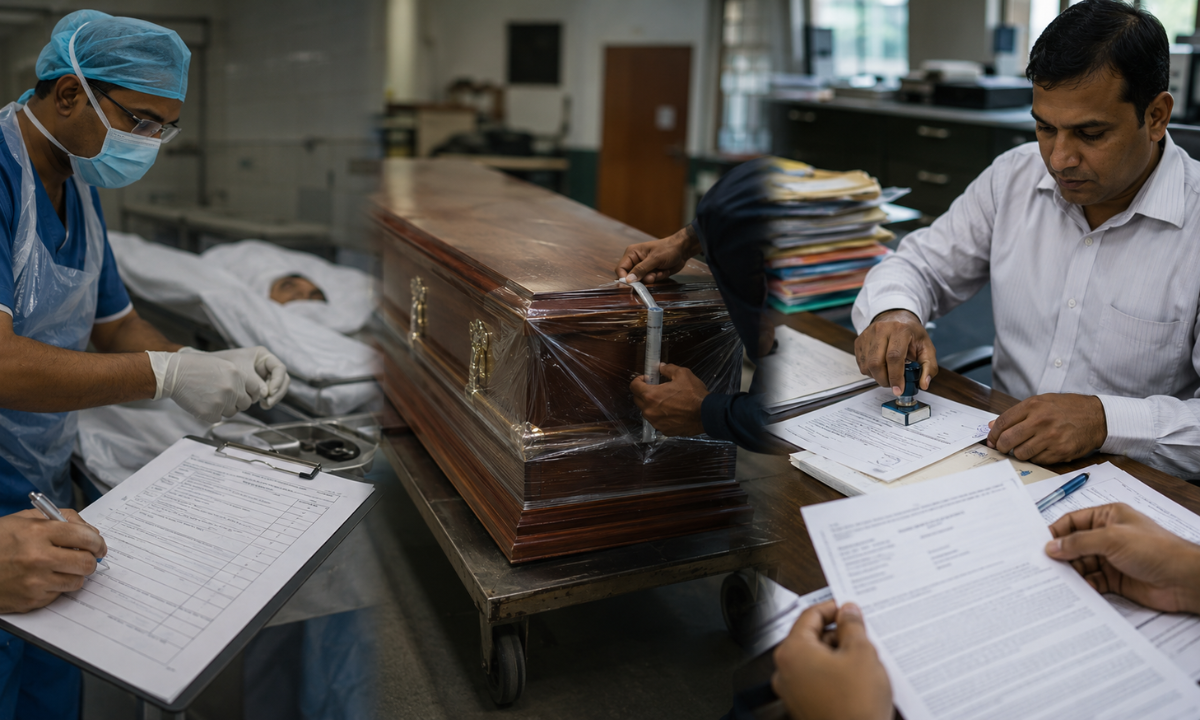
Once the local police and medical authorities grant clearance, the focus shifts directly to health and aviation compliance.
1. The Embalming Certificate
Issued by the mortuary doctor confirming that the medical preservation is complete. The paperwork fee is generally included in the overall medical preparation cost.
2. The Coffin Sealing Certificate
A mandatory declaration proving the entire casket is hermetically sealed and safe for high altitude commercial flights.
3. The Local Health Department NOC
Required to certify that the deceased did not pass away from a highly contagious infectious disease that could threaten public health. Administrative processing fees typically range from ₹500 to ₹1,500.
Phase Three Complex International Embassy Documentation

If you are bringing a loved one home from a foreign country, the paperwork becomes significantly more complex and expensive. You must secure a formal No Objection Certificate from the destination country embassy and officially cancel the passport of the deceased.
Embassy processing fees, mandatory document translation services and specialised international notary stamps can easily add ₹5,000 to ₹15,000 to your total administrative budget, and our detailed walkthrough of embassy procedures for transporting human remains explains exactly what each consulate requires before they are completely clear.
Every single certificate must be perfectly aligned because just one missing signature can cause severe logistical delays at the airport cargo terminal.
We highly recommend delegating this entire burden to professional repatriation experts who deeply understand the exact local government procedures.
Allowing seasoned professionals to handle the heavy paperwork protects your family from exhaustion and prevents costly flight cancellations caused by easily avoidable administrative errors.
Financial Transparency: Hidden Fees and Additional Charges
During a period of immense grief, the worst experience a family can face is arriving at an airport cargo terminal only to be confronted with sudden, unexpected financial demands.
When calculating the total budget, many families naturally focus entirely on the primary flight ticket or the base ambulance fare, overlooking the complex micro transactions required at various checkpoints. We believe in total financial transparency because sudden hidden fees create unnecessary anxiety.
To protect your family from these financial surprises, we have broken down the most common overlooked expenses that frequently arise during the transportation process.
The Unseen Administrative and Logistical Costs
The journey from a hospital to the final resting place involves multiple independent organizations, including mortuaries, airports and local government bodies. Each of these entities often applies its own handling fees.
1. Extended Mortuary Cold Storage
If a scheduled flight is suddenly cancelled or if a foreign embassy takes three extra days to process your paperwork, your loved one must remain in a secure, climate-controlled mortuary facility. These facilities charge strictly by the day.
2. Airport Cargo Handling Surcharges
The price quoted by an airline usually covers the actual flight itself. However, the local airport authority will charge a separate handling fee for their ground staff to physically load and unload the heavy casket from the aircraft.
3. Multiple Ground Transfers
You will need a specialised ambulance to move your loved one from the hospital to the embalming centre, then another transfer to the airport, and finally a receiving ambulance at the destination city. These multiple short trips quickly add up.
Approximate 2026 Breakdown of Overlooked Expenses
Understanding these potential hidden costs allows you to build a realistic, comprehensive budget, preventing any distressing surprises during transit.
| Expense Category | The Reason This Charge Occurs | Approximate 2026 Cost Range |
|---|---|---|
| Daily Cold Storage Fees | Unexpected flight delays or slow government bureaucratic processing | ₹1,500 to ₹4,000 per day |
| Terminal Handling Fees | Mandatory airport charges for specialised freight loading | ₹2,000 to ₹6,000 per airport |
| Emergency Weekend Surcharges | Government offices are charging premium emergency rates for weekend paperwork processing | 20 to 50 percent increase on standard fees |
| Zinc Lined Casket Upgrades | Aviation laws strictly mandate hermetically sealed coffins for international air travel | ₹25,000 to ₹45,000 |
| Heavy Cargo Adjustments | Airlines suddenly increasing fees if the combined weight of the coffin and the deceased exceeds standard limits | Highly variable based on the airline |
How to Protect Your Family Financially
You do not have to accept unexpected financial demands blindly. You can actively protect your peace of mind by following a few highly critical guidelines before signing any service agreements.
1. Demand an Itemised Quotation
Never accept a vague verbal estimate. Always insist on a written document that explicitly lists every single medical, administrative and transportation cost line by line.
2. Verify Arrival Responsibilities
Clearly confirm whether your initial payment covers the cargo handling fees at the final destination airport or if your receiving family members will be forced to pay out of pocket upon arrival.
3. Buffer Your Budget
Always assume that government paperwork will take one extra day to process, and silently add a day of mortuary storage to your personal budget calculations just to be safe.
By staying aware of these highly common financial traps, you can confidently navigate the logistical journey, ensuring your complete focus remains solely on honouring the memory of your loved one.
Step-by-Step Guide
When a sudden tragedy strikes, the sheer volume of immediate tasks can paralyse even the most organised families. Trying to figure out who to call first while navigating grief is an impossible burden. You do not have to figure this out alone. Having a clear, structured roadmap can provide an immense sense of grounding and restore a small measure of control during this highly chaotic time.
To help you carefully navigate the coming days, we have created a comprehensive step-by-step Repatriation checklist. Please take a deep breath and simply focus on completing one step at a time.
The Immediate First Steps
1. Notify the Immediate Authorities
If the passing occurred at home or in a hotel, immediately call the local emergency services or local police. If it occurred in a medical facility, the hospital staff will naturally guide you through the initial medical declarations.
2. Secure the Primary Medical Document
Request multiple original copies of the medical cause of death declaration from the attending physician before leaving the hospital premises. You will need these for every subsequent legal step.
3. Locate Core Identity Documents
Carefully gather the original passport, Aadhar card or national identity documents of your departed loved one. You must also keep your own original identification readily available, as you will act as the legal authorizing representative.
Guiding the Journey Home
4. Engage Professional Support
Immediately contact an experienced repatriation service provider, especially when a loss occurs abroad, where our practical guide for families handling sudden death overseas walks you through the first urgent steps before logistics begin.
5. Choose the Appropriate Transportation
Discuss the exact distance with your service provider to determine if a specialised road ambulance or an expedited domestic or international flight is the safest, most dignified route.
6. Sign the Official Authorisations
You will need to formally sign consent forms allowing the mortuary to perform the legally mandated embalming and physical preparation of your loved one.
7. Coordinate the Arrival Destination
Notify your family members or the receiving funeral home in the destination city regarding the estimated arrival time. Ensure someone is legally assigned to receive the casket at the final airport cargo terminal.
Strictly following this gentle roadmap, you ensure that no critical legal step is missed. Please remember that taking things one hour at a time is acceptable, and leaning on professional guidance is the most compassionate choice you can make for your own mental well-being.
Why Choose Beleiv Repatriation?
Navigating the overwhelming logistics of bringing a loved one home should never be a burden you carry alone. During your deepest moments of grief, attempting to negotiate with airline cargo terminals and decipher complex foreign embassy paperwork only adds entirely unnecessary trauma.
Choosing comprehensive dead body repatriation services, you are not just paying for transportation; you are directly investing in peace of mind for your entire family.
- Financial Transparency – We provide clear, itemised written quotations right from the very beginning, guaranteeing zero hidden fees or unexpected airport demands.
- End-to-End Administrative Relief – Our dedicated legal team handles all local police clearances, municipal certificates and complex international embassy approvals on your behalf.
- Dignified Physical Care – Our highly trained medical staff ensures all legally mandated embalming and physical preparations are conducted with due respect and strict cultural sensitivity.
- A Global Logistics Network – Whether you need a localised freezer ambulance or complex international flight coordination, we possess the established global partnerships required to bring them home safely and swiftly.
We at Beleiv Repatriation deeply understand that this is the final physical journey your loved one will ever take, and we treat that responsibility with the highest level of reverence. As the most trusted provider of funeral repatriation services in India, we take care of the logistical, legal and physical burden from your shoulders so you can focus solely on your family and your healing.
The journey of bringing a departed family member back to their resting place is undoubtedly paved with heavy emotional and financial questions. While the costs associated with respectful medical preparation, airline cargo fees and mandatory legal documentation are completely unavoidable, facing all the challenges alone is entirely optional.
We sincerely hope this comprehensive guide has provided you with the clarity needed to navigate the coming days with a small sense of confidence and control. You do not have to carry this immense weight by yourself.
If you are currently facing the heartbreaking loss of a loved one far from home, please contact the compassionate care team at Beleiv Repatriation today.
We are standing by twenty-four hours a day, ready to lift this heavy logistical burden from your shoulders and guide your family member safely home with the dignity and respect they truly deserve.
Frequently Asked Questions
1. How much does funeral repatriation cost in India in 2026?
Domestic funeral repatriation within India typically ranges from ₹25 to ₹40 per kilometre by road ambulance, or ₹25,000 to ₹60,000 by domestic air cargo. International repatriation costs significantly more, usually between ₹2,00,000 and ₹20,00,000, depending on the country, flight distance, and currency exchange rates.
The final price always depends on distance, mode of transport, and documentation requirements, which is why we provide an itemised written quotation before any service begins.
2. Is embalming mandatory for transporting a body by flight?
Yes. Embalming is a strict legal requirement for both domestic and international air transport, enforced by airlines and health departments. It is not optional. The procedure preserves the body during long transit hours and flight delays, and no commercial airline will accept the casket without a valid embalming certificate. You can learn more about the medical preparation process on our repatriation services page.
3. What documents are required to repatriate the deceased person to India from abroad?
To repatriate a loved one from a foreign country, you need the local death certificate, an embalming certificate, a coffin sealing certificate, a No Objection Certificate from the destination country embassy, and the cancelled passport of the deceased. Document translation, notary stamps, and embassy processing can add ₹5,000 to ₹15,000 and take up to three business days. Our legal team handles these international clearances on your behalf so families avoid costly airport delays.
4. How long does the funeral repatriation process take?
For domestic transport, the process can usually be completed within one to two days once medical and police clearances are secured. International repatriation typically takes three to five days, mainly due to embassy documentation and foreign health department approvals. Sudden or accidental passings may add 24 to 48 hours for police clearance. Engaging a professional repatriation service early is the fastest way to avoid avoidable delays.
5. Why is international repatriation more expensive than domestic transport?
International funeral repatriation is costlier because it involves foreign embassy clearances, international aviation compliance, multi-country coordination, document translation, and a mandatory zinc-lined hermetically sealed coffin. Airline cargo fees are also calculated on the combined weight of the deceased and the casket, and foreign currency exchange rates affect the total. These additional legal and logistical layers are why international costs start at around ₹2,00,000.
6. Should I choose a road ambulance or air cargo for transporting a body?
For shorter distances within the same state or to a neighbouring state, a specialised freezer road ambulance is usually the more practical and affordable choice at ₹25 to ₹40 per kilometre. For longer distances across India or international transfers, domestic or international air cargo is faster and more dignified. Discussing the exact distance with your service provider helps determine the safest route.
7. Are there hidden costs in funeral repatriation?
The most commonly overlooked expenses include daily cold storage fees of ₹1,500 to ₹4,000 if flights are delayed, airport terminal handling charges of ₹2,000 to ₹6,000 per airport, multiple ground ambulance transfers, and weekend surcharges on government paperwork. Always insist on an itemised written quotation and confirm whether destination airport handling fees are covered, so receiving family members are not asked to pay out of pocket on arrival.
8. Who is legally responsible for receiving the body at the destination airport?
A family member or an appointed representative must be legally assigned to receive the casket at the destination airport cargo terminal. This person should carry valid identification and the original documentation copies. When you use a full-service repatriation provider, this handover and the receiving ambulance can be arranged in advance, so no one is left coordinating at the terminal during a difficult time.